Thursday, April 20, 2023

Save the date: FaultLines: Democracy: A conference on building a democratic press

 Via Columbia University Journalism School


Tuesday, April 25, 2023 10:00 AM -

Wednesday, April 26, 2023 3:00 PM

Pulitzer Hall, 2950 Broadway, New York, NY 10027

Room/Area: Jamail Lecture Hall


Save the date for this critical, two-day conversation about the role of a free press in a thriving democracy and its responsibility when a democracy is under assault. This signature event from the Columbia Journalism School will feature historians, journalists, policy makers and others to assess the state of the press in America and provide a roadmap for what happens next. A detailed agenda and a list of confirmed speakers to be announced soon.

For more details, go to democracy.cjr.org

Columbia University is committed to protecting the health and safety of its community. To that end, all visiting alumni and guests must meet the University requirement of full vaccination status in order to attend in-person events. Vaccination cards may be checked upon entry to all venues.

RSVP here.

By RSVP'ing, I attest that I meet the University’s vaccination requirement for event attendance and that I will be prepared to provide proof day of.


DAY ONE: TUESDAY, APRIL 25, Lecture Hall, Columbia Journalism School

10 a.m. Welcome by President Lee C. Bollinger, Columbia University

10:15 a.m.-11:15 a.m.

America 2030

Moderator: Adam Serwer, The Atlantic

Annette Gordon-Reed, historian

Robert Kagan, Brookings Institution

Kathy Roberts Forde, author

Jeff Chang, journalist

11:30 a.m.-12:30 p.m.

Democracy and the World

Masha Gessen, The New Yorker

Jodie Ginsberg, Committee to Protect Journalists

Sheila Coronel, Columbia Journalism School


LUNCH: The World Room, Columbia Journalism School


 1:35 p.m.-2:30 p.m.

Journalism and Democracy

Moderator: Jelani Cobb, Columbia Journalism School

Errin Haines, the 19th

George Packer, The Atlantic

Margaret Sullivan, Guardian US columnist

Graciela Mochkofsky, City University of New York

Charles Whitaker, Medill School of Journalism

2:40 p.m.- 3:40 p.m.

Policy and the Press

Moderator: Jonathan Capehart, MSNBC

Joe Kahn, The New York Times

Sally Buzbee, The Washington Post

Kevin Merida, The Los Angeles Times

Alessandra Galloni, Reuters

Olatunde C. Johnson, Columbia Law School


DAY TWO: WEDNESDAY, APRIL 26

10:05 a.m.- 11:05 a.m.

Saving America

Moderator: Eugene Robinson, The Washington Post

Subrata De, Vice

Zeynep Tufekci, Columbia Journalism School

Eric Foner, historian

11:10 a.m.-11:20 a.m.

Video message from President Barack Obama

11:25 a.m.- 12:25 p.m.

Covering Vulnerable Communities

Moderator: Duy Linh Tu, Columbia Journalism School

Nina Alvarez, Columbia Journalism School

Nina Berman, Columbia Journalism School

June Cross, Columbia Journalism School

Daniel Alarcon, Columbia Journalism School


LUNCH: World Room, Columbia Journalism School

1:30 p.m.-3:00 p.m.

Democracy Town Hall

Host: Maria Hinojosa, Futuro Media

Event Contact Information:

Kyle Pope

klp2146@columbia.edu

Saturday, April 15, 2023

Glazer's Presents: The January 6th Insurrection in Photos with Nate Gowdy

 Via Glazer's Camera


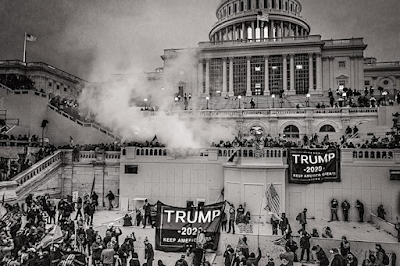
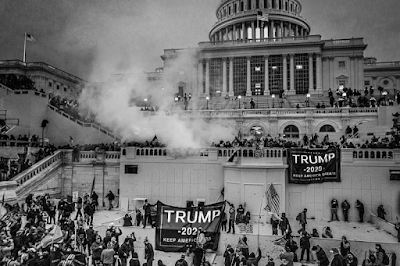
black and white photo of rioters on steps of US Capitol at 5:07:45 PM, January 6, 2021, US Capitol, Washington, DC

Join Nate Gowdy for an engaging visual presentation on the making of Insurrection, the only book of photojournalism dedicated to chronicling the deadly mob attack on the US Capitol on January 6th, 2021.

As a seasoned political photographer who had already covered 30 Trump rallies, Gowdy was confident he could handle one more. However, the events that transpired were beyond anyone’s expectations.

Gowdy will share his firsthand anecdotes and insights into his creative process amidst the chaos and violence of that fateful day. Despite being “fake news” and assaulted twice for carrying professional cameras, he remained committed to capturing the truth.

This event offers attendees the opportunity to connect with the photographer and delve deeper into the stories behind his January 6th portfolio, originally shot on assignment for Rolling Stone. He will also discuss his journey in self-publishing.

Copies of Gowdy's debut monograph, Insurrection, will be available after the presentation and Q&A.

Gowdy maintains a photography studio in Seattle’s International District, and his fine art is represented at Monroe Gallery of Photography in Santa Fe, New Mexico.

Tuesday, April 11, 2023

Save the date: Two Pioneering Women Photographers of The Photo League Gallery Talk April 21


TWO PIONEERING WOMEN PHOTOGRAPHERS OF THE PHOTO LEAGUE


black and white portraits of photographer Sonia Handelman Meyer seated in her studio and Ida Wyman holding her cameras circa 1940s


Opening Gallery talk April 21 with managers of the photographer’s estates, Joe Meyer, son of Sonia Handelman Meyer, and Heather Garrison, granddaughter of Ida Wyman. The talk starts promptly at 5:30, seating is limited and RSVP is essential. Zoom registration here. The exhibition continues through June 18, 2023.

The Photo League was a collective of photographers active between 1936-1951 who believed their work could change poor social conditions and champion photography as an art form in the process. The Photo League thrived as one of the most progressive, dynamic and creative centers for photography in America, and was unusual in its time as many of the collective’s members were women.

In the 1940s when McCarthyism started gathering momentum in the US, suspicious authorities decided to clamp down on the Photo League’s confrontational and uncensored representations of urban American society. In 1948, it was declared a subversive organization and blacklisted. As the league’s secretary at the time, Sonia Handelman Meyer answered the office phone when requests for comment about the accusations poured in from the media. “It got to be too much,” she told The New York Times. “They were blacklisting people”.

Both photographer’s work went unrecognized for decades. In recent years, there has been a revived interest in the radical collective that contributed incomparably towards promoting early street photography as an art form.


Thursday, March 30, 2023

Conversation Series David Butow

 Via Daniel Milnor YouTube


What's better than an interview with David Butow? Two interviews with David Butow. In this episode, we focus briefly on new developments in AI while narrowing our conversation more specifically to photography. What does David carry on assignment, how does he approach a scene and what happens with that work after a project is complete? We hit editing, sequencing the origins of his Brink book, and much more. 


Wednesday, March 29, 2023

Gaston County considering defunding history museum; comes less than a year after a dispute between county officials and the museum over a photo of two men kissing


Via The Gaston Gazette
March 29, 2023

screenshot of Gaston Gazette web article "Gaston County considering defunding history museum:


"Gaston County officials are considering defunding the Museum of Art and History, a move that could, according to some, force the museum to close its doors.....County Manager Kim Eagle brought up the museum, which is located in Dallas, at a county work session on Tuesday, asking for input from the Board of Commissioners on whether to continue funding the museum as a county department.

The talk of pulling funding comes less than a year after a dispute between county officials and the museum over a photo of two men kissing that the county manager ordered to be pulled from an exhibit."

color photograph of two men kissing, 2019 Charlotte, North Carolina Pride Parade, August 18, 2019

2019 Charlotte, North Carolina Pride Parade, August 18, 2019

Grant Baldwin's photograph is in our exhibit at The AIPAD Photograph Show in New York City this weekend, March 30 - April 2, booth #114, Center 415, 415 5 Avenue.


Saturday, March 25, 2023

Monroe Gallery announces representation of the Sonia Handelman Meyer estate

 Via Art Daily News

March 25, 2023

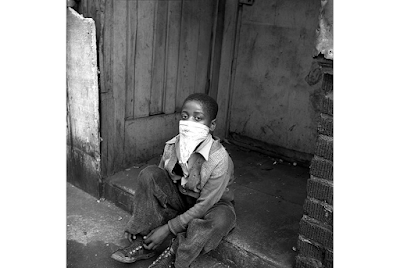
black and white photograph of African-American young boy with kerchief mask seated on stoopn in New Rork City while playing "cops and robbers", circa 1946-1950
Sonia Handelman Meyer/Courtesy of Monroe Gallery of Photography
 Boy in mask, New York City, c.1946-1950. Gelatin silver print.


SANTA FE, NM.- Monroe Gallery of Photography has announced its representation of the Sonia Handelman Estate, and will exhibit a selection of lifetime and vintage prints at the 2023 AIPAD Photography Show in New York City March 31-April 2 and present a 2-person exhibit with Ida Wyman: “Pioneering Women of The Photo League” at Monroe Gallery in Santa Fe, April 21-June 18, 2023.

The Photo League was a collective of photographers active between 1936-1951 who believed their work could change poor social conditions and champion photography as an art form in the process. The Photo League thrived as one of the most progressive, dynamic and creative centers for photography in America, and was unusual in its time as many of the collective’s members were women. In the 1940s when McCarthyism started gathering momentum in the US, suspicious authorities decided to clamp down on the Photo League’s confrontational and uncensored representations of urban American society. In 1948, it was declared a subversive organization and blacklisted. As the league’s secretary at the time, Sonia Handelman Meyer answered the office phone when requests for comment about the accusations poured in from the media. “It got to be too much,” she told The New York Times. “They were blacklisting people”.

Sonia Handelman was born on Feb. 12, 1920, in Lakewood, N.J., and grew up in New York City. Her parents were Jewish immigrants from Eastern Europe. After graduating college in 1941, Handelman Meyer worked during World War II in the Office of War Information for the U.S. Signal Corps in Puerto Rico, and the Office of War Information in New York, and then at a news photography agency. In 1943 she joined the Photo League, where she studied with John Ebstel and Sid Grossman. She also served as secretary (the only paid position at the League) and, in 1948-50, as chair of the Hine Committee. She participated in several group exhibitions, including "This Is the Photo League" (1948–49). Handelman Meyer collaborated with Morris Huberland on a photographic series of Sydenham Hospital in Harlem (1947) and photographed in neighborhoods throughout New York. She later documented the Weavers, the American folk group that included Pete Seeger. Her photographs appeared in The New York Times (1947–48) and U.S. Camera Annual (1947). Her photographs also appeared in the exhibition "Photographic Crossroads: The Photo League" at the International Center of Photography, New York (1978) and "The Women of Photo League" at Higher Pictures Gallery, New York (2009).

Sonia Handelman Meyer died on September 11, 2022, at her home in Charlotte, N.C., at age 102.

Sonia Handelman Meyer’s work went unrecognized for decades. In recent years, there has been a revived interest in the radical collective that contributed incomparably towards promoting early street photography as an art form.

Thursday, March 23, 2023

THE 2023 AIPAD PHOTOGRAPHY SHOW


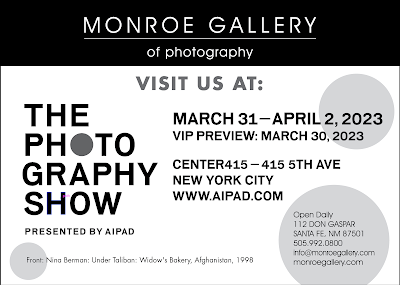
Graphic design with details for the 2023 AIPAD Photography Show March 30-April 2 at Center415, 415 5 Ave in NYC


We are pleased to exhibit once again at the AIPAD Photography Show which brings together exceptional photography from the world’s top fine art photography galleries. Monroe Gallery of Photography will be located on the main floor in booth #114 and will feature three distinct exhibits.

The first feature will showcase the work of independent photojournalists covering contemporary events with a focus on global displacement and American social issues.

The second feature will showcase photographs by Sonia Handelman Meyer (1920-2022) and Ida Wyman (1926–2019), two pioneering women photographers of the Photo League, a collective of photographers active between 1936-1951 who believed their work could change poor social conditions and champion photography as an art form in the process. Both photographer’s work went unrecognized for decades. In recent years, there has been a revived interest in the radical collective that contributed incomparably towards promoting early street photography as an art form. 

The final feature will highlight work by Tony Vaccaro, who passed away in December, 2022 at the age of 100 and who was a frequent fixture in the Monroe Gallery booth through past AIPAD Shows.


Booth #114


Center415 

415 5th Avenue

(between 37th and 38th streets)

New York, NY 10016    Tickets here


Thursday, March 30 | 12:00pm - 8:00pm (VIP Opening Preview)

 Friday, March 31 | 12:00pm - 7:00pm

 Saturday, April 1 | 12:00pm - 7:00pm

 Sunday, April 2 | 12:00pm - 5:00pm

Monday, March 20, 2023

Ed Kashi Artist Talk & Gallery Reception at Syracuse University Palitz Gallery in NYC


Via Syracuse University

Join Ed Kashi '79 for an artist talk and gallery reception celebrating the new Palitz Gallery exhibition "Ed Kashi: Advocacy Journalism."


Monday, March 27, 2023

6:00 PM to 8:00 PM ET

Louise and Bernard Palitz Gallery Syracuse University Lubin House

11 East 61st Street

New York, NY 10065

Register here

Tuesday, March 14, 2023

Meet Ed Kashi Photojournalist/Filmmaker


Via ShoutoutDFW

March 14, 2023

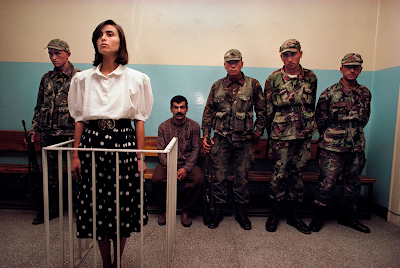
a woman in Turkish court is sentenced, behind her stand military guards
Ed Kashi: In a Turkish terrorist court in Diyarbakir, this Kurdish woman was sentenced to 13 years in prison, accused of belonging to the Kurdistan Workers Party, or PKK, which seeks to create an independent state in southeastern Turkey, 2006


Hi Ed, how has your work-life balance changed over time?

Prior to the pandemic, I had worked 6-7 days a week for the past 40 years. Being slowed down by Covid made me appreciate how much stress and burnout I had endured for decades in pursuit of my passionate commitment to my work. I am now more inclined and able to take time off and do not feel guilty about doing it. I still have a ways to go to find the right balance between work and life, but I’m getting better.

Can you open up a bit about your work and career? We’re big fans and we’d love for our community to learn more about your work.

My documentary work is predicated on long term, in depth visual storytelling. My personal projects last for years and that’s what sets my work apart. I focus on geopolitical and social issues, and increasingly work in a more advocacy approach in my photojournalism and documentary filmmaking. My purpose is to create stories and media materials that can be used to not only raise awareness but be a part of change. I have been working as a photojournalist for over 40 years. My work has been published globally in both print and digital platforms. I’ve produced 12 books of my photography and many short documentary films. In the course of my career I’ve witnessed and been a part of the digital revolution that has rocked the editorial world that I come out of. My work has primarily been for major magazines, including National Geographic, The NYT magazine, Time, The New Yorker and many others. I’ve been exhibited worldwide and lecture and teach on a regular basis around the world.

Doing this work has never been easy. For me it was a mixture of a very hard work ethic, a passionate commitment to making the work happen, investing in myself and not waiting for editors to green light my ideas and never giving up, no matter how hard the rejections, disappointments or mountains to overcome.

The lessons I’ve learned is that you must believe in yourself and your mission. You must be prepared to pay your dues, work very hard, continue to learn and keep an open mind and open heart. Never give up on yourself, no matter how tough the going gets. Do not rely on any one person, client or outcome. Always be prepared for new opportunities to come from places you might not expect and be good to everyone you encounter.

Any places to eat or things to do that you can share with our readers? If they have a friend visiting town, what are some spots they could take them to?

I would be a poor tour guide. My main interest in spending time with my closest friends is to just be with them. Where we eat, what we do or see is not the object of our time together. It’s to talk, listen, learn, feel the love and friendship without the pressure to entertain.

Shoutout is all about shouting out others who you feel deserve additional recognition and exposure. Who would you like to shoutout?

I’d have to give a shoutout to my wife, Julie, who has supported me and my work for the past 30 years, even when it meant single parenting our 2 kids for weeks and months at a time due to the heavy travel schedule my work requires. Because of her, our family is in tact, our kids are doing great and we can now develop the next phase of our relationship and lives together.

Full article with images here

Ed Kashi prints

Image Credits

Ed Kashi/VII is my credit for all images you publish. These images must only be used for this one purpose and cannot be used for any other. All images copyrighted to Ed Kashi.

Saturday, March 4, 2023

The City Of Santa Fe 2023 COVID-19 Memorial Day Monday, March 6, 2023


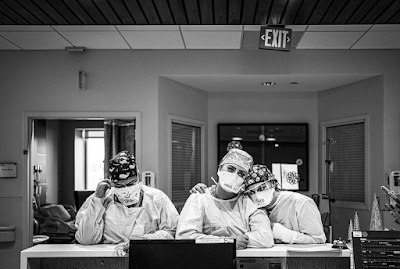
black and white photo from December 2020 of 3 exhausted nurses in masks in the Covid units of St. Vincent's hospital in Santa Fe, NM

A nursing station in the Frost 19 unit, Christus St. Vincent Regional Medical Center, Santa Fe, NM, December, 2020

Via The City of Santa Fe


Join Us For The City Of Santa Fe 2023 COVID-19 Memorial Day

12 Noon Monday, March 6, 2023, On The Santa Fe Plaza

The City of Santa Fe warmly invites all community members to attend the 2023 COVID-19 Memorial Day at 12 p.m. on Monday, March 6, 2023, on the Santa Fe Plaza. 

In February 2021, the Governing Body unanimously adopted a resolution designating the first Monday in March as COVID-19 Memorial Day. This event is held to remember all who have passed away, fallen ill, or who continue to suffer from the impact of COVID-19, as well as to honor essential workers. 

Citywide, Santa Feans are urged to participate in the memorial by observing a moment of silence at 12 p.m., and by adding their voices or noise to a moment of appreciation for essential workers at 12:01 p.m. (ringing bells at houses of worship, honking car horns, rounds of applause, etc.) 


Click here to download a shareable PDF of the event flyer.


Related: Ashley Gilbertson's Photographs In The NY Times: "Three Years Into Covid, We Still Don’t Know How To Talk About It"

Thursday, March 2, 2023

ICP Book Event: Women Photograph—“What We See: Women & Nonbinary Perspectives Through the Lens” with Nina Berman


March 11, 2023  1-2 PM

International Center of Photography & Online

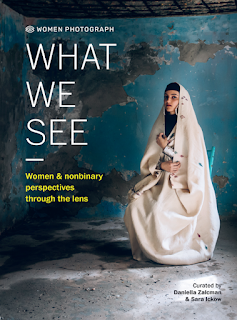
cover of book titled: WHAT WE SEE: WOMEN & NONBINARY PERSPECTIVES THROUGH THE LENS"


Women Photograph, a global organization dedicated to elevating the voices of women and nonbinary visual journalists celebrates its new publication, What We See: Women & Nonbinary Perspectives Through the Lens.

Sara Ickow, Exhibitions & Special Projects for Women Photograph and Senior Manager of Exhibitions and Collections at ICP, will lead a conversation with Women Photograph founder Daniella Zalcman and photographers Nina Berman and Kholood Eid centered on the new publication as well as the importance of representation resources within the field.

About the Book

Open your eyes to a new world view with 100 women and nonbinary photojournalists’ stories from behind the lens.

85% of photojournalists are men. That means almost everything that is reported in the world is seen through men’s eyes. Similarly, spaces and communities men don’t have access to are left undocumented and forgotten. With the camera limited to the hands of one gender, photographic ‘truth’ is more subjective than it seems. To answer this serious ethical problem, Women Photograph flips that bias on its head to show what and how women and nonbinary photojournalists see.

From documenting major events such as 9/11 to capturing unseen and misrepresented communities, this book presents a revisionist contemporary history: pore over 50 years of women’s dispatches in 100 photographs. Each image is accompanied by 200 words from the photographer about the experience and the subject, offering fresh insights and a much-needed perspective.

Until we have balanced, representative reporting the camera cannot offer a mirror to our global society. To get the full picture, we need a diverse range of people behind the lens. This book offers a first step.

Relearn how to see with this evergreen catalogue that elevates the voices of women and nonbinary visual storytellers.


This event is free with museum admission. This program is being offered both in person at ICP, located on NYC's Lower East Side, and online.

International Center of Photography & Online

79 Essex Street, New York, NY 10002

Tickets


More about the book here.

Wednesday, February 22, 2023

"In Conversation: Zaiga Minka Thorson, Dana Keeton, & Ryan Vizzions,” February 23


Via River Cities Reader

Thursday, February 23, 6:30 p.m.

Figge Art Museum, 225 West Second Street, Davenport IA

Protestor on illegal wall of shipping containers straddling the AZ / Mexico border , December, 2022
Ryan Vizzions


A lauded painter, a noted art therapist, and an award-winning photojournalist will share their histories and thoughts at the Figge Art Museum on February 23 when the Davenport venue hosts In Conversation: Zaiga Minka Thorson, Dana Keeton, & Ryan Vizzions, an informal and enriching conversation about how artists address personal trauma through their artistic practices.

Michigan native Thorson is a Black Hawk College Professor Emerita, having taught at the Moline institution since 1999. She holds a BFA in Painting from Western Michigan University and an MFA in Painting from Northern Illinois University, and is represented by Iowa Artisans Gallery in Iowa City. Having received numerous awards for her graphic design and artwork, which she exhibits both regionally and nationally, Thorson has served on the education committee for the Figge Art Museum, as well as on the Rock Island Preservation Commission and the Visual Arts Committee of Rock Island's Quad City Arts. She has stated that her reverence for nature is rooted in her Latvian heritage and growing up in Michigan, and her interests include research and travel to America's National Parks and UNESCO World Heritage sites, her points of interest particularly focused on sacred sites.

Based in Iowa City, Keeton is a registered, board-certified art therapist and a licensed mental health counselor whose trauma-informed psychotherapy work incorporates art therapy, EMDR, mindfulness, and breath work, as well as cognitive behavioral, client-centered, and strength-based approaches. She is also trained in EMDR (Eye Movement Desensitization and Reprocessing), a therapeutic technique that assists in reducing the intensity of emotions associated with disturbing life experiences; YogaCalm, an integrated wellness approach utilizing yoga movement, meditation and mindfulness; and a certified Victim Service Provider with the Iowa Organization for Victim Assistance.

Vizzions has been named Creative Loafing's 2014 "Best Fine Art Photographer" (readers choice) and 2015 "Best Cityscape Photographer" (critics pick); worked alongside international brands such as Adidas and artists such as Pharrell Williams; collaborated with local companies including #WeLoveATL, The Atlanta Opera, and Van Michael Salon; and covered many music festivals, among them Outkast's long awaited reunion series "Outkast ATLast." In hosting his own annual photo exhibition Wander Never Wonder, Vizzions connects local photographers and helps provide a platform for local artists to make money off of their craft. The artist and photojournalist is also deeply involved with the community of Atlanta, Georgia, often donating portions of his art sales to various local charities and foundations.

In Conversation: Zaiga Minka Thorson, Dana Keeton, & Ryan Vizzions will take place on February 23, the 6:30 p.m. program will be preceded by a 5 p.m. cash bar, and participation in the evening discussion is free. For more information, call (563)326-7804 and visit FiggeArtMuseum.org.


Tuesday, February 21, 2023

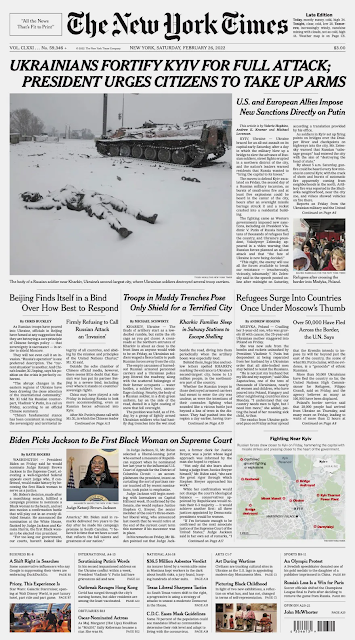
The Soldier in the Snow: A dark journey down the rabbit hole of war photos, blanketed in snow.


Via Patrick Witty, Field of View


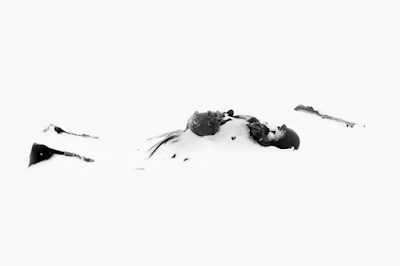
White Death, Pvt. Henry Irving Tannebaum Ottre, Belgium 1945: Dead soldier covered in snow
Tony Vacarro


Private First Class Tony Vaccaro, carrying an M-1 rifle and an Argus C3 brick camera, photographed this scene January 11, 1945, during the Battle of the Bulge. At first glance, it looks like a painting - spartan and stark, the composition as cold as the day.

“I saw the soldier that was lying down so peacefully, so beautiful as if an artist had drawn it.” Vaccaro recollected in the excellent 2016 documentary Underfire: The Untold Story of Pfc. Tony Vaccaro. “Death, that is beautiful. It’s a contradiction. You want the ugliest aspect of mankind, death, to be beautiful. Otherwise it can not be a monument.”

Vaccaro died in 2022 at the age of 100. The photo, titled “White Death, Requiem for a Dead Soldier,” was published alongside Vaccaro’s obit in The New York Times.


Full article here


screen shot of the NY Times front page of February 26, 2022 with Tyler Hicks photograph of dead soldier in snow by a tank in Ukraine


Saturday, February 18, 2023

Save The Date - March 30, 2023: Nate Gowdy: The Insurrection in Photos


Via Town Hall Seattle

February 18, 2023

Nate Gowdy – Town Hall Seattle


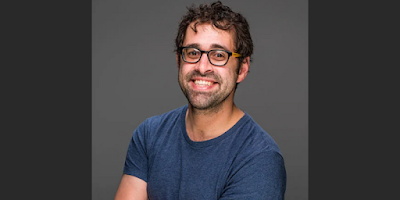
color portait of photographer Nate Gowdy smiling at camera


Nate Gowdy had previously photographed 30 Donald Trump rallies. He thought he was fully prepared for what should have been the grand finale, but the events that unfolded on January 6th, 2021, were more than anyone could have expected. 

As the event transformed from protest to outright insurrection, Gowdy never stopped photographing. The result is his first monograph, Insurrection — a comprehensive yet intimate account of the events of that fateful day. The 150-page book moves readers through the day in timestamped, chronological order, bringing them a firsthand account of not just the attack on the U.S. Capitol, but what it was like to be a journalist on the front lines.

Juxtaposed are scenes of domestic terrorists kneeling and praying, posing for group photos, eating hotdogs, rampaging against the Capitol’s sworn protectors, and defiling the Inauguration Day stand, historically reserved for the stately pomp and circumstance of our representative government. On assignment for Rolling Stone, Gowdy was deemed “fake news” and assaulted twice for having professional cameras.

Gowdy joins us in the Wyncote NW Forum to share more about that historic day in January.

Nate Gowdy captures the complexities of American politics with striking clarity. Since chronicling Washington state’s fight for marriage equality in 2012, he has traveled the US to photograph pivotal events, figures, and movements across the political divide. His images have been featured in Rolling Stone, Mother Jones, PBS NewsHour, Thom Hartmann, CNN, and TIME, where his Bernie Sanders portrait graced the cover in 2016. As a co-founder of The American Superhero Project and co-author of Our Students, Their Stories, a book celebrating Seattle Public Schools’ LGBTQIA+ students, families, and staff, Gowdy is committed to elevating underrepresented voices. He serves as the official photographer for Seattle Pride, and his documentary fine art is represented at Monroe Gallery in Santa Fe.


Thursday, March 30, 2023, 7:30PM

The Wyncote NW Forum

1119 8th Ave (Entrance off Seneca St.)

Seattle, Washington 98101

Get tickets here

Monday, February 13, 2023

Harwood Museum of Art announces Centennial Celebration in 2023; Monroe Gallery loans Margaret Bourke-White photograph


Via The Taos News

February 13, 2023


Harwood Museum of Art announces Centennial Celebration in 2023

Harwood Museum of Art of the University of New Mexico announces the celebration of its one-hundred-year anniversary in 2023. 

To mark the museum’s role as a steward of Western history and American art, Harwood’s Centennial celebration will take place from June 3, 2023 to January 28, 2024 and will include a major exhibition, publication and a full calendar of educational and community programs.  

Burt and Lucy Harwood made art and education the soul of Harwood when they purchased the property on historic Ledoux Street in 1916. The Harwood Foundation was founded in 1923; Originally a library born from the lending library Lucy Harwood began in her then-home, the museum has since become an international destination for tens-of-thousands of visitors each year. 

Accredited by the American Alliance of Museums, and the second-oldest museum in New Mexico, Harwood celebrates Taos’ artistic legacy, cultivates connections through art and inspires a creative future. 

“This is a great milestone for Harwood, which has been a cultural anchor in Taos,” said Juniper Leherissey, executive director. “As the museum has evolved and changed, what endures is the strength in art and creativity that we hope to continue to inspire long into the future.”

The kick-off for the Centennial will take place with opening events at the museum on Friday, June 2 and Saturday, June 3. This will be followed by the Harwood 100 Birthday Bash on Saturday, June 17 at the Sagebrush Events Center from 5:30-10 pm. The Harwood 100 Birthday Bash will include Taos Pueblo’s Hail Creek Singers, mariachis, and dance music by Big Swing Theory. Tickets will go on sale in March.

From June 2023 to January 2024, the Centennial exhibition will fill all nine galleries and will take visitors on a journey through the museum’s rich history, including 200 works of art from Harwood’s collection and 200 books from the former Harwood Public Library, along with significant works on loan by artists Ansel Adams, Paul Strand, Margaret Bourke-White, Elaine de Kooning and Georgia O’Keeffe. Continue to full article here.


For more information, visit  https://harwoodmuseum.org/centennial/.


Thursday, February 9, 2023

Save The Date: February 23, In Conversation Series With Ryan Vizzions

 Via River Cities Reader

February 9, 2023

Thursday, February 23, 6:30 p.m.

Figge Art Museum, 225 West Second Street, Davenport IA


A lauded painter, a noted art therapist, and an award-winning photojournalist will share their histories and thoughts at the Figge Art Museum on February 23 when the Davenport venue hosts In Conversation: Zaiga Minka Thorson, Dana Keeton, & Ryan Vizzions, an informal and enriching conversation about how artists address personal trauma through their artistic practices.

Michigan native Thorson is a Black Hawk College Professor Emerita, having taught at the Moline institution since 1999. She holds a BFA in Painting from Western Michigan University and an MFA in Painting from Northern Illinois University, and is represented by Iowa Artisans Gallery in Iowa City. Having received numerous awards for her graphic design and artwork, which she exhibits both regionally and nationally, Thorson has served on the education committee for the Figge Art Museum, as well as on the Rock Island Preservation Commission and the Visual Arts Committee of Rock Island's Quad City Arts. She has stated that her reverence for nature is rooted in her Latvian heritage and growing up in Michigan, and her interests include research and travel to America's National Parks and UNESCO World Heritage sites, her points of interest particularly focused on sacred sites.

Based in Iowa City, Keeton is a registered, board-certified art therapist and a licensed mental health counselor whose trauma-informed psychotherapy work incorporates art therapy, EMDR, mindfulness, and breath work, as well as cognitive behavioral, client-centered, and strength-based approaches. She is also trained in EMDR (Eye Movement Desensitization and Reprocessing), a therapeutic technique that assists in reducing the intensity of emotions associated with disturbing life experiences; YogaCalm, an integrated wellness approach utilizing yoga movement, meditation and mindfulness; and a certified Victim Service Provider with the Iowa Organization for Victim Assistance.

Vizzions has been named Creative Loafing's 2014 "Best Fine Art Photographer" (readers choice) and 2015 "Best Cityscape Photographer" (critics pick); worked alongside international brands such as Adidas and artists such as Pharrell Williams; collaborated with local companies including #WeLoveATL, The Atlanta Opera, and Van Michael Salon; and covered many music festivals, among them Outkast's long awaited reunion series "Outkast ATLast." In hosting his own annual photo exhibition Wander Never Wonder, Vizzions connects local photographers and helps provide a platform for local artists to make money off of their craft. The artist and photojournalist is also deeply involved with the community of Atlanta, Georgia, often donating portions of his art sales to various local charities and foundations.

In Conversation: Zaiga Minka Thorson, Dana Keeton, & Ryan Vizzions will take place on February 23, the 6:30 p.m. program will be preceded by a 5 p.m. cash bar, and participation in the evening discussion is free. For more information, call (563)326-7804 and visit FiggeArtMuseum.org.

Tuesday, January 31, 2023

Photojournalist Nate Gowdy Releases Intense Images from the Jan 6 Riot

Via Peta Pixel

January 31, 2023

black and white photograph of Trump rioters with Trump flags on steps of the US Capitol,  https://www.monroegallery.com/gallery/default/photoDetail/5-07-45-pm-january-6-2021-us-capitol-washington-dc#:~:text=5%3A07%3A45%20PM%2C%20January%206%2C%202021

Two years on from the Jan. 6 riots, an attack on the U.S. Capitol by Trump supporters, a photojournalist has released his photos from that fateful day.

For his new book Insurrection, Nate Gowdy tells PetaPixel that he was mistaken by some members of the mob as their “fellow patriot,” others assaulted him for being part of the “fake news.”

“Brave photojournalists had to endure hell to navigate that day better than I did,” Gowdy says.

“Many risked endless aggressions to document the battlefront and gore from up close. Not me. Lacking the necessary gear and armor for a combat zone, I captured the wider view. Instead of zooming in with my feet, I often took a step back.”

Gowdy says he was attacked by a group of Proud Boys in the morning and a second time in the afternoon after the perimeter barricades to the Capitol grounds were breached.

“A few insurgents mistook me as a fellow ‘patriot,’ offering water for my burning eyes, confiding in me, and even lending a hand,” he explains.

“The rest of them monitored me with suspicious glares. Because I wasn’t repping my press badge, they couldn’t be 100 percent sure I wasn’t on their team. If I could do it over, I’d cover my N95 with an American flag bandana.

“All afternoon, I worked discreetly, often facing the opposite direction as my lens was pointed, shooting with outstretched arms or from the hip. I religiously avoided eye contact, lest these people take notice of the fear in my eyes. It helped that my lens was wide enough that I didn’t have to point directly at someone in order to include them in my frames.”

Gowdy traveled to D.C. from Seattle to cover what was supposed to be a political rally for Rolling Stone magazine, no different from the many assignments he had been on previously.

But he soon realized that this would be much different and because of the holiday season, Gowdy didn’t have all of his usual gear and was forced to borrow some from a colleague.

“I struggled to adapt to my friend’s custom presets. For the life of me, I couldn’t get used to his ‘back-button AF,’ which separated AF activation from the shutter release,” explains Gowdy

“In no position to troubleshoot, I reset the camera, which made matters worse by somehow removing the AF function altogether! I can laugh at it now, but in my ten years as a photographer, I had never once used manual focus. I’m here to tell you that at a violent insurrection, it’s a difficult thing to learn.”

Virtually all of the photos were taken on Gowdy’s Lecia Q’s fixed 28mm lens and a flash that his friend had lent him.

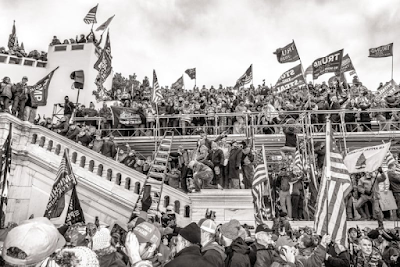
black and white photo of Trump rioters with signs and flags on the steps of the US Capitol, 3:19:18 PM, January 6, 2021, Washington, DC


“Locked between thousands of rioters at the Inauguration Day stand, I was immobile for long periods. The camera’s focal length forced me to focus on and prioritize the subjects and scenes right before me,” he adds.

The Pictures Almost Never Existed

After escaping without serious injury, Gowdy then had the utter devastation of his Leica Q, hard drives, laptop, and all of his pictures being stolen from Washington’s Union Station as he was traveling back to Seattle.

“It was one of the lowest points of my career, and I would’ve given anything to recover these photographs,” he says.

Luckily, one of his friends spotted the camera listed on an online marketplace and Gowdy messaged the seller who claimed to have “found” his backpack that contained all of his stuff. The crook then demanded $2,000.

“Very fortunately, the thief agreed to return to the scene of the crime and to make an exchange the following day at Union Station with a friend of mine,” explains Gowdy.

“Amtrak Police went above and beyond to work with my friend to coordinate a safe and successful sting operation. Everything was returned in time for me to photograph Biden’s inauguration day.”

The 150-page hardcover edition of Insurrection by Nate Gowdy is available via his website.

“If you’re curious to read the only available book of photojournalism about what it was like to be in the middle of the mob on January 6, I encourage you to pick it up,” he adds.


Bill Eppridge's Photograph in the NY Times Obituary for Bobby Hull

 Via The New York Times

January 30, 2023


color photograph of hockey player Bobby Hull talking a slap-shot on the ice
Hull’s slap shot over the years was measured at between 97 and 120 miles per hour.
Credit...Bill Eppridge/The LIFE Picture Collection


Short biographical video:  The Legacy of Bill Eppridge

Sunday, January 29, 2023

David Butow Photographs Star Ballroom Shooting Memorials and Resilience for CNN

 Via CNN

January 29, 2023


By Elizabeth Wolfe, CNN. Photographs by David Butow

After tragedy struck Monterey Park’s vibrant dance community, residents insist they will return to their beloved ballroom --click for full article.

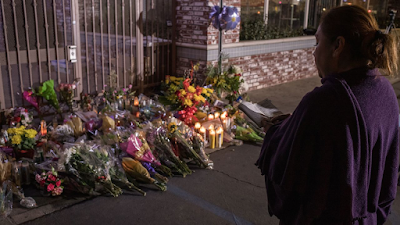
clolor photograph of people gathered at the Monterey Park City Hall for a candlelight vigil honoring 11 victims of a mass shooting in the city on Lunar New Year's Eve.
People gather at the Monterey Park City Hall for a candlelight vigil honoring 11 victims of a mass shooting in the city on Lunar New Year's Eve.


The gates outside the Star Ballroom Dance Studio have become surrounded by a makeshift memorial.


The gates outside the Star Ballroom Dance Studio have become surrounded by a makeshift memorial with flowers and portaits of the victims


The gates outside the Star Ballroom Dance Studio have become surrounded by a makeshift memorial.


Kevin Leung stands outside of the dance studio where he rented space for years to teach Kung Fu and traditional lion dancing. He knew two of those killed in the shooting.


Thursday, January 26, 2023

A show celebrating acclaimed photographer Tony Vaccaro at Santa Fe’s Monroe Gallery of Photography (112 Don Gaspar) can be viewed for five more days—through Jan. 29

 Via The Santa Fe Reporter

January 25, 2023


Honoring Vaccaro


Speaking of countdowns, a show celebrating acclaimed photographer Tony Vaccaro at Santa Fe’s Monroe Gallery of Photography (112 Don Gaspar) can be viewed for five more days—through Jan. 29. Monroe mounted two exhibitions—here and a New York pop-up last month—to honor Vaccaro’s 100th birthday; the photographer died on Dec. 28, just eight days after his centennial, which he celebrated in New York with friends at a surprise birthday dinner. 

A New York Times obituary recounts how Vaccaro became a war photographer in World War II—also the subject of a 2016 HBO documentary. After the war, he transitioned and began to make fashion, travel and celebrity photographs for the country’s leading magazines. 

Those celebrities included Georgia O’Keeffe, whom Life magazine assigned Vaccaro to photograph in 1960. O’Keeffe expected a more famous photographer and at first refused to pose: “To win her over, Mr. Vaccaro cooked a meal and made a picnic lunch. When the weather turned too windy for the picnic, he gave her a plate of Swiss cheese as she sat in the back of his car. And when she playfully peered through a hole in a piece of the cheese, Mr. Vaccaro went into action,” the obituary reads. His other famous subjects included John F. Kennedy, Pablo Picasso and Sophie Loren, to name a few. 

This quote from Vaccaro accompanies Monroe’s information on the exhibition: “We call each other German, French, Italian. There is no Italian blood. There is no French blood. It’s human blood. On this Earth there is one humanity. Let’s do something about it. Let’s live! In a way, photography was my way of telling the world, ‘We have better things to do than to kill ourselves.’”

Saturday, January 14, 2023

Ashley Gilbertson Photographs in January 15, 2023 NY Times

 Via The New York Times

January 14, 2023


How Montana Took a Hard Right Turn Toward Christian Nationalism

What happened to a state known for its political independence?

Photographs by Ashley Gilbertson for The New York Times


screen shot of black and white photo from a car window in Montana of white cross near roadsie
“If you want to live here,” a chapter president of the Montana Federation of Republican Women said, “be a Christian.” 
Credit Ashley Gilbertson


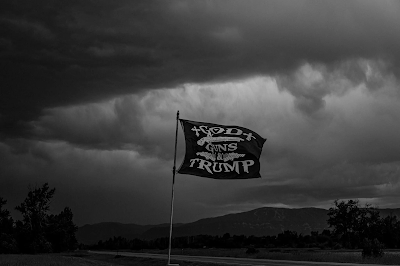
a black and white photo of a  flag near Red Lodge, Montana that says "God, Guns, Trump" Credit  Ashley Gilbertson
A flag near Red Lodge, Montana
Credit Ashley Gilbertson

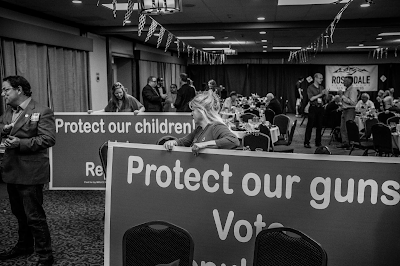
black and white photo of Montana Republican Convention with large signs "Protect Our Children" and "Protect our Guns)
The party convention in Billings last summer. Montana was one of the most politically independent states, but Republicans have recently managed to secure an ironclad grip over state politics.
Credit. Ashley Gilbertson

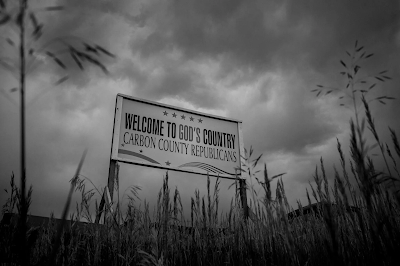
black and white photo of a sign near Red Lodge, Montana that says "welcome to God Country..Home of Carbond Counry Republicans"  Cdrefit  Ashley Gilbertson
A sign advertising the Republican Party near Red Lodge, a city in southern Montana. In 2021, the Legislature passed a bill banning transgender athletes on sports teams at public schools and universities, an increased tax credit benefiting private Christian schools and numerous anti-abortion laws.
Credit Ashley Gilbertson


Ashley Gilbertson is an Australian photographer and writer living in New York. His photograph from the Jan. 6 attack was part of the Times entry that was a finalist in the breaking-news-reporting category of the Pulitzer Prizes in 2022.

Tuesday, January 10, 2023

Poor People’s Art: A (Short) Visual History of Poverty in the United States; Artist's talk with Nina Berman January 12


January 13 – March 4, 2023

University of South Florida Contemporary Art Museum


dark photograph of 2 men outside of abandoned cottages where they were housed while doing slave labor at what was once the Florida School for Boys

Nina Berman: John Bonner and Richard Huntly, from the series The Black Boys of Dozier, 2013 

Thousands of boys, mainly black, passed through Dozier since it opened in 1901 as a reform school for wayward boys. But allegations over the years suggest it functioned more like a slave labor camp, with verified reports of children being hog tied and shackled. The name of the institution changed as each successive administration installed its own brand of punishment and forced labor, finally closing in 2011, not because of allegations, but according to the State, because of budget issues.


Panel discussion Thursday, January 12 with artists featured in Poor People’s Art: A (Short) Visual History of Poverty in the United States, including Nina Berman, Rico Gatson, and Jason Lazarus. Curator Christian Viveros-Fauné will lead the conversation exploring issues and topics addressed in the exhibition. This event is free and open to the public, Facebook live link here.

Dr. Martin Luther King Jr. is well known for his “I Have a Dream” speech, yet much less emphasis is placed on his campaign to seek justice for America’s poor, “The Poor People’s Campaign.” This was a multi-cultural, multi-faith, multi-racial movement aimed at uniting poor people and their allies to demand an end to poverty and inequality. Fifty-three years after Dr. King’s death, the Reverend William Barber II launched a contemporary push to fulfill MLK’s ambitious brief — one that calls for a “revolution of values” that unites poor and impacted communities across the country. The exhibition Poor People’s Art: A (Short) Visual History of Poverty in the United States represents a visual response to Dr. King’s “last great dream” as well as Reverend Barber’s recent “National Call for Moral Revival.”

With artworks spanning more than 50 years, the exhibition is divided into two parts: Resurrection (1968-1994) and Revival (1995-2022). Resurrection includes photographs, paintings, prints, videos, sculptures, books, and ephemera made by a radically inclusive company of American artists, from Jill Freedman's photographs of Resurrection City, the tent enclave that King's followers erected on the National Mall in 1968, to John Ahearns' plaster cast sculpture Luis Fuentes, South Bronx (1979). Revival offers contemporary engagement across a range of approaches, materials, and points of view. Conceived in a declared opposition to poverty, racism, militarism, environmental destruction, health inequities, and other interlocking injustices, this exhibition shows how artists in the US have visualized poverty and its myriad knock-on effects since 1968. Participating artists include John Ahearn, Nina Berman, Martha De la Cruz, Jill Freedman, Rico Gatson, Mark Thomas Gibson, Corita Kent, Jason Lazarus, Miguel Luciano, Hiram Maristany, Narsiso Martinez, Adrian Piper, Robert Rauschenberg, Rodrigo Valenzuela, William Villalongo & Shraddha Ramani.


Poor People’s Art is curated by Christian Viveros-Fauné, CAM Curator-at-Large and organized by the USF Contemporary Art Museum.   Exhibition Press Release

Monday, January 9, 2023

War-scarred land: Nina Berman and Ashley Gilbertson featured in award-winning book depicting collateral damage of U.S. military at home

Via The Harvard Gazette


In her recent book and accompanying exhibition, “Devour the Land” — honored at the 2022 PhotoBook Awards — curator Makeda Best considers how photographers have responded to the U.S. military’s impact on the environment since the 1970s.

Below, the Richard L. Menschel Curator of Photography at the Harvard Art Museums walks us through a few of the images she selected. (Full post here)


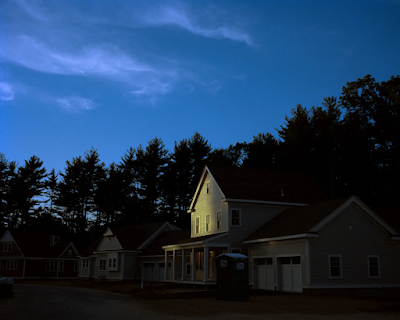
a house is seen in dim light besides trees and open sky

A Housing Development Bordering the Starmet Superfund Site, Concord, Mass., USA” (July 3, 2016) by Nina Berman, American (b. New York, N.Y. 1960). © Nina Berman; image courtesy of Nina Berman

Just outside Walden Pond, a toxic dump

Nina Berman’s photograph was made in nearby Concord. Made at sites across the country, Berman’s series “Acknowledgment of Danger” takes its title from a waiver visitors must sign before entering the toxic grounds of a former military facility. In Concord, she photographed a new housing development in early morning light. Concord is known for its connections to the Revolutionary War and to the U.S. environmental movement. (The pictured site is six miles from Walden Pond, made famous by Henry David Thoreau’s 19th-century nature writing.) Here, Berman draws out this site’s link to modern warfare: Starmet Corp. (formerly Nuclear Metals Inc.) manufactured products from depleted uranium, primarily for armor-piercing ammunition, among other things. The company discharged toxic waste into an unlined holding basin for nearly 30 years, contaminating the soil and groundwater. In 2001, the facility was placed on the National Priorities List, an EPA registry of the nation’s most hazardous sites.


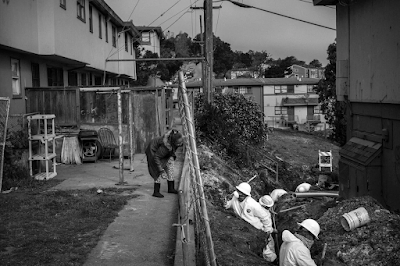
a  Resident Talks to Workers in the yards outside in the Hunter’s Point Neighborhood of San Francisco, Calif


 “A Resident Talks to Workers in the Hunter’s Point Neighborhood of San Francisco, Calif., on May 5, 2017.” From the series “Bombs in Our Backyard” by Ashley Gilbertson, Australian (b. Melbourne 1978). © Ashley Gilbertson/VII; image courtesy of the artist

Story of environmental racism

It was important to me that the exhibition speak to the fact that communities of color are disproportionately impacted by this pollution and toxicity. Ashley Gilbertson made this photograph in a neighborhood in my hometown of San Francisco, called Hunter’s Point. The neighborhood was largely built on a former naval base, today a Superfund site. Growing up, I knew kids who lived here — heard them talk about their eczema and asthma. In 2017-18, Gilbertson, a contributor to the catalog, acclaimed for his photographs of conflict in the Middle East, turned his attention to the U.S., documenting pollution caused by the military for the investigative journalism nonprofit ProPublica. Gilbertson collaborated with journalist Abrahm Lustgarten (another contributor to the catalog) to produce a series of in-depth reports on the pollution from former chemical weapons test sites and the harmful ways the military has chosen to dispose of chemicals and munitions. In his larger series, Gilbertson shows how people and toxins intersect — from illness to activism to labor and daily life in a poisonous environment.


*

Saturday, January 7, 2023

Gallery Photographer Nate Gowdy Interviewed on PBS New Hour for Anniversary of January 6 Insurrection


Via PBS News Hour

January 6, 2023

screen shot of PBS News Hour feature artice on Nate Gowdy's "Insurrection" book with image of crowd of rioter on Capitol steps, January 6, 2021


On Jan. 6, 2021, photographer Nate Gowdy was at the U.S. Capitol on assignment for Rolling Stone when what was billed as a pro-Trump rally escalated into an insurrection. He was on his way to take photos of the rally at the Ellipse when groups of people started walking toward the Capitol.

Hours later, Gowdy writes in his new book, he was “caught in a melee of war cries, adrenaline and suddenly surging bodies.”

After covering the mayhem outside the Capitol, Gowdy faced his own chaotic situation days later. His camera and computer with his Jan. 6 images were stolen from Washington’s Union Station.

“I would have sacrificed an arm or a leg to get those photos back,” he said.

Beyond capturing a shocking chapter in American political history, the images were also meant to be the conclusion to a book he had been long working on.

As friends tried to console him and help him replace his equipment, one acquaintance had a lucky, one-in-a-million break, spotting his original gear for sale online, and eventually reuniting him with his images.

“Insurrection,” a recent collection of 124 of Gowdy’s photos, offers a timeline of the day’s events through vivid portraits of the Trump supporters who broke into the complex while Congress counted Electoral College votes to confirm President Joe Biden’s 2020 election victory.

More than 950 people have been arrested for participating in the Capitol insurrection, the Justice Department reported Wednesday — two days ahead of the attack’s two-year anniversary. Hundreds of demonstrators and law enforcement officers were physically injured. The Capitol building sustained $1.5 million in damage. Eighteen journalists were assaulted and news equipment and cameras were damaged, according to the U.S. Press Freedom Tracker. Nine deaths have been connected to the attack and its aftermath.

“Almost four years prior to Jan. 6, 2021, I stood in the audience at the Inauguration Day stand and stared in disbelief as [President-elect Trump] vowed to uphold the Constitution and to end the specter of societal ‘American carnage,’” Gowdy said. “Now I found myself in the space – one historically reserved for solemn and dignified assembly – as it was flooded with true American carnage.”

Gowdy has worked since 2011 as a photographer for various editorial and commercial clients. He has also produced exhibitions and projects, including “The American Superhero Project” – a series of patriotic portraits featuring people of all stripes – and “Our Students, Their Stories: Celebrating LGBTQ+ Students, Families, and Staff,” a project commissioned by Seattle Public Schools.

Trump rallies became a focus of Gowdy’s work in recent years, he says in an attempt to better understand the movement. “I wanted to make photographs that could help us bridge this divide potentially. And now I see that because, again, we see what we want to see, they [my images] only perpetuate the divide, certainly with the climate we’re in. That’s not what I set out to do, but that’s what it’s become.”

The PBS NewsHour spoke with Gowdy by phone and email over the last few weeks about his experience covering the Jan. 6 attack and what led to his new book.

This conversation has been edited for length and clarity. Some of the photos featured in this story are graphic.

I’m curious how you came to be on Capitol Hill on Jan. 6. What led up to that?

Time magazine had reached out after I photographed a Bernie [Sanders] rally here in downtown Seattle being interrupted by Black Lives Matter demonstrators. … And that kind of gave me the confidence to get out there and do it. … I ended up getting the Bernie Sanders cover of Time magazine in June of 2016. … At the time, I’d only had a camera for four and a half years. So that was pretty cool.

The whole time I was out there traveling, self-funding these trips to primary states, sleeping in rental cars and doing what I had to do just to get the photos while this was happening. I thought the whole Trump-MAGA thing was a blip and I thought I had to catch it then and it would be over soon. And, you know, it didn’t end…

I saw Jan. 6 as Trump’s last stand. Excuse my language, but I knew it would be a stupid day. … I didn’t anticipate it being deadly and what it was.

This conversation has been edited for length and clarity. Some of the photos featured in this story are graphic.

I’m curious how you came to be on Capitol Hill on Jan. 6. What led up to that?

Time magazine had reached out after I photographed a Bernie [Sanders] rally here in downtown Seattle being interrupted by Black Lives Matter demonstrators. … And that kind of gave me the confidence to get out there and do it. … I ended up getting the Bernie Sanders cover of Time magazine in June of 2016. … At the time, I’d only had a camera for four and a half years. So that was pretty cool.

The whole time I was out there traveling, self-funding these trips to primary states, sleeping in rental cars and doing what I had to do just to get the photos while this was happening. I thought the whole Trump-MAGA thing was a blip and I thought I had to catch it then and it would be over soon. And, you know, it didn’t end…

I saw Jan. 6 as Trump’s last stand. Excuse my language, but I knew it would be a stupid day. … I didn’t anticipate it being deadly and what it was.

Did you ever go inside the Capitol at any point during the day?

No, I did not. … Everyone on that terrace where the inauguration platform [was on the West Front of the Capitol] had their backs to us. And so there was obviously something going on behind them. And that’s where the battle for the tunnel was. And that’s why I got to a higher elevation to have a view of it. But I didn’t want to be in the middle of it.

I didn’t have any protective gear, whereas a lot of my colleagues out there that day were militarized – wearing gas masks, goggles, helmets, boots, kneepads, you name it. But that also worked to “other” them, … whereas, I was wearing a maroon hoodie and Carhartt beanie and, besides my N95 mask and cameras othering me, a lot of people who were suspicious of me couldn’t be 100 percent certain I wasn’t a fellow “patriot” for the cause.

You were able to kind of blend in a little bit.

Yeah, I think in ways that worked to my advantage. But, that said, I was still attacked twice that day for having cameras.

How have you been since that day? How has what you saw affected you? Are you doing okay?

A lot of people care about me and ask that question a lot. And my response is that I don’t feel like I have any lingering trauma from that day. A whole lot of people do. And I’m just fine.

The trauma I experienced regarding that day didn’t have to do with the danger and the chaos or the events of Jan. 6. They had to do with on my way back to Seattle – … my camera, my computer and my photos were stolen. I’d just witnessed and photographed the most historic thing I’ve been to. And suddenly that was all gone, but for the 25 medium-res JPEGs I delivered to Rolling Stone.

Tell me about that.

This book’s photos were almost lost. On Jan. 8 at Union Station, my backpack—in it, my camera, hard drives, and laptop—were stolen. If not for the sleuthing efforts of an acquaintance, this book would not exist. Just two days after the theft, he found my camera listed on an online marketplace. I messaged the seller that it was unmistakably my Leica Q and laptop. Silence.

So close yet so far from recovering my things and particularly these images, I boarded my flight home to Seattle. Upon landing, I learned that the seller wanted me to call them. Over the phone, they claimed that they had “found” my backpack. “Praise be to God,” they exclaimed, for putting us in a position to help each other—as they attempted to extort $2,000.

Very fortunately, they agreed to return to the scene of the crime for the exchange the following day at Union Station with my friend. Amtrak Police officers went above and beyond to work with him to arrange a safe and successful sting operation. For a multitude of reasons, I didn’t press charges. The detained individual was banned from Union Station, but didn’t spend the night in jail.

What gave you the idea for a book?

I’ve been a photographer since I got a camera in 2011, and I’ve always been kind of pretty obsessed with photo books. Photography is the only thing that I let myself collect and get materialistic about. And so I’ve always kind of done long-form documentary projects in anticipation of curating the archives into books. And I’ve just never had the means to do that. And so I’ve wanted to do this for a long time. …

What spurred me to do this one was my ex-partner’s parents. When I met them, they’re very Trumpian. I love talking politics, but I tried to redirect away from politics with them. But when I mentioned, you know, I was there at the Capitol on Jan. 6 at the insurrection, her father threw a fit and made a scene at the restaurant we were at – at just me calling it an insurrection. That’s when I got the idea that, “Wow, people need to see this. They need something they can hold in their hands and point to and say, ‘Yes, this happened. Look, here it is.’”


Related: A Seattle photographer’s firsthand account of the Jan. 6 chaos | Crosscut