Tuesday, July 26, 2022

"A most satisfying photo...."


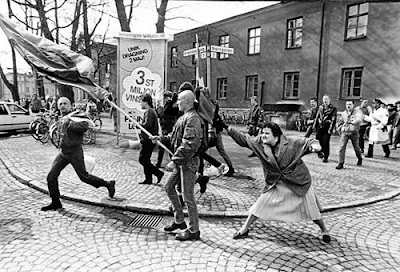
A woman hitting a neo-Nazi with her handbag in Växjö, Sweden, 1985

Hans Runesson: A woman hitting a neo-Nazi with her handbag, Växjö, Sweden, 1985


From The Santa Fe New Mexican Letters to the Editor, July 20, 2022

"A most satisfying photo

The reprint of a 1985 photo by Hans Runesson in a recent Pasatiempo of an elderly Swedish woman slugging a neo-Nazi in the back of the head with her handbag during a rally, is quite possibly the funniest thing I have ever seen. It provoked in me the most extravagant hilarity and happiness. Look at her! She puts her entire body into it. Her face is contorted in a grimace of pure rage. She looks like she is of the generation that actually experienced the real Nazis and knows what these silly, idle, testosterone-laden young boneheads do not know or will not recognize: that all of it was pure hell.

Slugging that young man must have been immensely satisfying. I will admit with only the smallest trace of shame that I wish I could have similarly slugged one of these boneheaded, malevolent and violent Jan. 6 rioters in the back of the head with my handbag. The photo is now on my fridge, to be enjoyed for weeks to come as a sort of counterweight against the hopelessness that befalls me at times these days."


"Imagine A World Without Photojournalism" continues through September 18, 2022

A Pennsylvania man pleaded guilty on Monday to attacking an Associated Press photographer during the Jan. 6, 2021 riot on the U.S. Capitol

Via The Associated Press

July 25, 2022


A Pennsylvania man pleaded guilty on Monday to attacking police officers and an Associated Press photographer during the Jan. 6, 2021 riot on the U.S. Capitol.

In a deal with prosecutors, Alan Byerly, 55, admitted to wielding a stun gun while confronting officers who were trying to protect the Capitol from the angry mob. He also admitted to assaulting AP photographer John Minchillo, who was documenting the chaos and violence outside the building where lawmakers were meeting to certify President Joe Biden’s election victory.


On July 22, photojournalists Nina Berman and David Butow spoke about threats photojournalists are facing. Both photographers covered January 6 at the US Capitol and talked about their experiences during the insurrection riot. View the discussion here on the Monroe Gallery YouTube page.

Sunday, July 24, 2022

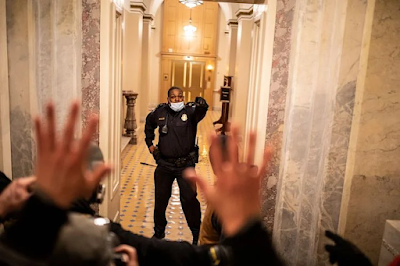
George Eastman Museum Acquires Ashley Gilbertson's Photograph of Office Goodman: The Storming of The Capitol, January 6, 2021


 Eastman Museum 

July/August 2022 Bulletin

"Throughout its history, our institution has collected and exhibited photographs and films that address timely and timeless topics. For example, we have recently acquired the powerful photograph (above) taken by Ashley Gilbertson, who bravely documented the events at the United States Capitol during the insurrection on January 6, 2021."


scan of Eastman Museum July/August 2022 Bulletin announcing acquisition of Ashley Gilbertson's photograph of Office Goodman at US Capiton on January 6, 2021
Ashley Gilbertson (Australian, b. 1978) Officer Eugene Goodman: The Storming of the Capitol, Washington, DC, January 6, 2021. Chromogenic development print, 12 x 18 inches. George Eastman Museum purchase from Monroe Gallery of Photography with funds from the Rusitzky Photograph Endowment Fund. ©Ashley Gilbertson


Friday, July 22, 2022

Photojournalism Under Threat: A Conversation With Photojournalists Nina Berman and David Butow


card announcing talk by Nina Berman and David Butow with image of an Afghan woman in a burqa and a Ukranian woman and child on train

Monroe Gallery of Photography, 112 Don Gaspar, was pleased to host photojournalists Nina Berman and David Butow for an engaging conversation on Friday, July 22,

Across America and throughout the world, photojournalists working to bring the world vital news have come under attack, often from authorities, governments, and groups using violence and repression as a form of censorship. Combined with deliberate misinformation creating public skepticism, the photojournalist’s mission of creating visual moments essential to understanding societal and political change is being threatened.


NINA BERMAN

Nina Berman is a documentary photographer, filmmaker, author and educator. Her wide-ranging work looks at American politics, militarism, post violence trauma and resistance.  Her photographs and videos have been exhibited at more than 100 venues from the security walls of the Za'atari refugee camp to the Whitney Museum of American Art.  She is the author of Purple Hearts – Back from Iraq, (2004) portraits and interviews with wounded American veterans, Homeland, (2008) an examination of the militarization of American life post September 11, and, An autobiography of Miss Wish (2017) a story told with a survivor of sexual violence which was shortlisted for both the Aperture and Arles book prizes. Additional fellowships, awards and grants include:  the New York Foundation for the Arts, the World Press Photo Foundation, Pictures of the Year International, the Open Society Foundation, the Center for Documentary Studies at Duke University, the MIT Knight Science Journalism Fellowship and the Aftermath Project.  She is a Professor at Columbia University Graduate School of Journalism where she directs the photography program. She lives in her hometown of New York City.

DAVID BUTOW

David Butow is a freelance photojournalist whose projects and assignments have taken him to over two dozen countries including Afghanistan, Burma, Iraq, Peru, Yemen and Zimbabwe. His new book, BRINK, chronicles politics in the United States from the 2016 presidential election through the chaos of the Trump presidency, the turmoil of 2020 and concludes with the insurrection and its aftermath at the U.S, Capitol in January 2021.

Born in New York and raised in Dallas, he has a degree in Government from the University of Texas at Austin. After college he moved to Los Angeles and worked in newspapers before beginning a freelance career for magazines in the 1990's. From the mid-90's through the late-2000's he worked as a contract photographer for US News and World Report magazine covering social issues and news events such as post- 9/11 in New York, the Palestinian/Israeli Intifada, the 2003 U.S. invasion of Iraq, the 2019 Hong Kong protests, the funeral of Nelson Mandela, and the death of Pope John Paul II at the Vatican.

Most recently, his photographs from Ukraine and Ulvalde, Texas have been published in Politico, Time, and The New York Times

David's photographs have been shown in numerous exhibitions including the Asia Society NY, the United Nations NY and Visa Pour l'Image in Perpignan, France. His photographs have also appeared in books and magazines worldwide.


Monday, July 18, 2022

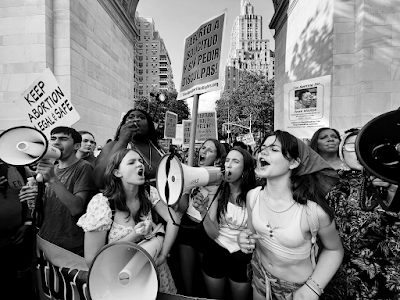
Defend Our Clinics! Photo Story by Nina Berman

 Via Indypendent

Photos by Nina Berman

July 5, 2022

screen shot of Indypendant cover story about pre-choice protest in New York after Supreme Court overturned Roe v. Wade on June 28, 2022

A Planned Parenthood clinic in Lower Manhattan has become a magnet for anti-choice activists who don’t want to stop with Roe’s repeal.

Women who have abortions should get the death penalty,” Beatrice, a pro-life protester, told The Indypendent. She wore a T-shirt that read “Hope is here” and was one of several women protesting outside the downtown Manhattan Health Center on the Saturday morning before the Supreme Court toppled Roe v. Wade. 

While the religious right’s quest for earthly dominion over women’s bodies proceeds undisturbed on this morning, that’s not always the case. On the first Saturday of each month, Witness for Life, an anti-choice group, returns to the same clinic, which is run by Planned Parenthood. They are met by counter-protests organized by NYC For Abortion Rights, a socialist-feminist collective that fights for full abortion and reproductive justice.

The Supreme Court’s ruling in Dobbs v. Mississippi will lead to the outright ban or severe restriction of abortion rights in 22 states that are home to 64 million women and girls, with several more states likely to enact similar laws. It won’t stop there. People who suffer miscarriages or stillbirths could face criminal investigations and those who cross state lines to procure an abortion will be targeted, as will all the people and organizations that help them. Digital surveillance technologies will further the aims of the abortion police in ways that weren’t possible when Roe was decided in 1973.

Meanwhile, New York’s state and local leaders have promised that ours will be a sanctuary state for women seeking abortions and won’t cooperate with out-of-state law enforcement. Mutual aid groups have also vowed to aid those in need. The prospect that anti-choicers, now further emboldened, will step up their protests and harassment outside New York City’s abortion clinics seems likely. If they do, how many of us will be there to greet them? For more, see abortionrights.nyc.


black and white photograph of thousands of abortion rights supporters rallying in Washington Square Park hours after the Supreme Court overturned Roe v. Wade on June 28.
Nina Berman: Thousands of abortion rights supporters rallied in Washington Square Park hours after the Supreme Court overturned Roe v. Wade on June 28.

More photos and full article here

Nina Berman and David Butow will be in discussion about the current threats to photojournalism on Friday, Jul 22 - Zoom registration here.


Sunday, July 17, 2022

Capturing The Front Lines Through The Lens


screen shot of Albuquerque Journal article "Capturing the front lines through the lens" about Monroe Gallery photo exhibition "Imagine A World Without Photojournalism"
Via The Albuquerque Journal

July 17, 2022


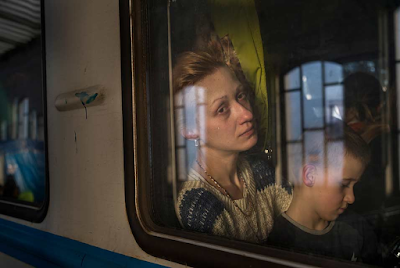
David Butow photograph through train window of Mother a and son leaving Ukraine in March, 2022
Two of the millions of refugees fleeing the war in Ukraine, this woman and her son leave for Poland and a completely unpredictable future. (Courtesy of David Butow)

From the Depression years to the Russian invasion of Ukraine, a human through line weaves among heroism, deprivation, power and oppression.

Open at the Monroe Gallery of Photography, “Imagine a World Without Photojournalism” explores those repeated connections through a roster of 24 photojournalists and 44 prints.

The photographs cover an arc of 20th and 21st century social and political change, from the battles of World War II to the Civil Rights struggles of the 1960s, from the Dust Bowl to the devastation of climate change, from the frenzy of presidential elections to the Jan. 6 insurrection on the U.S. Capitol.

“I think of it as a survey of our 20 years in Santa Fe,” gallery co-owner Michelle Monroe said. “We’re reinforcing the power of being educated by a free press. We’re trying to draw parallels between past events and current events.”

David Butow’s haunting portrait of a Ukrainian woman and her son leaving home for an unknown future in Poland reflects the uncertainty of migrants everywhere.

“It’s the heroism of every day people,” gallery co-owner Sidney Monroe said.

“He was in Ukraine covering the exodus when millions of people were trying to evacuate. He just returned from Uvalde, Texas (the site of the latest school massacre, where a gunman killed 21 people). He was also has covered the aftermath of other tragic school shootings.”


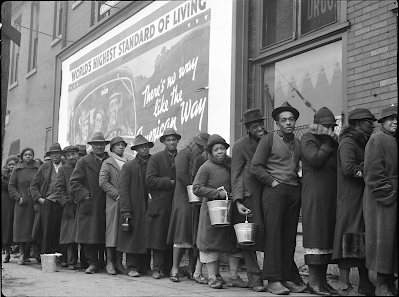
Line of African Americans at a Red Cross relief station in front of billboard that says "There's No Way Like The American Way", following flood in Louisville, Kentucky in 1937

Margaret Bourke-White’s 1936 image of a line of African American flood victims lining up for food and clothing beneath a sign touting the “American Way” reveals her ironic and subversive intent. Similar lines formed during the ravages of COVID-19.


Steve Schaprio’s “Stop Police Killings, Selma March, 1965” could have been taken at a Black Lives Matter march.

African - American woman holding a sign that says "Stop Police Killings" during the Selma March in 1965


“It’s never changed; the concept of an armed occupier,” Michelle Monroe said. “They can’t manage power responsibly.”

A photo of floating Zanzibar primary school students holding empty water jugs leads to the treatment of women, particularly in Muslim countries.

Daily life in the Zanzibar Archipelago centers around the sea, yet the majority of girls who inhabit the islands never acquire even the most fundamental swimming skills. Conservative Islamic culture and the absence of modest swimwear have compelled community leaders to discourage girls from swimming. The rate of drowning on the African continent is the highest in the world. The swimming lessons challenge a patriarchal system that discourages women from pursuing things other than domestic tasks.

“It’s a through line to the oppression of women,” Michelle Monroe said.

color photograph of A lone man stops a column of tanks near Tiananmen Square, 1989 Beijing, China. (Jeff Widener/AP)

Associated Press photographer Jeff Widener captured the iconic photograph of a lone man standing in front of a column of tanks during the Tiananmen Square protests and massacre in 1989 Beijing.


Widener was one of just a handful of photojournalists at the site.

“There were very few that got out with their film,” Michelle Monroe said.

“He hid it and let them take other canisters in his bag to get out,” Sidney said.

“That image is completely forbidden in China now,” he continued. “That whole movement has been erased.”


‘Imagine a World Without Photojournalism’

WHEN: Through Sept. 18

WHERE: Monroe Gallery of Photography, 112 Don Gaspar, Santa Fe

INFO: monroegallery.com


Saturday, July 16, 2022

Confronting “Press Freedom Predators”


Via Nieman Reports

Newsrooms are running a gauntlet of abuse around the world. But the threat is greater than against journalism alone — it’s against democracy itself

'In the United States, once considered a model for press freedom and free speech, press freedom violations are increasing at a troubling rate,” said Reporters Without Borders in this year’s World Press Freedom Index. That index ranked the U.S. 42nd out of 180 countries, an anemic standing for a nation whose origin story is rooted in press rights. The organization attributed the ranking to factors including online abuse of journalists and the unprovoked “harassment, intimidation and assault” reporters endure in the field.  

Moreover, some government officials in the U.S. have played a shameful role in delegitimizing the media at home and abroad, spreading anti-press rhetoric that gives succor to despotic regimes around the world. The term “fake news” is a deadly American export, one used to devastating effect by Vladimir Putin since the start of the Ukrainian invasion. And as Emre Kizilkaya writes, Turkish President Recep Tayyip Erdoğan is using the same language to push through a so-called “disinformation bill” that would represent “an unprecedented attempt to suppress journalism in Turkey.” '


Related: The Human Condition Through The Lens: “One of the challenges journalists are facing is just the outright denial of reality,” he says, adding that some visitors get defensive when confronted with uncomfortable truths.

Threats to Photojournalism, a panel program with photographers Nina Berman and David Butow, 5:30 p.m. July 22

Friday, July 15, 2022

The human condition through the lens

screen shoot of cover of Pasatiempo magazine with photo of women in yellow clothinng emerging from water in Zanzibar


Via Pasatiempo

By Brian Sandford

July 15, 2022


The 44 photos adorning the walls at the Monroe Gallery of Photography offer an unvarnished look at the human condition — tracing an emotional range from tender love to the fallout of hatred.

Many showcase the human spirit’s perseverance through challenges or trauma, while others are provocative reminders of recent history that some people would rather ignore or forget. That’s part of the point of Imagine a World Without Photojournalism, an exhibit that runs through Sept. 18 and includes a selection of art that has been shown throughout the gallery’s 20-year history.

The Monroe Gallery’s exhibit represents about a century of photojournalism. Gallery co-owners and spouses Sid and Michelle Monroe say the exhibit’s photographs were selected based on “individual universal relevance,” with each representing an important subject of social and political history.

In a way, records of historical events were created by painters for hundreds of years, if perhaps with less fidelity to the truth. As a result, accounts of historical events could come years — even centuries — later. The invention of photography in 1826 changed that, opening the door to real-time documentation of events and the work of photographers such as Mathew Brady, who defined our notion of the in-between moments of the Civil War.


A ma backs away as St. Louis County police officers approach him with guns drawn and eventually arrest him in Ferguson, Missouri, on Aug. 11, 2014;

Whitney Curtis, Rashaad Davis, 23, backs away as St. Louis County police officers approach him with guns drawn and eventually arrest him in Ferguson, Missouri, on Aug. 11, 2014; courtesy of Monroe Gallery of Photography


Modern photojournalism, though, began in the mid-1920s with the invention of the Leica, a portable camera using film able to capture movement.

Some photojournalists have gained fame for their work, such as Robert Capa, who documented war and whose photo of chaos on Omaha Beach in France on D-Day is part of the Monroe exhibit. Others are lesser known, despite producing iconic images, such as Eddie Adams. His name might not ring a bell, but his 1968 photo of the street execution of a Viet Cong prisoner in Saigon is an iconic symbol of the brutality of war.

Some of those photos might have been viewed differently had they been taken recently, Sid says.

Human condition on display at photography exhibit

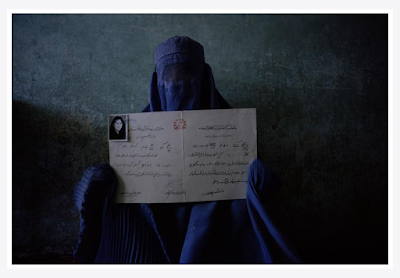
An Afghan Woman in blue burqa holds fer Diploma, Kabul, Afghanistan, 1998

Nina Berman, Afghan Woman with Diploma, Kabul, Afghanistan, 1998; courtesy of Monroe Gallery of Photography

“One of the challenges journalists are facing is just the outright denial of reality,” he says, adding that some visitors get defensive when confronted with uncomfortable truths.

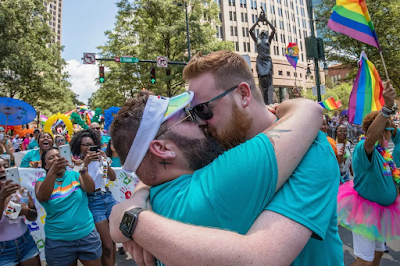
At least one of the images in the exhibit has created a stir elsewhere: A 2019 photo by Grant Baldwin was removed from a public museum in North Carolina in June. It depicts two men kissing at a Pride parade in Charlotte, North Carolina, while people in the background cheer and take pictures.

County Manager Kim Eagle ordered that the photo be removed from the Gaston County Museum, a move backed by at least two county commissioners there.

Men kissing after Mariage proposal at Pride Parade, Aug. 18, 2019

Grant Baldwin, Charlotte, North Carolina, Pride Parade, Aug. 18, 2019; courtesy of Monroe Gallery of Photography


While some images are divisive, Sid says, others are noteworthy for their unifying qualities. He cited as an example the iconic World War II shot of six Marines raising a flag at Iwo Jima, which is included in the Monroe Gallery’s exhibit. Joe Rosenthal captured the image on the Japanese island in 1945.

After the Sept. 11 attacks, “a photographer happened to capture these firefighters who took a flag off a boat that was docked near the towers, and they were putting it up on a column that had survived,” he says. “And then it was immediately seized upon, like, ‘Oh, this is a rally moment for America after 9/11.’ Well, we need [calls to rally]. Because most of these situations require sacrifice. Ukraine requires sacrifice. World War II required sacrifice. And so in order to galvanize the effort, you need that imagery to bring you all together.”

Selecting images for the exhibit wasn’t an easy task.

“You could do an entire museum, like, three floors and 200 pictures, and still not really tell the full story” of photojournalism, Michelle says.

Human condition on display at photography exhibit

A woman hitting a neo-Nazi with her handbag (Vaxjo, Sweden, 1985)


Hans Runesson, A woman hitting a neo-Nazi with her handbag (Vaxjo, Sweden, 1985); courtesy of Monroe Gallery of Photography


Part of that story is simply the power of an image viewed on a white wall, not accompanied by distractions on a computer screen.

“I often ask people in the gallery, ‘I wonder who’s benefiting from us thinking that we can’t be friends even though we think differently?’” she says. “As I like to say to my kids, don’t be an unpaid intern for someone. Because that’s what we’re doing for those people that are benefiting from separating us. We haven’t even examined how we really feel.”

The Monroes don’t aim to influence how others feel, they say.

“There’s never an agenda to the exhibit in terms of a viewpoint,” Sid says. “This is what happened. This is history.” 

Officer Eugene Goodman: facing a crowd, The Storming of The Capitol (Washington, D.C., Jan. 6, 2021)

Ashley Gilbertson, Officer Eugene Goodman: The Storming of The Capitol (Washington, D.C., Jan. 6, 2021); courtesy of Monroe Gallery of Photography

Details

▼ Imagine a World Without Photojournalism

▼ Through Sept. 18

▼ Monroe Gallery of Photography, 112 Don Gaspar Ave.

▼ 505-992-0800, monroegallery.com

▼ Also, “Threats to Photojournalism,” a panel program with photographers Nina Berman and David Butow, 5:30 p.m. July 22, at the gallery or via Zoom. RSVP required
 

Thursday, July 14, 2022

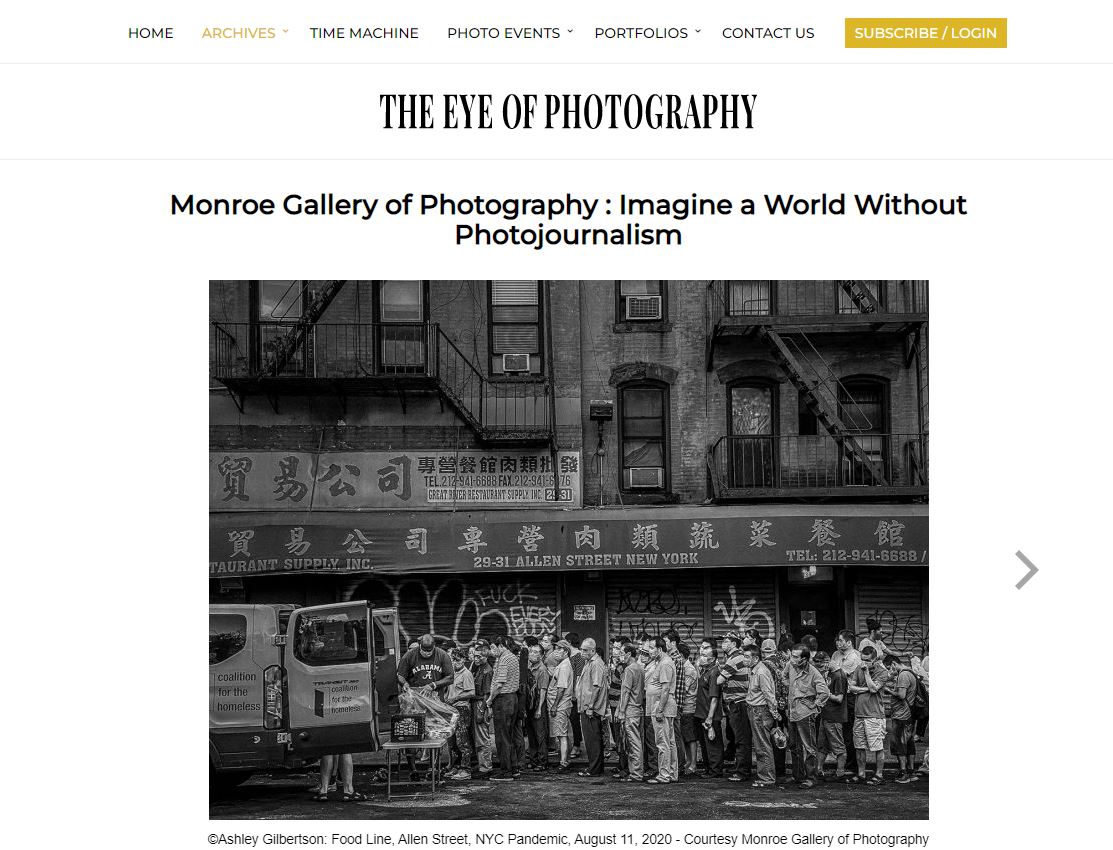
Monroe Gallery of Photography : Imagine a World Without Photojournalism

screen shot of The Eye of Photography article with b/w photo of food line in New York on Allen Street in 20202


July 14, 2022


Monroe Gallery of Photography presents an exhibition celebrating the Gallery’s 20th anniversary in Santa Fe. “Imagine a World Without Photojournalism” is a multi-photojournalist presentation of news events of the 20th and 21st Centuries. (slideshow here)

Across America and throughout the world, photojournalists working to bring the world vital news have come under attack, often from authorities, governments, and groups using violence and repression as a form of censorship. In 2021, there were 141 assaults on journalists in the US according to the US Press Freedom Tracker. Combined with deliberate misinformation creating public skepticism; the decline of newspapers and the “news deserts” that result from newspaper closings, the photojournalist’s mission of creating visual moments essential to understanding societal and political change is being threatened.

For 20 years, Monroe Gallery of Photography has presented exhibitions championing the critical work of photojournalists.

Photojournalism’s work and mission—one that can be put simply as documenting a news event through the medium of photographic images, has arguably become the most essential and enduring news messaging tool, and one that has gained only further traction and relevance in the 21st century. On the occasion of Monroe Gallery of Photography’s 20th anniversary in Santa Fe, we are proud to present an exhibition of photojournalists that we have exhibited throughout the years which span almost 100 years of history.


Imagine a World Without Photojournalism
through September 18, 2022.
112 Don Gaspar
Santa Fe, NM
www.monroegallery.com

A special program with gallery photojournalists Nina Berman and David Butow will be held on Friday, July 22 at 5:30 PM, RSVP required, please contact the Gallery for information.


Wednesday, July 13, 2022

Ashley Gilbertson Photographs of Deforestation of Congo River Basin in NY Times

screen shot of NT Times article with photo of man tending kiln for making charcoal

 Via The New York Times

July 13, 2022

Dionne Searcey and Ashley Gilbertson  reported from the Mpatemata Forest community, in the Democratic Republic of Congo, to understand the far-reaching effects of the charcoal trade on deforestation.


Sunday, July 10, 2022

Morris Museum of Art: Art Now Artist Talk: Ryan Vizzions

 Via The Morris Museum of Art


Woman on horse faces down armed police at Standing Rork protest

           Ryan Vizzions, Defend the Sacred: Standing Rock, Cannon Ball, North Dakota, 2016

Join us for a lecture by Atlanta native, independent photojournalist Ryan Vizzions, who set out on a mission to document the United States while traveling in his van and mobile photo studio. July 14, 2022
Lecture, 6:00 pm; reception, 7:00 p.m. FREE.  Details here.

Friday, July 8, 2022

Gaston County (North Carolina) forced museum to take down a photo of two men kissing; barred mention of Pride Month on its Facebook pages


Via Kara Fohner, The Gaston Gazette

Thu, July 7, 2022 

"Gaston County officials axed a social media post by the Gaston County Museum of Art and History that would have recognized Pride Month.

The decision came around a week before the county forced the museum to take down a photo of two men kissing, according to emails released by the county."

Article continues here

Related coverage here and here


The photograph was ordered removed from the Gaston County Museum exhibit "Into the Darkroom" photography, which, according to the museum, showcases "the evolution of photography, impacts of photography on human history, and highlights local photographers." It is now on exhibit at Monroe Gallery of Photography in the current exhibit "Imagine A World Without Photojournalism", on view through September 18, 2022

Thursday, July 7, 2022

David Butow, Author of the new book "Brink", on panel discussion at Monroe Gallery July 22


Monroe Gallery of Photography

Friday, July 22, 5:30 PM (MDT)

In Person and Online

112 Don Gaspar, Santa Fe, NM 87501


A Panel Discussion with David Butow and Nina Berman:

Threats to Photojournalism

Zoom RSVP here.


On Occasion of Monroe's Gallery 20th Anniversary

For more information go here.


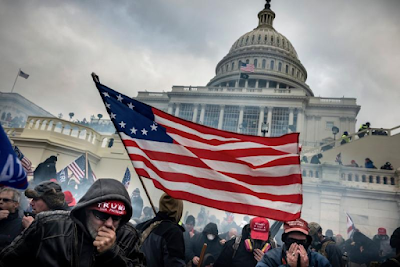
color photograph of supporters of President Donald Trump with American Flag retreating from tear gas at the Capitol, January 6, 2021
January 6, 2021. Supporters of President Donald Trump retreat from tear gas during a battle with Law Enforcement officers on the west steps of the Capitol in Washington during the attack on the day of Joe Biden’s election certification by Congress


From a dingy motel room in the swing state of Michigan, to the Oval Office, BRINK chronicles the dynamics that unfolded during the 2016 presidential election and led, finally, to the insurrection at the U.S. Capitol in January 2021. Photographer David Butow moved from the San Francisco Bay Area to Washington, D.C. in 2017 to document what he knew would be a chaotic time in U.S. politics. “While I expected the incompetence, I underestimated the treachery,” he says in the book’s Endnotes.

“Why make a book of photographs from events that overwhelmed many of us in the last four years? We lived through history minute by minute, so much so that the gravitas of what transpired is apparent only when you step back and see how the whole saga unfolded. As revisionists seek to trivialize or downplay the events of 2016-21, it's critical to maintain a record of just how close the presidency of Donald Trump brought U.S. democracy to the brink of collapse.” 

To buy the book, go to: https://www.davidbutow.com/BRINK/1

image of cover of book "Brink"

Saturday, July 2, 2022

‘It felt like history itself’ – 48 protest photographs that changed the world

 Via The Guardian

July 2, 2022


screenshot of a woman hitting a neo-Nazi demonstrator with her handbag

Hans Runesson's photograph is included in the current exhibition "Imagine A World Without Photojournalism", on view through September 18, 2022

View the full article in The Guardian here.

Imagine a world without photojournalism exhibit Opens, Marks Monroe Gallery's 20th anniversary in Santa Fe

 Via Art Daily

July 2, 2022

color photograph thrugh train window of mother and child leaving Ukraine

David Butow, March 15, 2022. Two of the millions of refugees fleeing the war in Ukraine, this woman and her son leave for Poland and a completely unpredictable future. © David Butow. Courtesy Monroe Gallery of Photography.


SANTA FE, NM.- Monroe Gallery of Photography opened a major exhibition celebrating the Gallery’s 20th anniversary in Santa Fe. “Imagine a World Without Photojournalism” is a multi-photojournalist presentation of news events of the 20th and 21st Centuries. The exhibition will continue through September 18, 2022.

A special program with gallery photojournalists Nina Berman and David Butow will be held on Friday, July 22 at 5:30 PM, RSVP required, please contact the Gallery for information.


Imagine a world without photojournalism

Across America and throughout the world, photojournalists working to bring the world vital news have come under attack, often from authorities, governments, and groups using violence and repression as a form of censorship. Combined with deliberate misinformation creating public skepticism, the photojournalist’s mission of creating visual moments essential to understanding societal and political change may be threatened.

For 20 years, Monroe Gallery of Photography has presented exhibitions championing the critical work of photojournalists.

Photojournalism’s work and mission—one that can be put simply as documenting a news event through the medium of photographic images, has arguably become the most essential and enduring news messaging tool, and one that has gained only further traction and relevance in the 21st century.

On the occasion of Monroe Gallery of Photography’s 20th anniversary in Santa Fe, the gallery presents an exhibition of photojournalists that they have exhibited throughout the years which span almost 100 years of history.

Photographs in the exhibition cover 20th- and 21st- century societal and political change, from the battles of World War II to the Civil Rights struggles of the 1960s, from the frenzy of Presidential campaigns to the January 6 Insurrection on the United States Capitol. The exhibit includes a photograph from the 2019 Charlotte, North Carolina Gay Pride parade that the Gaston County manager ordered removed from a Gaston County museum exhibit on June 15, 2022.

Photographs in this exhibition are universally relevant; they reflect the past, the present, and the changing times. These unforgettable images are imbedded in our collective consciousness; they form a sort of shared visual heritage for the human race, a treasury of significant memories. Many of the photographs featured in this exhibition not only moved the public at the time of their publication, and continue to have an impact today, but set social and political changes in motion, transforming the way we live and think.


NINA BERMAN

Nina Berman is a documentary photographer, filmmaker, author and educator. Her wide-ranging work looks at American politics, militarism, post violence trauma and resistance. Her photographs and videos have been exhibited at more than 100 venues from the security walls of the Za'atari refugee camp to the Whitney Museum of American Art. She is the author of Purple Hearts – Back from Iraq, (2004) portraits and interviews with wounded American veterans, Homeland, (2008) an examination of the militarization of American life post September 11, and, An autobiography of Miss Wish (2017) a story told with a survivor of sexual violence which was shortlisted for both the Aperture and Arles book prizes. Additional fellowships, awards and grants include: the New York Foundation for the Arts, the World Press Photo Foundation, Pictures of the Year International, the Open Society Foundation, the Center for Documentary Studies at Duke University, the MIT Knight Science Journalism Fellowship and the Aftermath Project. She is a Professor at Columbia University Graduate School of Journalism where she directs the photography program. She lives in her hometown of New York City.


DAVID BUTOW

David Butow is a freelance photojournalist whose projects and assignments have taken him to over two dozen countries including Afghanistan, Burma, Iraq, Peru, Yemen and Zimbabwe. His new book, BRINK, chronicles politics in the United States from the 2016 presidential election through the chaos of the Trump presidency, the turmoil of 2020 and concludes with the insurrection and its aftermath at the U.S, Capitol in January 2021.

Born in New York and raised in Dallas, he has a degree in Government from the University of Texas at Austin. After college he moved to Los Angeles and worked in newspapers before beginning a freelance career for magazines in the 1990's. From the mid-90's through the late-2000's he worked as a contract photographer for US News and World Report magazine covering social issues and news events such as post- 9/11 in New York, the Palestinian/Israeli Intifada, the 2003 U.S. invasion of Iraq, the 2019 Hong Kong protests, the funeral of Nelson Mandela, and the death of Pope John Paul II at the Vatican.

Most recently, his photographs from Ukraine and Ulvalde, Texas have been published in Politico, Time, and The New York Times

David's photographs have been shown in numerous exhibitions including the Asia Society NY, the United Nations NY and Visa Pour l'Image in Perpignan, France. They have also appeared in books and magazines worldwide.

Wednesday, June 29, 2022

Monroe Gallery presents the exhibition "Imagine a world without photojournalism"

 Via Visura

June 29, 2022


Graphic text "Imagine" in white on black background


For 20 years, Monroe Gallery of Photography has presented exhibitions championing the critical work of photojournalists.

IMAGINE A WORLD WITHOUT PHOTOJOURNALISM

Exhibit Celebrates Monroe Gallery's 20 Years in Santa Fe

Santa Fe--Monroe Gallery of Photography, 112 Don Gaspar, is pleased to announce a major exhibition celebrating the Gallery’s 20th anniversary in Santa Fe. Opening on Friday, July 1, “Imagine a World Without Photojournalism” is a multi-photojournalist presentation of news events of the 20th and 21st Centuries.  A public reception will occur on Friday, July 1, from 5 – 7 pm. The exhibition will continue through September 18, 2022.

A special program with gallery photojournalists Nina Berman and David Butow will be held on Friday, July 22 at 5:30 PM, RSVP required, please contact the Gallery for information.

Full article here.


Monday, June 27, 2022

The Truth in Tears….

 Via Joe McNally's Blog

June 27, 2022

Navy CPO Graham Jackson as he Plays 'Goin' Home' on the accordion while President Franklin D. Roosevelt's body is carried from The Warm Springs Foundation, where he died suddenly of a stroke on April12, 1945


Ed Clark/Life Picture Collection: Navy CPO Graham Jackson as he Plays 'Goin' Home' on the accordion while President Franklin D. Roosevelt's body is carried from The Warm Springs Foundation, where he died suddenly of a stroke on April12, 1945 Courtesy Monroe Gallery of Photography

One of the proudest associations I have enjoyed in my career is my long time affiliation with the Monroe Gallery in Santa Fe. The gallery represents historically important photojournalism, and Sid and Michelle Monroe are fierce advocates of the importance of photojournalism, and equally fierce defenders of the artists who create the work they show on their walls. They are also amongst the most knowledgeable people in this industry, steeped in the history, legends and lore of this art and craft.

On Friday, July 1, they launch an important exhibit. “Imagine a World Without Photojournalism,” which is a date that coincides with the gallery’s 20th anniversary in Santa Fe. Their walls will simply vibrate with famous, important, provocative, challenging, memorable, sad and glorious slices of our life and times. The images enrich, enrage, dismay, and soothe the soul. Your eyes and heart will never be the same after seeing this collection of work.

Sid and Michelle are dear friends, and they know me well by now. Whenever I sell an image through the gallery, I never ask for the money. I leave it with them, building a bank account over time, at the gallery. When I have enough stashed to afford a print, I choose one. Such as CPO Jackson, above, in the banner photo. I have it on my wall, and see it every day.

Made by the formidable LIFE staffer Ed Clark, it depicts Navy CPO Graham Jackson as he plays “Goin’ Home” on the accordion while President Franklin D. Roosevelt’s body is carried from The Warm Springs Foundation, where he died suddenly of a stroke on April 12, 1945. According to accounts, he had a personal relationship with FDR, thus his grief, so poignantly manifest in this frame, is both about the loss of a leader, and a friend.

The picture is just as searing, relevant and heart wrenching today as it was the day Mr. Jackson was playing that accordion, and Ed Clark clicked a shutter button. Without the hearts and minds of photojournalists, a picture like this doesn’t exist. Without the photographers who are risking their lives in Ukraine, we don’t know and thus can’t feel the weight and horror of the madness raging there.

Photojournalists are often not welcome, as we show, in unflinching fashion, things many don’t want to see or recognize. But visual storytelling is more necessary than ever. As our country devolves into vengeful tribalism, and skepticism flourishes, nourished by unalloyed ignorance, I look at CPO Jackson’s face from long ago. There is truth in the tears.


More tk….

Saturday, June 25, 2022

Collection spotlights photojournalist Ed Kashi’s ‘spontaneous “uncomposition”’

 Via NPAA

June 25, 2022

cover of new Ed Kashi book "Abandoned Moments"


Taking pictures by intuition sounds mystical. How can you make photographs without thinking about composition, focus and adjusting the exposure?

Maybe after enough missteps — the back-focused portrait, an underexposed face, the wrong choice of lens — you can make the right decisions without thinking about them. Think of musicians who learn to adjust for a wrong note and a basketball player who seems to know where the ball is going before the pass is made.

Some photojournalists learn the same kind of automatic reaction. Ed Kashi is one of them.

He calls his new collection of 40 years of photography “Abandoned Moments,” a term he describes as moments “shaped by serendipity and instinct, rather than objectivity and intellect.” Released from the formality and training that direct most of the work of a creative soul, Kashi feels that with less control over his photography his images “may be more certain and more certainly true.”

In his search for truth, Kashi found himself observing life and reacting in a split second, finding serendipity and shaping it.


View Ed Kashi's fine art prints here. Signed copies of "Abandoned Moments" are available from the Gallery.

Sunday, June 19, 2022

Monroe Gallery exhibit looks at history through Life’s photographs

 Via The Albuquerque Journal

By Kathaleen Roberts    June 19, 2022

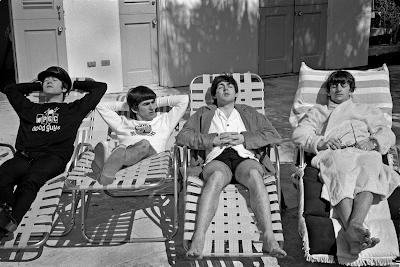
black and white photograph of The Beatles lounging on pool chairs at swimming pool in Miami, 1964

The Beatles, Miami 1964,” at a private residence after their appearance on “The Ed Sullivan Show.” (Courtesy of Bob Gomel)

SANTA FE – When Sidney and Michelle Monroe stepped into the workplace of the great photojournalist Alfred Eisenstaedt decades ago, they were more than intimidated.

“There’s a picture of Hitler and Mussolini shaking hands in his office,” Michelle Monroe said. “We’re not peers.

“Honestly, we could barely catch our breath, we were so star-struck.”

That meeting in New York’s Time-Life building would launch a career of exhibiting some of the most pioneering photojournalists in the country. Monroe Gallery will celebrate the glory days of Life magazine with about 40 images by such photographic luminaries as Eisenstaedt, Margaret Bourke-White, Bob Gomel and Bill Ray through June 26.

Known as the father of photojournalism, Eisenstaedt is best recognized for his image of a sailor kissing a nurse in a dance-like dip during Times Square’s V-J celebration in 1945. When the Monroes approached him, he had never shown his work in a gallery before.

In 1963, Life assigned the photographer a photo essay on life in Paris.

“He didn’t know what he could do that Henri Cartier-Bresson hadn’t done,” Sidney Monroe said.

While he was walking the streets, Eisenstaedt spotted a playground with a puppet show of “St. George and the Dragon.” He crawled under the stage and began shooting the crowd from beneath the drape. The photographer captured the children in the audience, their facial expressions tumbling from delight into fear and horror.

“It’s almost timeless, aside from their clothing, it could be any time,” Sidney said. “It’s a great example of what a photographer does.”

Gomel was already in Miami to shoot the Muhammad Ali-Sonny Liston fight when his editors asked him to photograph the Beatles. The foursome had flown south to relax immediately after their 1964 “Ed Sullivan Show” debut. Gomel shot them sunbathing at a private home.

“The editor of Life was really interested in the world of pop culture,” Sidney said. “The Beatles would sell so many magazines.”

Carl Mydans had been captured by the invading Japanese when the Philippines fell during World War II. He was freed during a prisoner exchange in 1943.

In 1945, Mydans photographed the Japanese formal surrender on the deck of the battleship USS Missouri in front of Gen. Douglas MacArthur.

Mydans had also shot the famous image of MacArthur wading onto a Philippines beach.

“When news came of the formal surrender, it was bedlam,” Sidney Monroe said. Mydans approached a MacArthur aide to make sure he gained entry to the ship.

The photographer captured the iconic moment while he was straddling a cannon. As soon as he shot the photo, a sailor pulled him off.

“The U.S. officials came in wearing their day-to-day khakis, much to the displeasure of the Japanese,” Sidney Monroe said.

Bourke-White was the first photographer hired by Life.

When she photographed Mahatma Gandhi in 1946, he insisted she learn to spin in order to have an audience with him.

“He had no time to digress from his campaign to free India from British oppression,” Sidney said. “She needed him and he knew he needed her.”

Founded by Henry Luce, publisher of Time magazine, Life was long one of the most popular and imitated of American magazines, selling millions of copies a week. Published weekly from 1936 to 1972, it emphasized photography.

“They’re all in their very defining moments,” Sidney Monroe said. “The moments are in our heads because they’re part of our history.”

If you go

WHAT: “The LIFE Photographers”

WHERE: Monroe Gallery of Photography, 112 Don Gaspar, Santa Fe

WHEN: Through June 26

CONTACT: monroegallery.com, 505-992-0800

Saturday, June 18, 2022

Podcast: Photojournalist Grant Balwin on Removal of LBGQT Picture from Exhibit


On episode 60 of the Nooze Hounds podcast, Ryan Pitkin talks to photojournalist Grant Baldwin about a story that made national headlines this week after one his photo of two men kissing was removed from an exhibit at the Gaston County Museum of Art & History at the request of Gaston County Manager Kim Eagle. 

Charlotte photojournalist Grant Baldwin discusses how he found himself at the center of a story that made national headlines this week after a photo he took of two men kissing was removed from an exhibit at a Gaston County history museum.

Listen here


This photograph is included in the Monroe Gallery of Photography exhibit "Imagine A World Without Photojournalism" July 1 - September 18

Photographs in the exhibition cover 20th- and 21st- century societal and political change, from the battles of World War II to the Civil Rights struggles of the 1960s, from the frenzy of Presidential campaigns to the January 6 Insurrection on the United States Capitol. The exhibit includes a photograph from the 2019 Charlotte, North Carolina Gay Pride parade that the Gaston County manager ordered removed from a Gaston County museum exhibit on June 15, 2022.


Thursday, June 16, 2022

"This is just two people protected under the Constitution, and it is seen as suddenly offensive. That's a huge problem."


two men kissing at a 2019 Charlotte Pride event

This photo, shot by freelance photographer Grant Baldwin, was taken down from the Gaston County Museum at the direction of the county manager. 

(Photo: courtesy of Grant Baldwin Photography)

June 15, 2022

Photo removed from Gaston County Museum to be displayed in Santa Fe gallery
Kara Fohner

A gallery in Santa Fe, New Mexico, will display the photograph that the Gaston County manager ordered removed from a museum exhibit.

The photograph, which features two men kissing after one of them proposed at a Charlotte Pride parade in 2019, will be featured in an exhibit titled "Imagine a World Without Photojournalism" at the Monroe Gallery of Photography. The exhibit runs from July 1 to Sept. 29.

Grant Baldwin, the photographer who shot the image, said that he received an email from the gallery owners, Sidney and Michelle Monroe, asking to use the photograph in the exhibit with plans to include an explanation about how it was removed from the photography exhibition at the Gaston County Museum of Art and History.

The photograph was removed from the Gaston County Museum at the order of County Manager Kim Eagle. The county said in a written statement that Eagle reviewed the photograph and told museum staff to work with the photographer to find an alternative photograph to display "that would be more considerate of differing viewpoints in the community." 

The county said that it finds it important that the items the museum shares be "informational without championing political views," according to a statement released by the county Tuesday.

Baldwin, who has been a freelance photojournalist for 11 years, has mixed feelings about the situation. He is sensitive to the impact that the news of the photo's removal may have had on LGBTQ+ individuals in Gaston County, but he is also excited that the photograph seems to have taken on a life of its own. 

"I just feel like, you know, on those occasions when a journalist gets to make something that takes on its own narrative and life, ... that's really great, that excites me. And I feel honored that I got to make a piece of work that's doing that," Baldwin said. "So, as a journalist, I'm excited about what's going on, and I don't mean that in any sort of disrespectful way to the challenges that this poses for the LGBTQ community. I'm not happy with what they're experiencing with this."

Michelle Monroe, one of the co-owners of the Monroe Gallery of Photography, said that she learned the photograph had been removed from the museum exhibit from media reports.

"I'm using the photo for several reasons, but it is also a wonderful photograph. We are a gallery, and you know, we don't just want a photograph with substance. We want a photograph that is well done and beautiful, and tells an important story," she said. "We actually have had other work that would represent the human civil rights of the LGBTQ and decided that we would switch out one of those for this, because this was so current and apparently so threatening that we wanted to champion it."

She said that in terms of the arc of history, some moments are signals, catalysts that ultimately have historical significance.

She said the removal of the photograph from the exhibit is a clear signal that history is moving in the wrong direction.

"This piece of art is simply a photograph, right?" she said. "This is just two people protected under the Constitution, and it is seen as suddenly offensive. That's a huge problem." 

Related Coverage

"It is our understanding that the photograph has already been sent to a gallery in Santa Fe, where the gallery owner, Michelle Monroe of Monroe Gallery of Photography, recognizes that it is a substantial photograph that tells an important story about human civil rights."  -Opinion, Gaston Gazette

N. Carolina county orders museum to remove photo showing same-sex couple kissing to celebrate marriage proposal

NC museum removes LGBTQ Pride photo, sparking outrage

Gaston County Museum pulls gay Pride photo

'It's surreal:' Man shocked his engagement photo at center of Gaston County controversy

When the Moment Occurs – Review of “Abandoned Moments: A Love Letter to Photography” by Ed Kashi

 Via Frames


Ed Kashi calls Abandoned Moments, his new collection, an autobiography, and the distinction is important. In this case, Kashi has curated his own oeuvre to make a statement. -Click to read full review


View Ed Kashi's available prints here.

Wednesday, June 15, 2022

A Sobering Documentary Shows the Fourth Estate Under Strain

 Via Variety

June 14, 2022

Heidi Ewing and Rachel Grady's potent new HBO doc finds frightening evidence of the free press — and democracy — in multinational decline.

By Dennis Harvey


The resurgence of neo-fascist movements and authoritarian rule around the world has unsurprisingly coincided with a ramping-up of hostility against press freedom. Assassinated U.S.-based Saudi journalist Jamal Khashoggi is the most notorious single example, but hundreds in his profession have been murdered in recent years, with many more assaulted, detained, harassed and so forth. Telling the truth has become a dangerous business in an era where politicians now frequently stoke anger towards “fake news,” as they often brand any reportage that doesn’t flatter them. All this is occurring at a time when professional outlets and standards continue to diminish, their existence eroded by competition from newer platforms where opinion and rumor often supplant factual reality.

That escalating crisis gets its pulse taken by “Endangered,” the latest documentary feature by Heidi Ewing and Rachel Grady, whose stellar collaborations to date have tackled diverse subjects from U.S. evangelicals (“Jesus Camp”) to broadcast maverick Norman Lear (“Norman Lear: Just Another Version of You”). Executive produced by Ronan Farrow, this urgent yet admirably cool-headed look at an increasingly heated issue launches on HBO and HBO Max June 28, two weeks after its Tribeca festival premiere.


After an opening-credits montage of meaningful free-press moments in the 20th century’s second half (notably Watergate), we begin meeting the film’s principals. Each is embroiled in covering national politics in a climate where the more conservative leaders and supporters prefer to combat negative stories by “shooting the messenger,” sometimes literally.

In Sao Paolo, newspaper reporter Patricia Campos Mello attends a rally for Brazilian president Jair Bolsonaro, a nationalist strongman who frequently directs his fervent followers’ rage towards the Fourth Estate. Having exposed fraud within his election campaign, she’s been a regular target for his often crudely sexualized attacks: She isn’t kidding when she says, “To half the Brazilian population, I am a whore who trades sex for information.” Finally deciding to sue him for slander in order to “send a message,” she provides “Endangered” with a rare encouraging development here, when the court duly awards her monetary damages.

In Mexico City, purple-haired photojournalist Sashenka Gutierrez is in an even more perilous position, noting “Mexico is one of the most dangerous countries to be a journalist … A lot of my colleagues have disappeared or been killed.” Their casualties are minuscule, however, compared to the estimated 3600 women murdered every year in a nation where misogynistic violence seems to be an epidemic. (That death toll is about twice as many as in the U.S., which has nearly three times the population.) “My mother taught me not to be afraid to tell the truth,” she says, wading with her camera into protests where fed-up women take a stance just as aggressive as the police who arrive in full riot gear to meet them. Despite this brave attitude, however, there’s undeniable tension underlying her daily work. When we see her arrive at home alone at night, we brace for the kind of unpleasant surprise that happens in fictional thrillers.

Such professional peril, more common to war-zone reportage, as yet seems a remote risk Stateside — but that may change. Covering a Black Lives Matter protest after George Floyd’s murder, Miami Herald photographer Carl Juste records the heavy-handed police response, his images becoming evidence as local law enforcement files false reports of their actions. On a similar occasion not long after, cops appear to actively target press persons for harassment, tear-gassing and strong-arm treatment.

Juste and reporter Oliver Laughland, who writes about American politics for the U.K. Guardian, actively feel infrastructure as well as popular support for a free press eroding around them. At Trump rallies, his base (often urged on by the man himself) demonstrate the venomous flipside of their adulation by spewing insults at the journos in the rear. When Laughland asks individuals how they feel about a variably shrinking and biased media landscape, he gets responses ranging from “I’m not gonna buy a newspaper that doesn’t reflect my view” to citing of YouTube videos as a better information source. Such deteriorating relations reach a logical climax when we see January 6 insurrectionists destroying the equipment of media personnel they’ve already forced to flee.

After introducing these main figures at some length, “Endangered” intercuts between them to find increasing parallels, particularly once COVID descends — and far-right voices spread related disinformation. In Mexico City, officials deny an emergency exists even as a hospital worker tells Gutierrez that her facility’s patient death rate is 90 percent. Meanwhile, Bolsonaro lies, “The whole coronavirus thing is a fantasy.”

Framed by an early-1960s U.S. broadcast program exalting the role of a free press in democracy — as specified in the Constitution — “Endangered” views so much open antagonism towards accurate reportage as a dire sign of decreasing institutional accountability in general. Every dictatorship begins in earnest with the forced dissolution of media that doesn’t parrot the administration’s talking points. A fifth major interviewee is Joel Simon, who comments on such trends as executive director (a post he left last year) of the NYC-based watchdog organisation Committee to Protect Journalists. He notes issues that formerly only arose abroad are now relevant here in the States, given rising public distrust towards the profession, and the growth of “news deserts” where no truly local newspapers still exist.

The prognosis looks bleak for “moderators of fact and falsehoods,” as Juste calls fellow journalistic practitioners. But Ewing and Grady deliver that bad news with a tonal emphasis on obstinate resistance, and a briskness that lets the darkening view register without succumbing to hand-wringing or nihilism. The complexity of unfolding events (and of a reporter’s job in interpreting them) is nicely captured by frequent use of split-screen imagery, the clarity of that busy editorial approach abetted by terrifically sharp photography credited to three DPs.

A concise call for awareness towards what’s already a considerable emergency, “Endangered” is too disciplined and focused to simply hit the panic button. But you can tell the filmmakers, like their subjects, are struggling to suppress a scream.


---Exhibition opening July 1 at Monroe Gallery of Photography: Imagine a World Without Photojournalism

Raft by Raft, a Rainforest Loses Its Trees: photographer Ashley Gilbertson traveled 500 miles along the Congo River and its tributaries to explore the forces driving deforestation.

 Via The New York Times

June 14, 2022


screen shot of NT Times web article photo of raft of logs is prepared for a trip down the Congo River


Dionne Searcey, a climate reporter at The New York Times, and photographer Ashley Gilbertson traveled 500 miles along the Congo River and its tributaries to explore the forces driving deforestation.