Showing posts with label September 11. Show all posts

Thursday, September 10, 2026

9/11 25 Years Later: Photojournalist Eric O’Connell recalls being thrust into horror and history after living just a week in NYC

 Via AM New York

September 10, 2026

Eric O’Connell had been living in his apartment on Pearl Street in Lower Manhattan, next to historic Fraunces Tavern, for less than a week when the Sept. 11, 2001, terrorist attacks struck the city. 

As a 33-year-old photojournalist and commercial photographer at that time, he had been working in various parts of the country, teaching and photographing for magazines and advertising stock. Because New York City is the American center of photojournalism, it was only natural for O’Connell to make a new home here. 

Like many others, O’Connell recalls hearing about the first attack on the World Trade Center that day while watching television.

“When the first plane hit the World Trade Center, I saw it on the news – Matt Lauer and Katic Couric were preempted and they showed a picture of the building on fire (the north tower) – may be a Cessna hit it and I said, ‘ok, this is not an accident and my training kicked in,’” O’Connell said from his current home in San Antonio in an interview with this reporter, who had spoken to him for the first time in 25 years. “I grabbed my cameras and ran out the door.”

That’s when he said the metal doors on the building shook; he didn’t realize it at that moment, but that was when the second plane had hit the south tower. “It felt like an earthquake,” he recalled.

Despite having moved to NYC in July, O’Connell was not too familiar with the city. He had just spent July teaching in Italy and all of August in New Mexico teaching art. Nevertheless, he made his way to the World Trade Center, running down Broadway to Liberty Street, passing the black tombstone-like Deutsche Bank building.

Then O’Connell came upon the grotesque scene of horror: A piece of plane fuselage on a parking lot across from the south tower. A chunk of steel from the plane pierced the hood of a car. Gruesome body parts were scattered.

Then came the unthinkable: Jumpers.

“They (firefighters) were coming across the parking lot, and then I heard it. I saw something out of corner of eye; it finally registered that a body was falling,” O’Connell recalled. “Then I saw these guys running. Firefighters were dragging him, a firefighter hit by debris. I didn’t know at the time that a body had hit him.”

O’Connell had witnessed what this reporter had seen while covering that fateful morning: Firefighter Danny Suhr struck by a jumper. He ran around the corner and snapped a picture of him being removed in front of 90 West St. He then shot a few frames of St. Nicholas Greek Orthodox Church.

“I was standing on the corner (of Liberty Street) where there was scaffolding and I thought, ‘Okay, this is barely safe – things were falling out of the sky,’” he recalled. “I took a picture of the church from the corner, and my instinct was that there was extreme danger. There were two cops there, one a female, and we didn’t know where to go.”

O’Connell had witnessed what this reporter had seen while covering that fateful morning: Firefighter Danny Suhr struck by a jumper. He ran around the corner and snapped a picture of him being removed in front of 90 West St. He then shot a few frames of St. Nicholas Greek Orthodox Church.

“I was standing on the corner (of Liberty Street) where there was scaffolding and I thought, ‘Okay, this is barely safe – things were falling out of the sky,’” he recalled. “I took a picture of the church from the corner, and my instinct was that there was extreme danger. There were two cops there, one a female, and we didn’t know where to go.”


black and white photograph looking up at burning World Trade Center with St. Nicholas Church in foreground, Sept. 11, 2001
Eric O'Connell: Greek Orthodox Church and Towers, September 11, 2001

“Then we heard the rumble; we knew the building was falling and someone yelled, ‘Run!’” O’Connell recalled. “The female cop screamed, ‘In here!’ I chose to dive in, turned left and curled up in a ball.”

O’Connell had grown up in the southwest U.S., where his community sometimes suffered tornadoes. As the south tower fell, he remembered the advice his mother gave him when a twister approached: Get into the corner. 

“I headed to the wall, and the impact threw me in the air,” he recalled. “I remember thinking to myself, ‘Please let it be quick.'”

As soon as the rumble of the collapse stopped, “only 10 seconds, I was sitting on my ankles with knees bent thinking maybe the building is on fire and I might die from the smoke,” he said. “I felt like I had three inches of talcum powder on my face. Then I heard a woman’s voice say, “We can get out here.’ I also heard another voice say, ‘Over here.’”

He could not tell where the doorway was at first, the entrance to Liberty Street completely blocked by debris. Instinctively, he unscrewed the dust-filled filter from his camera and took a few photos, capturing a female police officer and in the background with this reporter.”


black and white photograph of a group of people with a policewoman using a flashlight in dust of fallen World Trade Center on Sept. 11, 2001

Eric O'Connell: The crowd, September 11, 2001

Once outside of the building, the street was dark and filled with dust. He made an important life choice.

“My early influences were all those journalism guys, like James Nachway and Anthony Suau (both famed war photographers), and I thought, ‘I’m not a Nachway or a Suau – I’m not a war photog,’” he said. “So I had a choice to turn right or left, and I turned left. I didn’t want to be one of those people.”

O’Connell then photographed a man in a dust-coated business suit. He took a picture of O’Connell with an instant camera next to an MTA bus. Then he made a joke that “disgusted” O’Connell. “Who do we sue?” the man had quipped.

O’Connell kept walking south and ran into an abandoned hot dog cart.

“I grabbed a water and as soon as I did, a different female cop put her hand on my shoulder, pulled me towards her and said, ‘you need to wash your face,’ so she dragged me to a water fountain, and she pressed the button for me. She then disappeared and I kept walking.”

He said a few guys had a transistor radio on top of car, listening to the news. He said he thought about the movie “Red Dawn,” and thought about the country being under attack as happened in the film.

By the time he made it to Battery Park, he turned back when he heard another rumble, and “I saw an enormous cloud of dust and smoke,” the collapse of the north tower.

“I started to understand what may have happened, but I just didn’t know what to do so I went home, (to his apartment on Pearl Street) and I saw the pictures on television. I took my clothes off. I knew my life had changed forever,” he said.

After cleaning up, he went back out and walked a woman across the Brooklyn Bridge; “she was terrified to walk across,” O’Connell recalled. He went to a friend’s house in Brooklyn to get food and some sleep.

“I tried to sleep but I kept waking up because I was having a nightmare of falling – I’d He brought his processed film to Time Magazine the next day, but because he had shot it on black-and-white film, they weren’t interested. He later sold the images to CNN and “60 Minutes” and gave and St. Nicholas Greek Orthodox Church — which had been destroyed in the Twin Towers’ collapse — a photo to help them raise money to rebuild.

photographer Eric O'Connell stands near his framed photograph from Sept. 11, 2002 at and exhibition at Monroe Gallery in Santa Fe

Eric O’Connell showing photos in an exhibit in 2021 at Monroe Gallery of Photography for the 20th anniversary of 9/11. Photo shows last picture of the Greek Orthodox Church crushed in the collapse.

(Photo Courtesy of Eric O’Connell)

O’Connell said he sometimes regrets not having done more on that “historic moment.” But he was also suffering from post-traumatic stress disorder that so many also experienced. He never returned to the site: “I couldn’t even go down there.” He said he didn’t leave Manhattan for a year.

“I was scared to leave – didn’t think I could come back – I was in a red zone, and so when I finally did leave, I’d make sure to take my insurance card, or utility bill, to show where I lived. I was just angry about stuff – I had just moved to New York City,” he said. “I chose to turn my back on it; I didn’t have that connection to all those people – I only had a few friends.” 

Now living in San Antonio, he continues to work as a photographer, but also works part-time for Parks and Recreation and rides his bike on the greenways, “like the West Side Highway along the river.”

One of the guys he rides with is a retired NYPD officer, “the only person he knows who speaks about 9/11.”


Exhibit: 9/11 In Remembrance

City of Santa Fe 25th Remembrance Ceremony for September 11

 Via The City of Santa Fe


25th Remembrance Ceremony for September 11

Friday, September 11, 2026 | 10 a.m.

City Hall | 200 Lincoln Avenue


Twenty-five years ago, 343 of the firefighters who answered the call at the World Trade Center never made it home. On Friday, September 11, we remember them not only for the sacrifice they made, but for the courage and commitment to others they showed that day.

The community is invited to join the City of Santa Fe and the Santa Fe Fire Department for the annual September 11 Remembrance Ceremony at City Hall.

The morning will include a stair climb, a fire engine procession from Station 1 to City Hall, music from the Santa Fe Firefighters Pipes & Drums, and a tribute from the Honor Guard. Together, we will remember the lives lost, honor the first responders who answered the call, and stand in unity as a community.

Schedule

6:46 a.m. – Firefighters stand guard at the empty table in front of City Hall

8 a.m. – Stair steppers arrive at City Hall

8:46 a.m. – Stair steppers begin climbing

9:25 a.m. – Procession from Station 1 to City Hall

10 a.m. – Remembrance ceremony begins


Visit the Monroe Gallery Pop Up exhibit 9/11 In Remembrance, on view through September 13, 2026

Tuesday, September 8, 2026

When The Faces of Ground Zero Giant Polaroids Came To Santa Fe


installation photograph of Gaves of Ground Zero Giant Polaroids at 9/11 museum


As the 25th anniversary of 9/11 nears, Joe McNally will be sharing the story behind his powerful portraits of 272 lives changed by 9/11. The Faces of Ground Zero, which are life-sized, giant Polaroids, was created by photographer Joe McNally in the immediate aftermath of the tragedy. Working out of a special studio housing the camera, a highly specialized instrument, he photographed 272 people whose lives intersected in profound fashion with 9/11.

Firefighters, police officers, medical personnel, iron workers, volunteers, families—all came to the camera to have their story told in pictures and their own words. The Giant Polaroids, framed, stand roughly 9 feet tall and 4 feet wide. They toured the US and internationally, became a book, and assisted in raising approximately $2 million for the 9/11 relief efforts.

The project is now on view, installed permanently in the 9/11 Memorial Museum

On September 10 at 5pm EDT Joe McNally will be at Adorama in a special appearance to discuss the creation of this project, and the emotional story of how these pictures were made. Reserve a spot here, watch on YouTube here.

In 2014, Monroe Gallery was honored to present a selection of The Faces of Ground Zero Giant Polaroids in a retrospective exhibition of Joe McNally's career.


photograph of large wooden crate containing Gian Polaroids being brought into Monroe Gallery entrance


installation photograph of large wood crate containing Gian Polaroids being positioned insiide Monroe Gallery


Wednesday, September 2, 2026

9/11 In Remembrance 25 Years Later


color photograph of sun-reflecting from the World trade Center Towers in 1979


Monroe Gallery of Photography announces a special Pop Up exhibition of photographs commemorating the 25th anniversary of the terrorist attacks on the World Trade Center that became known as 9/11. The Pop Up is at Monroe Gallery, 112 Don Gaspar Avenue September 9-13, 2026.

Every year since 2001 solemn ceremonies are held to remember the many that lost their lives, the families whose lives were changed forever, and the selfless first responders who performed heroically on that day, and for days after, in the search for survivors.


black and white photograph of 3 weary FDNY Firemen looking up towards the burinng World Trade center amongst debris on the street, Sept 11, 2001

Shepard Sherbell: Firemen on scene of the terrorist attack on World Trade Center, September 11, 2001


The twin towers design process started in 1965 and construction began in 1972. The twin towers were the tallest buildings in the world for a very short time. Photographs in the exhibit document the construction of the World Trade Center, its prominence in the skyline of Manhattan, and the devastation of September 11, 2001

Sidney and Michelle Monroe relocated their family and Gallery from New York City to Santa Fe shortly after 9/11. This exhibit is a remembrance of the World Trade Center, fellow New Yorkers, and the countless lives affected on that day.


Monday, August 31, 2026

Joe McNally - Faces of Ground Zero: 25 Years Later


Via Adorama


Joe McNally shares the story behind his powerful portraits of 272 lives changed by 9/11
Adorama, New York, NY
Thursday, September 10  •  5 PM - 6 PM

Please join us for a very special night in honor of the 25th Anniversary of 9/11.

The Faces of Ground Zero, which are life-sized, giant Polaroids, was created by photographer Joe McNally in the immediate aftermath of the tragedy. Working out of a special studio housing the camera, a highly specialized instrument, he photographed 272 people whose lives intersected in profound fashion with 9/11.

Firefighters, police officers, medical personnel, iron workers, volunteers, families—all came to the camera to have their story told in pictures and their own words. The Giant Polaroids, framed, stand roughly 9 feet tall and 4 feet wide. They toured the US and internationally, became a book, and assisted in raising approximately $2 million for the 9/11 relief efforts.

The project is now on view, installed permanently in the 9/11 Memorial Museum, but for one night only, join us in-store to see a limited amount of the giant Polaroids up close!

photograph showing Faces of Ground Zero Giant Polaroid installation


On the 25th Anniversay Joe McNally will be at Adorama in a special appearance to discuss the creation of this project, and the emotional story of how these pictures were made.


Joe McNally is an internationally acclaimed, award-winning photographer whose prolific career includes assignments in nearly 70 countries. McNally is often described as: Authentic, articulate, an exceptional technical photographer whose varied skill set means he is called upon often for the “unusual” or “challenging” job. But no job is too big or too small for McNally because he loves photographing anything or anyone interesting in front of his lens.

He is also known world-wide for his unmatched visual creativeness and extraordinary imagination. He is calm under pressure and excels in the field whether it is a portrait of a celebrity or corporate CEO to an unwieldy fashion shoot with a crew of 60.

Joe McNally’s credit list includes 5 covers of the National Geographic, (amongst an overall 15 coverages for the magazine), 7 Covers of Life Magazine and 4 successful Olympic coverages as he looks ahead to number 5 with Paris 2024 approaching. McNally has also climbed the Empire State Building 4x and the Burj Khalifa tower 2x. A proud Nikon Ambassador, he is the rare photographer to make the bridge between photojournalism and commercial photography and has the distinct ability to come away with a photograph no matter the twist or turns he might encounter on assignment.

Monday, August 24, 2026

The Woman Guiding Tourists Through New York City’s Worst Day

 Via the New York Times

August 24, 2026


"The tour begins outside a Burger King on Liberty Street in Lower Manhattan, and the guide explains why. People forget that this was commandeered by the police on Sept. 11, 2001, as a staging area amid the chaos, “NYPD Temp HQ” spray-painted over the front door.

What follows is a very specific narrative of the events of that day as told by a very specific guide, Christina Stanton, who lived it firsthand. She continues to watch it unfold, 25 years on.....

Why keep reliving that?

Because.

Because the boat rescue is praised as the largest maritime evacuation in the country’s history — it has been called the “American Dunkirk” — and there is a documentary about it narrated by Tom Hanks, and yet few on her tours seem to have heard of it.

Because not everyone realizes that the number of illnesses and deaths linked to the attacks continues to grow, far surpassing the number of people who died that day.

Because, surrounded by plaques and statues and the reflecting pools and the broken hull of that huge metal Sphere, she, too, is a memorial."


Related exhibition: 9/11 - In Remembrance

Thursday, August 20, 2026

PROJECTIONS 9/11 - 25 YEARS COMMEMORATION

 Via Projections


SAVE THE DATE: PROJECTIONS

9/11 - 25 YEARS COMMEMORATION

BEFORE HISTORY WAS WRITTEN, IT WAS PHOTOGRAPHED


September 6–11, 2026
Live Worldwide via Zoom • 7:00 p.m. EST

Twenty-five years after September 11, 2001, PROJECTIONS brings together 35+ photographers, editors, and visual journalists whose images documented the attacks and shaped how the world understood them.

Across six nights, photographers who covered the World Trade Center, the Pentagon, Shanksville, and the White House will share firsthand accounts of that extraordinary day and its aftermath.

Now the witnesses return to tell the stories behind the images that became history.

Among the confirmed presenters:

• Joel Meyerowitz • Peter Turnley • David Hume Kennerly • Steve McCurry • David Friend • MaryAnne Golon • Ruth Fremson • Jennifer S. Altman • Thomas Dallal • David Handschuh • Jim Lowney • Ron Haviv • Mark Edward Harris • Stan Honda • Mario Tama • Jose Jimenez-Tirado • Pete Souza • Rabbi Irwin Kula • Jeff Swensen • Robert Clark • Matthew McDermott • Gary Suson • Todd Maisel • Gulnara Samoilva • Lori Grinker • Thomas Franklin • Jason Florio • Lyle Owerko • Eric Draper • Spencer Platt • Shannon Stapleton • Phil Penman • Lauren Walsh • Susan Watts • Todd Maisel

The programs will be recorded and permanently archived by PROJECTIONS as an educational resource for future generations.

Join us…

September 6–11, 2026
7:00 p.m. EST each evening
Live Worldwide via Zoom


Related Exhibit: 9/11 - In Remembrance

Sunday, September 5, 2021

Photography exhibit looks at the World Trade Center before and after 9/11


Via The Albuquerque Journal

By Kathaleen Roberts

September 5, 2021

Iconic symbols of the New York skyline, the World Trade Center gleamed like golden towers in the sunset, then smoked and fell with the devastation of 9/11.

Such was the cycle of life for what had been once the tallest buildings in the world.

Black and white photograph of the Greek Orthodox Church and Towers, by Eric O’Connell, September 11, 2001
“Greek Orthodox Church and Towers,” by Eric O’Connell, September 11, 2001

Santa Fe’s Monroe Gallery of Photography is commemorating the 20th anniversary of that fateful day with “9/11 In Remembrance,” an exhibit of more than 20 images. The photographs document the design and building of the World Trade Center, its reign over the city skyline and its fall on that crisp September day.

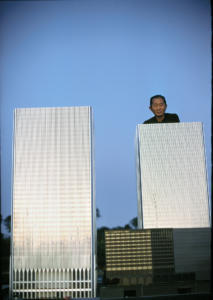
World War II and lifestyle photographer Tony Vaccaro captured the towers during a 1979 sunset, as well as their architect, Minoru Yamasaki, in 1969.

Yamasaki’s preference for “aesthetic thinness” surfaced in the narrow spacing of the buildings’ windows and the vertical patterning created by aluminum alloy sheathing. When construction ended in 1976, it garnered scant praise, but the skyscrapers became symbolic of the Manhattan skyline.

When terrorists struck 25 years later, freelance photographer Eric O’Connell had just moved to New York from San Francisco. He saw the burning towers, heard a rumble and grabbed his cameras and ran toward the flames. He got to the St. Nicholas Greek Orthodox Church as everything exploded around him. When the pounding stopped, he didn’t know if he was dead or alive.

O’Connell’s print shows both the towers and the church being swallowed by smoke and flames.

“He heard people yelling, ‘It’s coming down!’ and he dove into a lobby,” gallery co-owner Michelle Monroe said. “He couldn’t tell what was inside and what was outside. It looks like a horror movie.”

O’Connell also captured the chaos and confusion of people engulfed in ash and dust in “The group in dust, West Street, September 11, 2001.”


Black and white photograph of survivors in dust, Wall Street, by Eric O’Connell, September 11.
“The group in dust, Wall Street,” by Eric O’Connell, September 11.


Black and white photograph of 3 NY Firemen at scene of Terrorist attack on the World Trade Center, September 11, 2001
“Firemen on the scene of the terrorist attack on World Trade Center,” by Shepard Sherbell, September 11, 2001.

Shepard Sherbell photographed a horrified trio of firemen watching the collapse.

“There were 8 million faces that looked like that for weeks afterward,” Sidney said.


Color photograph of the  Twin Towers in sunset, New York by Tony Vaccaro, 1979


Twin Towers in sunset, New York,” by Tony Vaccaro, 1979.

“They shut down all the traffic in Manhattan,” Michelle Monroe added. “They designated streets as one-way for emergency responders. New Yorkers would line the streets as the shifts changed.”

The crowd applauded, waved signs of support and gave out water bottles and flowers, echoing the pandemic’s spontaneous salutes to first responders. Black bunting draped every firehouse, honoring the firefighters who died.

“Every firehouse was a shrine,” Sidney Monroe said.

New Mexico’s Eric Draper photographed President George W. Bush on the phone in a Florida classroom when he learned of the attack. Draper was the president’s personal photographer.


Color photo of Deputy Assistant Dan Bartlett pointing to news footage of the World Trade Center, President George W. Bush gathers information about the attack Tuesday, Sept. 11, 2001, from a classroom at Emma E. Booker Elementary School in Sarasota, Fla

As Deputy Assistant Dan Bartlett points to news footage of the World Trade Center, President George W. Bush gathers information about the attack Tuesday, Sept. 11, 2001, from a classroom at Emma E. Booker Elementary School in Sarasota, Fla. Eric Draper  (Courtesy of Monroe Gallery of Photography)


“He was reading books to a kindergarten class,” Sidney Monroe said. “They set up an office in one of the school rooms, then they whisked him out on Air Force One and flew around until they figured out what was going on.”


In their own words

As former New Yorkers, 20 years later Sidney and Michelle Monroe still struggle with the anniversary of Sept. 11, 2001.

Their gallery stood nine blocks north of what became Ground Zero. The National Guard cut off the neighborhood, closing their business. Their daughter was 9 years old.

“Our daughter was in school,” Sidney Monroe said. “They had a recess period before the school started. They saw the plane flying over their playground.”

The school staff rushed the children into some old fallout shelters. Afterward, Japanese school children sent them 1,000 teddy bears.

“Our daughter will never, never be the same,” Michelle Monroe said.

The fires were still burning when the gallery reopened.

“You’d look out the window and there would be ash falling,” Sidney Monroe said. “It was surreal.”

The couple decided to move to Santa Fe because of its status as either the second or third most active art market in the country, depending on the source.

“It’s a dreadful, dreadful anniversary, but there were so many people who ran into the mouth of hell,” Michelle Monroe said. “We don’t do anything that day. We just say, ‘Let’s get it over with.’ I don’t think anyone stopped crying for a couple of weeks.”


color photograph of Minoru Yamasaki, World Trade Center Architect with model of the buildings by Tony Vaccaro, 1969.

“Minoru Yamasaki, World Trade Center Architect,” by Tony Vaccaro, 1969


If you go

WHAT: “9/11 In Remembrance”

WHERE: Monroe Gallery of Photography, 112 Don Gaspar Ave., Santa Fe

WHEN: Through Sept. 26

CONTACT: monroegallery.com, 505-992-0800


Friday, August 30, 2013

"This is the icon of the century, this flag”


Firefighters at Ground Zero, Sept. 11, 2001<br>© Bergen Record
Firefighters at Ground Zero, Sept. 11, 2001
© Bergen Record


Via CNN


‘THE FLAG’ Pursues the Mystery of a Missing 9/11 Icon


The First Commissioned CNN FILMS Documentary Debuts Wednesday, September 4
 
The first original production commissioned for CNN FILMS, THE FLAG, directed by Michael Tucker and Petra Epperlein, follows the mysterious journey of the American flag featured in one of the most iconic photographs taken at the World Trade Center on September 11, 2001. The 90-minute film is based upon the forthcoming book by David Friend, Vanity Fair’s editor of creative development and formerly LIFE magazine’s director of photography (The Flag, August 27), and will debut Wednesday, September 4, at 9:00pm, 10:30pm, and 1:00am. All times Eastern.

A vibrant American flag, flying from the back of a boat moored very near the Twin Towers, managed to survive the destruction of the World Trade Center 12 years ago. Someone removed the flag from the boat on September 11th. Thomas Franklin, a photographer for the New Jersey newspaper The Record, took a searing photograph of that flag as it was raised by three fire fighters above the smoldering rubble on the evening of the terrorist attacks. That image immediately became one of the archetypical photographs of the disaster.

Shortly after the iconic photo was taken, the whereabouts of the original flag became a mystery. Who would keep it – and why?

The flag that toured the country to reassure the nation, flew over Yankee Stadium as a patriotic rebuke to terrorism, and flew over the USS Roosevelt as the battleship carried troops to Afghanistan in response to the attacks, was represented as the same flag that was raised at Ground Zero. It turns out the original flag disappeared shortly after it was photographed.

Tucker and Epperlein interviewed the owners of the original flag, Shirley Dreifus and Spiros Kopelakis. They reveal key details about their flag that distinguish it from the imposter.

“That’s not the flag that they raised on 9/11. The flag that went to Yankee Stadium, or was on the ship [the USS Roosevelt], could not have been the flag that was in the photograph,” Dreifus says in the documentary.

Former New York City Mayor Rudolph Giuliani, as well as fire fighters, police officers, photographers who were at Ground Zero, the makers of the flag, editors who used the Franklin photograph, and others, all speak about their memories of that day for the documentary. Each discusses also his memories of the famous flag.

“I see the rebuilding starting with that photograph,” Giuliani says. “That was the moment on which, these three fire fighters, speaking for all New Yorkers – and all Americans – said: ‘Enough is enough. We’re going to fight back.’”

Tucker and Epperlein try to solve the mystery of the flag’s journey. Along the way, their interviews with key eyewitnesses from 9/11 reveal moving insights into the tragedy – and, highlight the enduring power that imagery holds for healing and national reconciliation that, for some, the original flag still represents.

“This is the icon of the century, this flag,” Kopelakis says emphatically, “and it is not any excuse, from any politician, not to try to find this flag.”

THE FLAG will encore on Sunday, September 8 at 9:00pm, 10:30pm, 1:00am, and 2:30am, and will broadcast again on Wednesday, September 11 at the same Eastern times.

As an original production for CNN FILMS, THE FLAG will air exclusively on CNN. It is the fourth CNN FILMS broadcast. ESCAPE FIRE, GIRL RISING, and OUR NIXON debuted earlier this year. CNN FILMS will mark its first anniversary in October 2013.

About CNN FILMS
CNN Films brings documentaries beyond the small screen by developing strategic partnerships to leverage distribution opportunities at film festivals and in theaters. Amy Entelis, senior vice president of talent and content development for CNN Worldwide, and Vinnie Malhotra, senior vice president of development and acquisitions for CNN Worldwide, oversee the acquisition strategy of documentaries for CNN Films. Malhotra manages the day-to-day operation of CNN Films, and works directly with filmmakers to develop original projects.
About CNN

CNN Worldwide is a portfolio of two dozen news and information services across cable, satellite, radio, wireless devices and the Internet in more than 200 countries and territories worldwide. Domestically, CNN reaches more individuals on television, the web and mobile devices than any other cable TV news organization in the United States; internationally, CNN is the most widely distributed news channel reaching more than 271 million households abroad; and CNN Digital is a top network for online news, mobile news and social media. Additionally, CNN Newsource is the world’s most extensively utilized news service partnering with hundreds of local and international news organizations around the world. CNN is division of Turner Broadcasting System, Inc., a Time Warner Company.

Wednesday, September 7, 2011

9.11.01 - 9.11.11


World Trade Center and Washington Square Arch, New York, 1998
Carolyn Schaefer: World Trade Center and Washington Square Arch, New York, 1998


Earlier this week, The New York Times ran an article titled  "Media Strive to Cover 9/11 Without Seeming to Exploit a Tragedy".  "There’s no precedent for something like this,” said Lawrence C. Burstein, the publisher of New York magazine. There has been debate about how the anniversary should be covered. Should it be left to great thinkers and elegant writers to define what the attacks have meant for the country? Or are Americans better served by the accounts of those who experienced the attacks first-hand?"

We relocated from New York City to Santa Fe in January, 2002. Our list of recommended posts (so far):

CNN: Witness to history: White House photographer Eric Draper and the images of 9/11

New York Times Interactive: The Reckoning: America and The World A Decade After 9/11

Wall Street Journal: A Decade After 9/11


New York Daily News: 9/11 Ten Years Later

La Lettre de la Photographie: Archives 9/11

BBC: 9/11 Ten Tears On

VII Photo Agency: 9/11Remembered

POP Photo: 9/11: The Photographers' Stories, Part 1—"Get Down Here. Now."
  
The New Yorker Photo Booth: Ten Years Later

Shutter Photo: 10 Years After 9/11: The Importance of Photojournalism

The Atlantic: September 11: A Story About the History of Digital Photography

Time LightBox: Stephane Sednaoui: 9/11 Search and Rescue

Time Light Box: Twin Towers and the Metropolis: 1970-2011

Time Light Box: Revisiting 9/11: Unpublished Photos by James Nachtwey

Time Light Box:  Flight 93 and Shanksville, Pa: The Forgotten Part of 9/11

Time Light Box: Photo Editors On 9/11: The Photographs That Moved Them Most

David Schonauer: Icons, The 9/11 Series Part One
                              Part Two
                              Part Three
                              Part Four

The Washington Times: Special Section: Sept. 11


The Telegraph: The 9/11 Picture I'll Never Forget (But Wish I Could)

The Guardian: The 9/11 Decade

CBS New York: Remembering 9/11/01 Ten Years Later
(including archive of live newsradio broadcasts)

Photographers revisit 9/11: 'It was that horrific'

Magnum: Susan Meiselas: Ground Zero Artifacts and Construction

Joe McNally: "Like many New York based shooters, I had a bit of a love fest with the World Trade Centers"

Richard Falco: September 11 - To Bear Witness

International Center of Photography: Remembering 9/11
(Including a full list of 9/11 exhibitions and events in New York with locations)

Related: The Newseum has 147 newspaper front pages from 19 countries published on September 12, 2001

Tuesday, September 6, 2011

Photographers revisit 9/11; 'It was that horrific'


Firefighters at Ground Zero, Sept. 11, 2001<br>© Bergen Record
Firefighters at Ground Zero, Sept. 11, 2001
© Bergen Record
Via msnbc Photo Blog

In his new documentary "Witness to History," photojournalist Thomas Franklin revisits 9/11 through the eyes - and lenses - of photojournalists who captured iconic photos that day.


When Tom Franklin, photojournalist for The Record newspaper in New Jersey, took the picture showing three firemen raising the American flag above the rubble of the World Trade Center on Sept. 11, 2001, he had no idea it would become an iconic image.

“It was something that just happened,” he said. “I shot it the best way I could and I moved on.”

Franklin said he was standing about 30 yards away from the three firefighters, and the photo was one of a series of frames he shot of them that fateful afternoon.

On the 10-year anniversary of 9/11, Franklin - now a multimedia editor for NorthJersey.com - revisits the day of the attacks in a new documentary about the iconic photos of the day and the photojournalists who captured them. Franklin says photographers played an important role in documenting the historic day.

“I hope a lot of people get to see [the documentary],” he told msnbc.com. “It’s a way of recognizing what journalists do.”

Featuring dramatic images of 9/11, the 13-minute documentary “Witness to History” looks behind the lenses of professional photographers such as David Handschuh of the New York Daily News and Aris Economopoulos of the New Jersey Star-Ledger, and accidental witnesses such as Carmen Taylor, who happened to be visiting New York from Arkansas that day.

Taylor, who was on vacation by herself, told Franklin she would have been screaming if she hadn’t been busy taking photos.

While iconic, most of the images from that day are stirring, if not shocking. Franklin argues there is real value in retelling what happened, particularly because of the horror of the events.

“9/11 was that bad,” he said. “It was that horrific.”

Watch the entire documentary here, and watch Thomas Franklin explain how he got the iconic image of the firemen raising the American flag.


Thomas Franklin's photograph of Firefighters at Ground Zero, Sept. 11, 2001 is included in the exhibition "History's Big Picture" at Monroe Gallery of Photography through September 25, 2011.

Thursday, August 25, 2011

An Evening with White House Photographer Eric Draper

Emma Booker Elementary School. Sept 11, 2001
Eric Draper: Emma Booker Elementary School. September 11, 2001

Eric Draper, a former Albuquerque Tribune and Associated Press photographer, who lives in Rio Rancho, was selected by President-Elect George Bush to be the White House photographer in 2000. For the next eight years, Draper had a front row seat to history: during Oval Office meetings, aboard Air Force One, and even at intimate Christmas celebrations.


Photographer Eric Draper
Eric Draper


What: The Society of Professional Journalists, Rio Grande Chapter and Citadel Broadcasting present An Evening with Former White House Photographer Eric Draper

Date: Thursday, Sept. 1, 2011

Time: 6 pm – 9 pm

Where: Central New Mexico Community College’s Smith Brasher Hall (SW Corner of Coal and University — FREE Parking)

Reception and Silent Auction: 6 pm – 7 pm

Program: 7 pm – 8:45 pm

Tickets: The Rio Grande Chapter has a limited number of free tickets available to SPJ Rio Grande Chapter members.

Citadel Broadcasting also will be giving away some tickets through special radio and online broadcast promotions.

 Eric Draper's fine-art photographs are represented by Monroe Gallery of Photography, and two are featured in the exhibion "History's Big Picture" through September 25, 2011.

Sunday, August 21, 2011

Sunday Focus: Joe McNally and the Faces of Ground Zero


Via JerseyStyle Photography
Because There's Style…And Then There's JerseyStyle…


The sky was falling and streaked with blood
I heard you calling me then you disappeared into the dust
Up the stairs, into the fire
I need your kiss, but love and duty called you someplace higher
Somewhere up the stairs into the fire….
- Into the Fire, Bruce Springsteen, from The Rising


Sometimes it’s hard to believe it happened 10 years ago already.
Sometimes it’s hard to believe it didn’t happen just yesterday.
Sometimes it’s hard to believe 9/11 even happened at all.

There are a number of things I’ll remember from that time. I was working for a pharmaceutical company back then, and living in Central New Jersey, about an hour from NYC. I remember my boss at the time coming into my office, on a beautiful early fall day, saying “A plane just hit the World Trade Center. It’s on CNN.” I remember going into his office to watch…and watching as reports broke that another plane hit the WTC.

I remember dust and rubble. I remember all of us there at work just not sure what was happening.

I remember, as I was driving home later that day, American flags flying at half mast. I remember going back to my apartment, walking my dog, still under an impossibly gorgeous sky, and then pouring myself a glass of Jack Daniels and watching the news for the rest of the night.

Fast forward a few months. I’m on the road, doing some corporate photo shoots with Joe McNally. I had known him for a couple of years at that point, and was always happy to get to work with him again (though my passion for photography hadn’t broken the surfaced yet.) I remember being somewhere in the Midwest with Joe and his assistant, and him telling me about this portrait project he did in the days right after 9/11..had something to do with a huge Polaroid camera.

Then came the first showing of the exhibit in NYC in 2002. Joe invited me to come see the opening. Joe, others, made speeches. Jewel sang. It was a big night out for me and this gal I was seeing then. I shot some crappy images with a 1.2 megapixel digital camera. (see above, regarding passion for photography item…)

NYC was rebounding.

Fast forward even further…ten years down the road… the gal I took to that opening is now my wife. People have married and divorced. Babies have been born, and children have grown up under the cloak of terrorism and war. We got Osama. NYC continues to rebound.

Joe is now blogging and tweeting. And he keeps shooting.

The portraits Joe shot soon after 9/11 continue to live on and draw inspiration. With the exhibit opening again this Wednesday, with some new portraits and video interviews included, I wanted to find out from Joe what has changed in the last 10 years, and what has stayed the same.

So, enough with this long preamble to the good stuff. Read on…
.
JSP Q: Take me back to 2001….after 9/11, how did you conceive this project and how did it all come about?

JM:
In the days immediately after the attacks, I was home, with the kids. Like everyone, I was a mixture and a mess of various feelings and sensations – sorrow, shock, anger, confusion. Being a photog, there was also that part of me that was screaming to get the cameras and just go there. But I didn’t. I couldn’t have added much at all to the immediate photographic record that was being compiled by the hundreds of photographers already on the streets of lower Manhattan. I stayed at home and tried to come up with some way of making a contribution, and harked back to this camera I had used once, a very singular, one of kind camera that made huge, instant photos – the world’s only giant Polaroid camera the brainchild of Dr. Land himself.
Fortuitously, it was located in a studio not too far from Ground Zero, and very near several FDNY firehouses that had suffered losses. I had the notion that this particular camera, which renders people life size, with a great deal of formality and stature, might be an appropriate instrument to use to document the people whose lives had intersected with 9/11 in dramatic fashion. I secured funding almost immediately, from Time-Life. We moved into the camera within about 10 days of the event, and started to work. All the shooting was completed within a month or so. During that month, I lived at the studio, sleeping in a loft bed over the camera, rarely straying more than a few blocks from it. We were taking crews from the pit at 2 a.m., 12 noon, late at night, you name it. We told everyone – if you come to the studio, we will take your picture.


Ladder Nine, Engine 33 was the first firehouse to come by. Word of mouth spread pretty rapidly about this project, and this giant camera. Ultimately the effort came to be known as Faces of Ground Zero, and it became a book and a traveling exhibit that assisted in the raising of nearly $2 million dollars for the relief effort. This is the core of the show that will be on the floor of the Time Warner Center, 10 years later.

JSP Q: You’re including a number of new portraits and interviews for the new showing of the Faces of Ground Zero. I know you’ve kept in touch with some of your Faces portraits subjects, like Louie Cacchioli, over the past 10 years. Have you kept in touch with others?

JM:
Yes, quite a number. I’m a “friend of the house” at a couple NYC firehouses, and I do photography for them when they have things like medal days etc. I’m close with a few people, and families. Doing this update 10 years later has been a welcome excuse to reach out to all these people again. They’re an amazing, resilient group of folks.


JSP Q: What were some of your biggest challenges working on the project back then and what were some of the challenges this time around?

JM:
A big challenge back then was simply trying to not sound like an unhinged lunatic on the phone with people. I mean, imagine getting a call during this highly emotional, stressed time period from someone you don’t know, trying to convince you to come to some outlandish, giant camera on the lower east side of NY. People were in shock, people had experienced grievous losses. The idea of coming to pose for a photo sounded ridiculous, even to me. But I think what overrode other feelings was people’s need at the time to be part of something, to tell their story, and to have a voice. The project gave them a dignified way of doing that.

So our success rate of persuading people to come to the camera was very high, indeed. The cumbersome nature of the giant Polaroid actually played in my favor here. Every sheet I used cost $300. So when people asked those familiar questions, “How long will this take? How many pictures are you going to shoot?” I could honestly say that it wouldn’t take long at all, because I would only make one picture. And that proved to be true, most of the time.

Challenges this time around involved updating the show with a series of photos that have power and clarity all on their own, and speak to the person’s life now, ten years later. Additionally, we did video interviews as well, so there’s an additional component to the visual reporting that we have done. The new photos have to compete with their very large counterparts, all these years later, in terms of interest and pictorial power. That was a big challenge.


JSP Q: Any surprises this time around?

JM:
No real surprises, I would say, maybe more of a refreshing feeling of relief. I knew right from the get go, from back in 2001, that these were very strong people. And sure enough, here they are 10 years on, still strong, still doing their jobs, still being who they are. They were not crushed by 9/11. There’s an enormous sense of the positive they exude. Ten years of raising kids, fighting fires, doing their work, helping other people – the power of life ongoing is very strong. I remain in awe of the whole bunch.

JSP Q: It seems as though you have special connection with the people that you shot for this project. Do you expect to continue shooting portraits to for this project?

JM:
Yes, I hope to. We will continue, and also continue our efforts to raise money for the support of the collection as it makes its’ transition to the 9/11 Memorial Museum, where it will reside in perpetuity.


It has been a bit of a saga, for me, as a lone freelance photographer, to shepherd this project for the last decade. But, it is a part of me, and I owe a great deal to the subjects of the project to safeguard their images, and to continue.

I guess to me, photographs have always been, very importantly, about memory, and the preservation thereof. Hence I continue to preserve these pictures and add to it as time goes on.


JSP Q: What’s next for Joe McNally?
JM: I would imagine, the next picture, the same way it has been for the last 35 years.
******************************************************************

Joe McNally and I have known each other for over 10 years now – first as business associates, then as friends. I’ve never asked him to be part of the my little Sunday Focus’. While he’s given me equal parts encouragement and inspiration towards my passion for photography, I never wanted to intrude on his time or play off that friendship for one of these posts.

But this one is a little different. I want to try to help get the word out about the new Faces of Ground Zero exhibit, so I asked Joe if he’d do this interview. I appreciate Joe taking the time to answer these questions in such a thoughtful manner. It was more than I expected, frankly, but then again, Joe doesn’t do anything halfway.

Nikon Inc. is the exclusive photographic equipment sponsor of the Faces of Ground Zero – 10 Years Later exhibit at the Time Warner Center. The free exhibit will take place from August 24 to September 12, 2011, and is open from 10:00 a.m. to 9:00 p.m. Monday – Saturday and from 11:00 a.m. to 7:00 p.m. on Sunday.

Adorama, Johnson &amp;amp; Johnson, JP Morgan Chase &amp;amp; Co. and others are also sponsors.
If you’re in the city and you get to see the exhibit, stop back here to let us know what you thought about it. Or if you Tweet about it, hashtag it #FGZ so that we can find it. It’s going to be powerful, I’m sure.

To find out more about the exhibit, or any of Joe’s work, follow him on Twitter and/or subscribe to his blog.

© Mark V. Krajnak 2011 | JerseyStyle Photography | All rights Reserved
Unless otherwise noted, images captured with a Canon 50D, SanDisk digital film, finished with PS4 or PSE6 and Nik Software
.

Saturday, August 20, 2011

FACES OF GROUND ZERO: TEN YEARS ON

Faces of Ground Zero: Louie Cacchioli, Firefighter, Engine 47, FDNY

Faces of Ground Zero: Louie Cacchioli, Firefighter, Engine 47, FDNY


"Faces of Ground Zero" on Display at Time Warner Center 8/24 - 9/12 in New York City

Starts Wednesday, Aug 24 10:00a to 9:00p
Price: Free
Marking the 10th Anniversary of Sept. 11 Time Warner Center Presents Joe McNally's "Faces of Ground Zero, Portraits of the Hereos of Sept 11, 2011."

This special exhibition will feature the original life-size Polaroids, along with new digital images and exclusive video interviews shot with Nikon D-SLR cameras revealing where the subjects are today and how 9/11 affected their lives.

Exhibit will run daily from 8/24 - 9/12 and is FREE


Read more: Ten Years On via Joe McNally's blog

Related: Joe McNally: Faces of Ground Zero

Tuesday, August 9, 2011

JOE McNALLY: TEN YEARS ON EXHIBIT OPENS AUGUST 24


Via Joe McNally's Blog
In Friends, News at 6:11am

Bill Butler was with Josephine Harris and five other members of Ladder 6, inside the North Tower of WTC when it came down. They resolutely stuck with Josephine, refusing to leave her, despite her painfully slow rate of descent. Bill half carried her, cajoling her all the way about seeing her grandchildren again. The building came down, and the miracle of Josephine’s pace put all of them in a fourth floor stairwell that remained intact. Somehow, as the building came down, crushing everything around it, they, and Josephine, survived.


Bill Butler, 2001, Firefighter, Ladder 6, FDNY

While trapped with Harris and his ladder company in Stairwell B, Butler used a cell phone to call emergency numbers but couldn’t get through. As a last effort, he called his home in Orange County, N.Y. His wife, Diane, answered.


“I just said, “Hi, what are you doing?” I was trying to be nonchalant. She said, “Where are you?” I said “We’re at the World Trade Center.” She asked, “Is everything okay?” Then I said, “Well, we have a little problem. We’re trapped in the Trade Center, but we’re okay.” Then she started to cry a little bit, because she knew there was no World Trade Center. At that point I said, “Listen, you can’t cry. I have to give you some information. You have to call the firehouse or call someone and tell them where we’re at.”


Lieutenant Bill Butler, FDNY, Aug. 3, 2011


Ten years later, Bill is a lieutentant with FDNY, serving at Ladder 56, Engine 48, up in the Bronx. His memories of the day are still vivid, even with the passing of time. Shot this, along with a video interview with Bill, just last week. The interview, and the portraits open at the Time Warner Center at Columbus Circle, on Aug. 24th.
Exhibition made possible with the generous sponsorship of Nikon USA, Johnson & Johnson, JP Morgan, and friends of the collection.

More tk….