Wednesday, October 19, 2022

‘Ed Kashi: Advocacy Journalism’ Pop-Up Exhibition on Display at Syracuse University Art Museum Oct. 25-30

Via Syracuse University

October 19, 2022

A special pop-up exhibition featuring the photography of renowned photojournalist, filmmaker, speaker, and educator Ed Kashi ’79 will be on view at the Syracuse University Art Museum Oct. 25-30. The exhibition will travel to the Louise and Bernard Palitz Gallery at Syracuse University Lubin House after its presentation at the museum, where it will be on view Dec. 5-April 27, 2023.

Featuring 15 photographs recently gifted to the museum by the artist, this exhibition considers Kashi’s practice of what he terms “advocacy journalism”. It highlights three projects, ranging in subjects from aging in America, to oil in the Niger Delta, to the global epidemic of chronic kidney disease. In each of these bodies of work, Kashi depicts individuals with great sensitivity and compassion. Through his creative framing and compelling method of visual storytelling, Kashi seeks to instill a sense of hope in the viewer.

Organized by museum interim chief curator Melissa Yuen, the special weeklong exhibition will be accompanied by programming, including a teaching workshop and a lunchtime lecture, both with the artist, in the pop-up exhibition space. All programs are free and open to the public. Advance registration is required for the teaching workshop and information is available on the museum website.

This exhibition and related programs are organized in conjunction with the Newhouse School’s 2022 Alexia Fall Workshop and is co-sponsored by the Center for Global Engagement, Newhouse School of Public Communications and Light Work, and supported in part by the Robert B. Menschel ’51, H’91 Photography Fund.

About the Artist

Ed Kashi is a renowned photojournalist, filmmaker, speaker and educator who has been making images and telling stories for 40 years. His restless creativity has continually placed him at the forefront of new approaches to visual storytelling. Dedicated to documenting the social and political issues that define our times, a sensitive eye and an intimate and compassionate relationship to his subjects are signatures of his intense and unsparing work. As a member of VII Photo Agency, Kashi has been recognized for his complex imagery and its compelling rendering of the human condition.

Kashi’s innovative approach to photography and filmmaking has produced a number of influential short films and earned recognition by the POYi Awards as 2015’s Multimedia Photographer of the Year. Kashi’s embrace of technology has led to creative social media projects for clients including National Geographic, The New Yorker and MSNBC. From implementing a unique approach to photography and filmmaking in his 2006 Iraqi Kurdistan Flipbook, to paradigm shifting coverage of Hurricane Sandy for TIME in 2012, Kashi continues to create compelling imagery and engage with the world in new ways.

Along with numerous awards from World Press Photo, POYi, CommArts and American Photography, Kashi’s images have been published and exhibited worldwide. His editorial assignments and personal projects have generated eleven books. In 2002, Kashi, in partnership with his wife, writer and filmmaker Julie Winokur, founded Talking Eyes Media. The nonprofit company has produced numerous award-winning short films, exhibits, books and multimedia pieces that explore significant social issues.

Ed Kashi is represented by Monroe Gallery, located in Santa Fe, New Mexico. For any print sales, please contact info@monroegallery.com.

Special Events

Teaching Workshop

Oct. 24, 2-4 p.m.

Co-taught by Ed Kashi and Kate Holohan, curator of education and academic outreach, this workshop will provide Syracuse University faculty and graduate students with key information and pedagogical tools that will help them to teach with Kashi’s work as well as with related objects in the Museum’s collection. Advance registration is required.


Lunchtime Lecture: Ed Kashi ’79

Oct. 25, 12:15-1 p.m.

Hear Kashi speak about his work. Space is limited to 25 people, first come, first served. 

Thursday, October 13, 2022

Alumnus Ed Kashi ’79, a photographer with National Geographic and VII Agency, will deliver the keynote address for the 2022 Alexia Fall Workshop October 20

 Via Newhouse School at Syracuse University

October 13, 2022

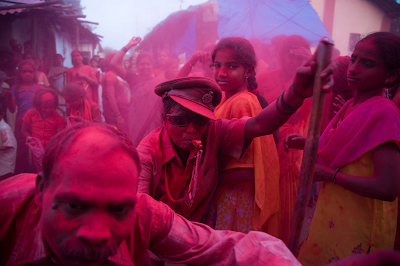
color photograph of Villagers celebrate the Ganapati Festival to honor the Lord Ganesh. Vadhav, India, 2007.


Alumnus Ed Kashi ’79, a photographer with National Geographic and VII Agency, will deliver the keynote address for the 2022 Alexia Fall Workshop. 

Kashi is a renowned photojournalist who uses photography, filmmaking and social media to explore geopolitical and social issues that define our times. He is also a dedicated educator and mentor to photographers around the world. Kashi lectures on visual storytelling, human rights and the world of media.

In support of his newly published book, “Abandoned Moments: A Love Letter to Photography,” Kashi will also present a gallery of his interdisciplinary work along with a book signing, immediately preceding the lecture.

6 – 7 p.m. Gallery opening and book signing

7:15 – 8:15 p.m. Lecture

Co-sponsored by Nikon, Center for Global Engagement, Syracuse University Art Museum, Syracuse University Humanities Center, and Light Work.


Photo: Villagers celebrate the Ganapati Festival to honor the Lord Ganesh. Vadhav, India, 2007.


Ed Kashi is represented by Monroe Gallery, located in Santa Fe, New Mexico. For any print sales, please contact info@monroegallery.com.


Contact

Ken Harper

kharpe01@syr.edu

502.263.3380

Wednesday, October 12, 2022

New MFA exhibit explores world history through photography: "LIFE Magazine and the Power of Photography,”

Via The Suffolk Journal

October 12, 2022

By Leo Woods

The Museum of Fine Arts opened its newest exhibit, “LIFE Magazine and the Power of Photography,” on Oct. 9, allowing patrons to step back in time and experience some of the most pivotal moments of the 20th century captured on film. 

The exhibit, made in collaboration with Princeton University Art Museum, details the genesis of LIFE, which was published weekly from 1936-1972. Henry R. Luce, the founder of LIFE, took inspiration from European picture magazines to create a publication that would be both visually enticing and informative to the American people. His work was a success, as LIFE regularly reached 1 in 4 Americans during the years of its publication, according to the MFA.

As visitors walk through the exhibit, they see the process by which LIFE was developed and found its niche over time. With unique insight into the photography process and how stories were developed for the magazine, the exhibit seeks to examine how American views of the 20th century were shaped by magazines from the period. 

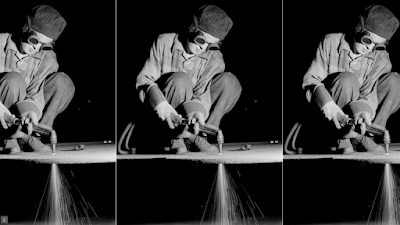
The works of over 30 photographers are featured in the exhibit, including Margaret Bourke-White, Robert Capa, Frank Dandrige and Gordon Parks. Each photographer’s signature style and vision are clear in their use of composition and perspective, from Bourke-White’s empowering portraits of female steelworkers in Indiana to Dandrige’s heartbreaking still at the bedside of Sarah Jean Collins, one of the victims of the 1963 bombing at the 16th Street Baptist Church in Birmingham, Ala.

One of the most striking parts of the exhibit is the section titled “Documenting War,” which shows how photojournalists for LIFE were on the front lines of World War II and the Vietnam War, capturing historical images that allowed Americans to see the unfiltered reality of conflict overseas. Capa was one of only four photographers permitted to document the storming of Normandy, France, and the slightly shaky picture of soldiers running up the beach through the waves was published in LIFE at least eight times, according to the caption underneath the image.

While LIFE sought to bring nuance to stories with their photography, the magazine’s audience primarily consisted of white, middle-class Americans, and the photo essays reflected the attitudes of that group. When George Rodger and Bourke-White’s haunting photos of the recently liberated German concentration camps were published in 1945, LIFE refused to identify victims of the Holocaust as Jewish, reinforcing the anti-semitic sentiment in the United States at the time.

LIFE’s pieces also portrayed the U.S. as a “savior” of individuals like Japanese-Americans who were forced into internment camps in the aftermath of the bombing at Pearl Harbor. The magazine published letters to the editor criticizing the inaccurate depiction of the camps and the unfair treatment of the incarcerated residents, but the majority of reader responses “expressed vehemently xenophobic anti-Japanese sentiments,” according to a caption beside images of the camps.

In an effort to highlight the bias and discrepancies still present in journalism today, the MFA has included immersive works by contemporary artists Alfredo Jaar, Alexandra Bell and Julia Wachtel dispersed throughout the exhibit. 

Jaar’s featured pieces include work from his Rwanda Project, which documented the aftermath of the Rwandan genocide in 1994. Jaar called the project an “exercise in representation,” challenging the international community’s lack of response to the genocide. Over 1 million Rwandans belonging to the Tutsi ethnic group were killed by Hutu militias during a 100-day period, and no outside governments intervened, much less acknowledged that it was happening.

In an effort to contextualize the scale of the genocide, Jaar created “Eyes of Nduwa yezu,” a display of 1 million picture slides of a young boy, Nduwayezu, who witnessed his parents’ murder by Hutu militia members. The piece is striking, the eyes of the young boy seem to bore into the viewer, challenging them to feel the despair he does.

Bell’s “Counternarrative” series examines the implicit bias and systemic racism present in reporting today. Side-by-side images of the front page of the New York Times show Bell’s edits in red ink, pointing out how whiteness is seen as innocent in the eyes of the press, especially in the case of Michael Brown Jr., a Black Missouri teenager killed by a white police officer in 2017. 

The MFA commissioned Wachtel to create a multimedia piece to go alongside images of Japanese internment camps from the 1940s, and the stage-like composition of the work creates a commentary on the politicization of mass media, as well as LIFE’s erasure of the truth behind the camps. Oil paintings of Gen. Douglas MacArthur cover a blurred photo of internment camp residents, showing how the U.S.’s military power superseded the humanity of individuals solely based on their race.

“LIFE Magazine and the Power of Photography” offers a revolutionary insight into American history and culture, as well as explores the incredible impact publications like LIFE had on a global scale. Timed-entry tickets are required to view the exhibit, which is on display until Jan. 16, 2023.


Related: THE LIFE PHOTOGRAPHERS: Celebrating Monroe Gallery’s 20th Anniversary in Santa Fe

Monday, October 10, 2022

Bill Eppridge’s Vibrant Portrait of America in the 1960s: A new exhibition charts the legacy of a photojournalist who chronicled the nation during a turbulent era.

screen shot of Blind magazine article on Bill Eppridge wth mourners holding "Goodbye Bobby" signs as the RFK funeral train passes, 1968

 Via BLIND Magazine

October 10, 2022


“A journalist does not necessarily imply ‘artist’ but you are not going to make your point if you cannot make a picture that people will stop and explore,” said Bill Eppridge (1938 – 2013). As one of the most accomplished photojournalists of the 20th century, Eppridge chronicled the breaking stories of his day, helping to shape the way in which the nation navigated a tumultuous era. Whether documenting the Vietnam War, Woodstock, and the Civil Rights Movement or bearing witness to the tragic end to Senator Robert Kennedy’s presidential campaign, Eppridge brought a humanistic approach to reporting. (click for full article with photographs)


The Legacy of Bill Eppridge is on exhibit through November 20, 2022

Saturday, October 1, 2022

Tony Vaccaro 100: A Life of a Photographer from War to Culture


The Museum für Photographie Braunschweig logo


Via Photography in Berlin

October 1, 2022

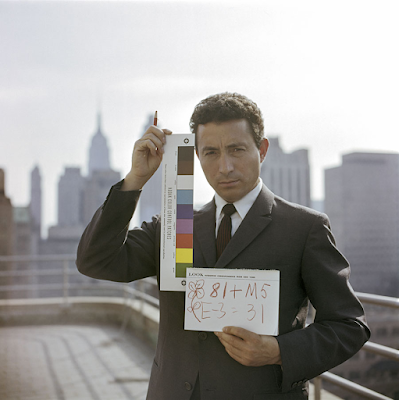
color photograph of Tony Vaccaro holding a test stip, NY, 1968


A Life of a Photographer from War to Culture

Curated by Barbara Hofmann-Johnson, Director Museum für Photographie Braunschweig.

The Museum für Photographie Braunschweig shows for the 100th Birthday of Tony Vaccaro (* December 20, 1922 in Greensburg, Pennsylvania, lives in Long Island, NY) an exhibition of the American photographer of Italian descent and presents important and award-winning works from different creative phases. These include photographs taken during and after World War II in Europe and important portraits of artists, musicians, politicians and cultural figures.

With a special sense for composition and the connection to the outside space, fashion photographs are also part of Tony Vaccaro’s work. Some of the artistically staged fashion shots are part of the exhibition, especially those that were taken for a documentary for Marimekko, the Finnish design house in the 1960s, are particularly noteworthy.

The exhibition at the Museum für Photographie Braunschweig is created in cooperation and with the support of Tony Vaccaro Studio, New York City, USA and the Monroe Gallery of Photography Collection, Santa Fe, NM, USA.


Museum für Photographie Braunschweig

Helmstedter Straße 1 · 38102 Braunschweig
Opening hours: Tue – Fri 1 – 6 pm, Sat & Sun 11 am – 6 pm
Admission: 3,50 € / reduced 2,00 €. Happy Thursday: Free admission & extended opening hours until 8 pm & guided tour at 6 pm every first Thursday of the month.


Monroe Gallery of Photography will announce two additional major exhibits celebrating Tony Vaccaro's 100th birthday. "Tony Vaccaro: The Centennial Exhibition" will be on view in Santa Fe, NM and New York, NY - details to be announced

Tuesday, September 27, 2022

BRINK Review: "Any single one of Butow’s powerful images supports the adage that a picture is worth a thousand words"


screen shot of PhotBook Journal web page featuring cover of David Butow;s book BRINK
September 26, 2022

"BRINK is the new Punctum publication of David Butow’s photographs documenting the January 6th, 2021 riots at the United States Capitol. Any single one of Butow’s powerful images supports the adage that a picture is worth a thousand words. Yet taken as a whole, the 100 color photographs that comprise BRINK can render even the most opinionated viewer speechless. BRINK is an important body of images; a historical record of the power of myths. Myths of great countries, of democracies and other assorted political structures, of checks and balances, of elections – that are neither fair nor free." --full review here


David Butow: Brink - link to exhibition and Gallery talk


Wednesday, September 21, 2022

Gabriela Campos, born and raised in Sante Fe, New Mexico, began cultivating her photography skills in high school and her camera is now a vehicle for telling powerful visual stories


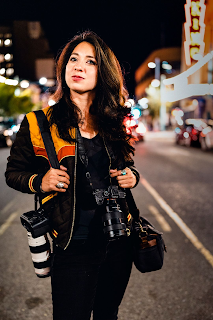
color photograph of Gabriela Campos with her cameras

Via Culturelines


Gabriela Campos, born and raised in Sante Fe, New Mexico, began cultivating her photography skills in high school. Seduced by the magic of the dark room film process, Campos slowly (and intentionally) transformed a creative outlet into her lifeblood. Her camera is now a vehicle for telling powerful visual stories, building community, connecting with strangers and showcasing the people and stunning natural beauty of her home state. As a freelance photographer, her incredible work has been featured in several noteworthy publications, including The Guardian, High Country News, Al Jazeera, VICE, The Daily Beast and various local publications. She’s also exhibited in Washington, D.C. alongside fellow photographer Nathaniel Tetsuro Poalinelli. 

I connected with Campos to explore the genesis of her career, her creative vision and the importance of being a homegrown creative. 

When did you know you wanted to be a photographer?

Gabriela Campos: I first fell in love my senior year of high school. I switched to a new high school and they had this program where you could take photography classes at the community college. I was always interested in [photography] because my dad used to be into [photography]. I took black and white number one, got my dad's old Pentax camera and I experienced the beauty and magic of the dark room — where you just watch something come out of darkness. From that first class, I was hooked.

Why is it important to tell New Mexican stories?

Gabriela Campos: Some people are always seeking to go outside of themselves, and they don't see the potential of their home. There are so many culturally significant things in New Mexico. I'm going through a phase where New Mexico is very much a muse. I am so inspired by the people, the places, the textures, the landscape. It's important to tell the stories that you feel passionately about.

How do you build trust when you go into a new space?

Gabriela Campos: There are two different ways that I approach it. For [The Santa Fe New Mexican] newspaper, I have to be thrown into new situations every single day and feel I can create that sort of intimacy. I show up and I'm interested, and I'm curious. I like to ask people questions. I feel genuine interest goes a long way. Because, it's not often that people get to show off their worlds. Sometimes it's about talking to people. Sometimes I go on assignment and I take photos for the first five minutes, but then people just want to sit down and tell me their story, what's really going on in their lives and the worst of their worlds. 

Have you learned a lot from other creatives?

Gabriela Campos: I learn a lot from watching other photographers work. I've been in situations where there's five [or] six photographers and we're all covering the same event. Everybody approaches it a little differently. It's fun to see if people are throwing themselves directly in there, if they're standing far back in the corner trying to get environmental things or if they're trying to get close. I try to remind myself to touch on all the things. Sometimes, I have to say, “step back, show a little bit more, there's more to the story than just people.” 

Why is natural lighting your preferred environment?

Gabriela Campos: When you step into somebody's world, you don't often have the luxury of being able to orchestrate all the details. It's about working with what you have, because then you're never reliant on having a flash or a strobe; you're equipped to do what you need to do anywhere if you just train your eye to seek out that natural light. There's nothing more beautiful, [when] it hits in that perfect way.

What’s better, color or black and white?

‍Gabriela Campos: Sometimes colors can be a little bit distracting. Certain colors, like reds and yellows, are really flashing and people are drawn to them. But maybe you're drawn to it for the wrong reasons. Maybe what I like about the frame is the expression of the person, the shapes, the lines or the way the light hits something. There is definitely a place for colors, because sometimes I'm really attracted to the vibrancy of something. 

Could you ever imagine sitting behind a desk?

 Gabriela Campos: No, I always wanted to be interacting with people and entering people's worlds; photography is the most absolute, ideal situation for that. Every day I get to be something different. Some days, I'm a firefighter. Some days, I'm a doctor. Sometimes, I drive an Impala around. It lets me see life from [different] perspectives. 


Monday, September 19, 2022

Monroe Gallery of Photography is honored to announce major exhibitions celebrating Tony Vaccaro’s 100th birthday


Logo for Museum for Photography Braunschweig, Germany

Via Museum für Photographie Braunschweig · 

TONY VACCARO 100!

A Life of a Photographer from War to Culture

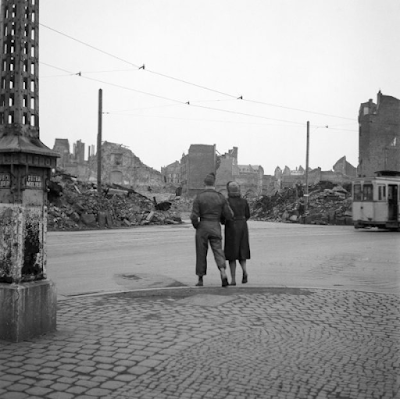
GI and woman looking at rubble of destroyed building after WWII in Frankfurt, Germany, 1947

Tony Vaccaro: Entering Germany, Frankfurt Germany, 1947
© Tony Vaccaro Studio, Courtesy of Monroe Gallery of Photography and the Tony Vaccaro Studio


The Museum für Photographie Braunschweig shows for the 100! Birthday of Tony Vaccaro  (born December 20, 1922 in Greensburg, Pennsylvania, lives in Long Island, NY) an exhibition of the American photographer of Italian descent and presents important and award-winning works from different creative phases. These include photographs taken during and after World War II in Europe and important portraits of artists, musicians, politicians and cultural figures.


With a special sense for composition and the connection to the outside space, fashion photographs 
are also part of Tony Vaccaro’s work. Some of the artistically staged fashion shots are part of the exhibition, especially those that were taken for a documentary for Marimekko, the Finnish design house in the 1960s, are particularly noteworthy.


The exhibition at the Museum für Photographie Braunschweig is created in cooperation and with the support of Tony Vaccaro Studio, New York City, USA and the Monroe Gallery of Photography Collection, Santa Fe, NM, USA.


Museum für Photographie Braunschweig · Helmstedter Straße 1 · D-38102 Braunschweig


Supported by: City of Braunschweig, Foundation of Lower Saxony, MWK, DB, Wine Shop Bremer


Monroe Gallery of Photography is honored to announce major exhibitions celebrating Tony Vaccaro’s 100th birthday. "Tony Vaccaro 100" is at the The Museum für Photographie Braunschweig in Germany October 1 - December 4, 200. "Tony Vaccaro: The Centennial Exhibition” opens in Santa Fe, NM on Friday, November 25, with Tony Vaccaro appearing remotely live from his New York home at 5:30 pm. The exhibition will continue through January 15, 2023.

A special satellite exhibit in New York City will be on view at the Monroe Gallery of Photography "pop up", 21 Spring Street, New York City, December 13 – 18. Tony Vaccaro will be in attendance on the evenings of December 14 – 17, RSVP required, please contact the Gallery.


Friday, September 9, 2022

LIFE Magazine and the Power of Photography October 9, 2022–January 16, 2023

 Via Museum of Fine Arts Boston

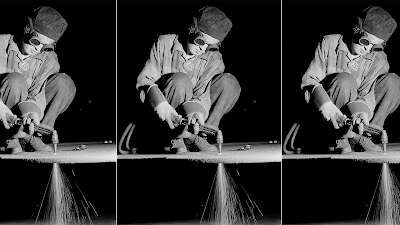
3 frames of female welder Ann Zarik with torch, 1943  by Margaret Bourke-White

Margaret Bourke-White, Flame Burner Ann Zarik, 1943

From the Great Depression to the Vietnam War, almost all of the photographs printed for consumption by the American public appeared in illustrated magazines. Among them, Life magazine—published weekly from 1936 to 1972—was both wildly popular and visually revolutionary, with photographs arranged in groundbreaking dramatic layouts known as photo essays. This exhibition takes a closer look at the creation and impact of the carefully selected images found in the pages of Life—and the precisely crafted narratives told through these pictures—in order to reveal how the magazine shaped conversations about war, race, technology, national identity, and more in the 20th-century United States. From Neil Armstrong’s photographs of the historic moon landing to Charles Moore’s coverage of the Birmingham civil rights demonstrations, the photographs on view capture some of the defining moments—celebratory and traumatic alike—of the last 100 years.

Drawing on unprecedented access to Life magazine’s picture and paper archives as well as photographers’ archives, the exhibition brings together more than 180 objects, including vintage photographs, contact sheets, assignment outlines, internal memos, and layout experiments. Visitors can trace the construction of a Life photo essay from assignment through to the creative and editorial process of shaping images into a compelling story. This focus departs from the historic fascination with the singular photographic genius and instead celebrates the collaborative efforts behind many now-iconic images and stories. Particular attention is given to the women staff members of Life, whose roles remained forgotten or overshadowed by the traditional emphasis on men at the magazine. Most photographs on view are original working press prints—made to be used in the magazine’s production—and represent the wide range of photographers who worked for Life, such as Margaret Bourke-White, Larry Burrows, Henri Cartier-Bresson, Frank Dandridge, Yousuf Karsh, Gordon Parks, and W. Eugene Smith.

Interspersed throughout the exhibition, three immersive contemporary “moments” feature works by artists active today who interrogate news media through their practice. A multimedia installation by Alfredo Jaar, screen prints and photographs by Alexandra Bell, and a new commission by Julia Wachtel frame larger conversations for visitors about implicit biases and systemic racism in contemporary media.

“Life Magazine and the Power of Photography” offers a revealing look at the collaborative processes behind many of Life’s most recognizable, beloved, and controversial images and photo essays, while incorporating the voices of contemporary artists and their critical reflections on photojournalism.

The exhibition is accompanied by a multi-authored catalogue, winner of the College Art Association’s 2021 Alfred H. Barr Jr. Award. “Life Magazine and the Power of Photography” is co-organized by the Museum of Fine Arts, Boston, and the Princeton University Art Museum.


Visit the Monroe Gallery of Photography exhibition "The LIFE Photographers"

Tuesday, September 6, 2022

Photographs from Ed Kashi's groundbreaking project, Aging in America, were recently acquired by the Library of Congress

elderly woman in front of fashion poster with young models


30 photographs from Ed Kashi's groundbreaking project, Aging in America, were recently acquired by the Library of Congress, the world's largest library and the national library of the United States. Its collections comprise the world's most comprehensive record of human creativity and knowledge, and as such Kashi's work will take its place in the annals of history. 

Aging in America: The Years Ahead chronicles the unprecedented changes confronting America as old age goes mainstream. Ed Kashi and writer Julie Winokur first began the project as an award-winning story published by The New York Times Magazine. They then embarked on an eight-year-long journey across the topography of aging in search of what it means to have a “good old age” by collecting scores of personal histories that, when viewed together, challenge the culture of aging in America.

From the upsurge of elderly immigrants following their children to America to the overwhelming toll a tornado exacted on a rural elderly community, to the intimate vignettes of people who are living the new old age, the book and its companion film traverse the vast experiences of our elders. We are able to travel with the Loners of America, an RV club for mature singles and delve into a retirement community where Alzheimer’s patients work in a child daycare facility. We track the campaign of a 76-year-old politician running for office for the first time, follow a woman launching her modeling career in her 60’s, and celebrate the wedding of a couple of octogenarians. Through their stories, we laugh and cry as the “wellderly” to the elderly tackle life’s challenges, celebrate their freedom, apply their wisdom, and suffer the consequences of their bodies’ limitations.

This original award-winning body of work was published in The New York Times Magazine, July 13, 1997.


Ed Kashi's fine art prints are available from Monroe Gallery of Photography

Ageing in America book available here


Saturday, September 3, 2022

Stephen Wilkes: Visualizing Time

 Via The Westport Library


Stephen Wilkes: Visualizing Time, a presentation of Wilkes’s work, in conversation with Stacy Bass on September 8 at 7pm,  in person in the Forum.

Note: The program will be preceded by a reception with the photographer at 6:15. Q&A will follow.

PLEASE REGISTER HERE

This exhibit, which will encompass all 3 of the library’s galleries through 11/29 and will explore how Wilkes' visualization of the concept of time has evolved from the earlier days of his career through his latest series “Day to Night” and “Tapestries.” 

 September 8 - November 29, 2022


The Westport Library

20 Jesup Road

Westport, CT 06880 


View Stepehen Wilkes' photography here

Tuesday, August 30, 2022

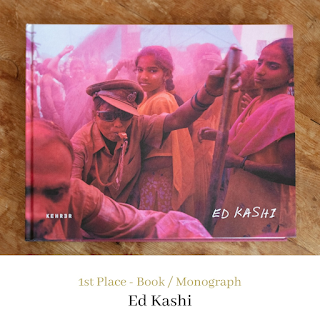
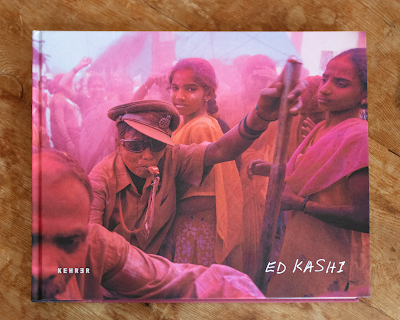
Ed Kashi's Book "Abandoned Moments" Receives 2022 Prix de la Photographie Gold Medal


The “Prix de la Photographie, Paris” (P×3) promotes the appreciation of photography, discover emerging talent and introduce photographers from around the world to the artistic community of Paris.

Gold in Book/Monograph


photo of cover of Ed Kashi book "Abandoned Moments"


If the decisive moment reflects reality in tune with the photographer’s intuition, flawlessly combining composition and timing, then the abandoned moment is the consequence of a fractional instant of surrender. This collection, made over a 40-year period by renowned photographer Ed Kashi, reveals imprecise glimpses of transitory events filled with frenetic energy - the chaos of everyday life. Embodying photography’s intrinsic power, they preserve moments that can never occur again in exactly the same time and space.


Ed Kashi is a photojournalist, filmmaker, speaker and educator dedicated to documenting the social and political issues of our times. A sensitive eye and intimate relationship to his subjects are signatures of his work. A member of VII Photo Agency, Kashi is recognized for his complex imagery and compelling rendering of the human condition. In addition to producing 9 books, he is a pioneer and innovator of multimedia, whose award-winning work has been published and exhibited worldwide.

Ed Kashi: Abandoned Moments Gallery Talk

Awards

Awards Aaron Siskind Foundation Individual Photographer's Fellowship Grant, American Photo, Applied Arts, Artivist Film Festival , Black Maria Film & Video Festival Jury's Stellar Award, Communication Arts Photography Annual, Days Japan Photojournalism Awards, Festival Photoreporter, Freddie Awards, International Photography Awards, Nathan Cummings Foundation Grant, National Endowment for the Humanities Grant, National Geographic Explorer's Grant, National Press Club Journalism Award, New York Photo Festival Awards, Open Society Institute Grant, Photo District News (PDN), Photocrati Fund, Pictures of the Year (POYi), Prix Pictet Commission, Robert Wood Johnson Foundation 2-year fellowship grant, UNICEF Photo of the Year, USA Book News National Best Books Award, Village Voice Best Photo Book, World Press Photo

Monday, August 29, 2022

The National Press Photographers Foundation is pleased to announce the Michel du Cille $15,000 fellowship is awarded to Anna Boyiazis

 Via Nation Press Photographers Foundation

August 29, 2022

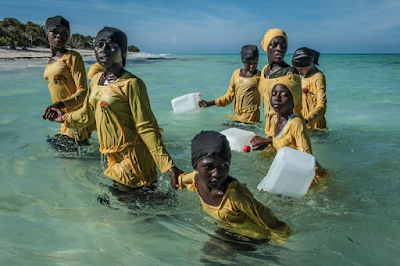
students in yellow fill lenghth cloting walk to shore after a swimming lesson, Muyuni Beach, Zanzibar, 2016


The National Press Photographers Foundation is pleased to announce the Michel du Cille $15,000 fellowship is awarded to Anna Boyiazis.

Judge's Comments

In 2016, Boyiazis began photographing her long-term project, Finding Freedom in the Water, in the Indian Ocean off of the Zanzibar Archipelago. The project bears witness to women and girls learning to swim, an act of emancipation. Taking this project to the next level, Boyiazis will expand upon existing work to create a nuanced portrayal of first-generation women and girls to acquire this potentially life-saving skill. 

 “I’m extremely grateful to be named the 2022 Michel du Cille Fellow to expand upon my existing work focused on aquatic safety and drowning prevention. With a deep sense of humility, I welcome this opportunity to celebrate Michel du Cille’s enduring legacy and compassionate spirit!” 

“The approach that Anna used was very refreshing. She took an issue with some complications and issues that needed to be solved. But she also took the high road and said that these humans have other lives. This is not just a downtrodden approach. Anna uplifted these women. And by doing that, she uplifted the viewer in the process of their plight. It is refreshing to see happen!” – juror Dudley Brooks.

 “Anna’s work has a beautiful lyrical feel,” said juror Clinton Cargill. Cargill said, “Anna approached this story with grace, dignity, nuance, and texture. That’s what our coverage of the world should be.”

 Michel’s wife and juror Nikki Kahn added, “Michel loved Africa. Anna shows Africa in the light that was extremely important to Michel, so thank you. We look forward to seeing what comes out of the next body of work.”

 The 2022 fellowship jurors were Dudley Brooks, The Washington Post, Deputy Director of Photography; Clinton Cargill, The New York Times, Assistant Photo Editor; and Nikki Kahn, Sierra Magazine, Photo Editor.


The 2022 fellowship jurors were Dudley Brooks, The Washington Post, Deputy Director of Photography; Clinton Cargill, The New York Times, Assistant Photo Editor; and Nikki Kahn, Sierra Magazine, Photo Editor.

Saturday, August 27, 2022

Coming in October: See ‘Life Magazine and the Power of Photography’ at the MFA Boston

 Via Boston.com

August 26, 2022

3 frames of woman welders at work in 1943
Flame Burner Ann Zarik, taken in 1943. Photo by Margaret Bourke-White, Life picture collection

The museum displays photos from the archives of the publication that shaped American photojournalism.

The Museum of Fine Arts will display dozens of original photos from Life magazine’s archives in “Life Magazine and the Power of Photography” this fall, highlighting Life’s cultural impact and the way its photos shaped American media throughout the mid-twentieth century.

Life printed in some capacity from 1883 through 2000. Published independently until 1936, Life was a light entertainment magazine heavy on illustrations, featuring the likes of Charles Dana Gibson and Norman Rockwell. Publisher Henry Luce bought the publication in 1936, turning it into the notable American photographic magazine we know it as today. The first of its kind, it defined photojournalism and chronicled historic moments of the last century, like the moon landing and the Birmingham civil rights demonstrations. Life was the first to publish Alfred Eisenstaedt’s “V-J Day in Times Square.”

The exhibit will display original photos alongside objects from Life’s paper archives like assignment outlines, memos, and layout drafts, taking a close look at how Life photo essays were constructed from assignment all the way through to completion. In peering behind the scenes of the magazine’s creation, the exhibit also examines how Life shaped conversations around topics like race, war, technology, and national identity. 

“Life Magazine and the Power of Photography” also displays three immersive contemporary works interspersed throughout the exhibit—a multimedia installation by Alfredo Jaar, screen prints and photos by Alexandra Bell, and a new commission by Julia Wachtel all examine modern news media and themes like implicit biases.

The exhibit features the work of photographers like Margaret Bourke-White, Larry Burrows, Henri Cartier-Bresson, Frank Dandridge, Yousuf Karsh, Gordon Parks, and W. Eugene Smith, and runs Oct. 9 through Jan. 16 in the Ann and Graham Gund Gallery.


Related: Monroe Gallery Exhibition "The LIFE Photographers"

LIFE Magazine Show Opens At Monroe Gallery Of Photography

Friday, August 26, 2022

Miami University Art Museum exhibit: “A Lens For Freedom: Civil Rights Photographs by Steve Schapiro”

 Via Dayton Daily News

Augst 26, 2022

young people join hands in front of bust with others in bus indows during "Freedom Summer" in 1964

Steve Schapiro: "We Shall Overcome" Summer of '64 Freedom Bus, Oxford, Ohio, 1964


OXFORD — “A Lens For Freedom: Civil Rights Photographs by Steve Schapiro” will be one of the three featured exhibitions on display this fall at Miami University Art Museum and Sculpture Park. The exhibitions will be on view through early December.

“‘A Lens For Freedom’ consists of 17 photos and three photo murals that are based on photographs of contact sheets that all pertain to civil rights photographs by Steve Schapiro with particular focus on developments leading up to and involving Freedom Summer,” said Jason Shaiman, curator of exhibitions at Miami University Art Museum.

Schapiro was there in the 1960s with his camera to capture some of the most iconic moments of the civil rights movement. Schapiro was also one of the leading photographers to document the historic 1964 Freedom Summer Campaign. His photographs are on view in the McKie Gallery.

“At the Art Museum, we have been very involved in exhibitions and programs for a number of years that support civil rights and social justice, and we’ve done other exhibitions pertaining to Freedom Summer,” Shaiman said.

This foundation for this exhibition really came about in 2019, when we worked with Steve Schapiro and his now widow, because unfortunately, Steve passed away in January of this year, of providing a partial gift as well as a museum purchase of 20 photographs. So, that’s where the 17 photos are from. We took the three contact sheets, and we’ve blown them up as photo murals, he said.

“This was a wonderful collaboration with Steve, because, as you might know, the grounds where the Art Museum stands is part of what used to be the Western College for Women. Now, it’s considered the Western Campus for Miami University. In 1964, the Western College for Women hosted the two-week training for volunteers, who were going into the Deep South, particularly Mississippi, to support Black voter registration, and the setting up of Freedom Schools and Freedom Libraries,” Shaiman said.

Freedom Summer was hosted by Western College for Women.

“The photos that we have piece together how Steve Schapiro got involved in photographing the civil rights movement. Then, with a particular focus on Freedom Summer, some of the photos were taken in Oxford during the first week of training. Steve was only present for the first week of training,” he said.

The rest of the photos in the exhibition record what he was seeing and documenting in Mississippi, around the region of Neshoba County, which is where a lot of the trouble in Mississippi took place, Shaiman said.

“Steve had a diverse career. He really made a name for himself within civil rights photography. He took some of the most amazing photos of Dr. King, of people like John Lewis, Medgar Evers, Rosa Parks, and so many major figures in the civil rights movement, especially in the 1960′s. His involvement really started with James Baldwin, who was a very well noted writer, poet, speaker on the Black experience,” he said.

Baldwin introduced Schapiro to a lot of major civil rights figures, and that transformed his trajectory as a photojournalist, which continued through the 1960′s. In the 1970′s, he started working in Hollywood, and he was doing still photos on and off-set for a lot of major movies like “The Godfather,” “Taxi Driver,” and a number of big-name films and he became very well known and respected for that work, which kept him busy for several decades.

“Schapiro has said in interviews, that as wonderful as those opportunities were, he still felt like his civil rights photos were his most important contributions to photography,” Shaiman said.

He said Schapiro was able to capture the individual personalities of the people that he recorded in his photos.

“He had a unique approach,” Shaiman said, “There was nothing that felt staged about his photos.”

“He was really capturing who these people were, and what they were fighting for, and I think his approach moved beyond photojournalism, and it really captured a sense of humanity of the people that he was photographing,” said Shaiman.

The exhibition and related programming are supported with a grant from FotoFocus as part of the FotoFocus Biennial 2022. The Art Museum also received support from Richard and Susan Momeyer. The exhibition is dedicated to the memory of Schapiro, who passed away on Jan. 15.

How to go

What: “A Lens For Freedom: Civil Rights Photographs by Steve Schapiro”

When: 10 a.m. to 5 p.m. Tuesday through Friday, noon to 5 p.m. Saturday and 10 a.m. to 8 p.m. the second Wednesday of each month. The exhibition will be on display through Dec. 10. Closed on Sundays, Mondays and university holidays.

Where: Miami University Art Museum and Sculpture Park, 801 S. Patterson Ave., Oxford

Admission: Free and open to the public. Visitor parking passes are available at the museum.

More info: (513) 529-2232 or www.MiamiOH.edu/ArtMuseum. It is optional for visitors to wear a mask.

Tuesday, August 23, 2022

Stephen Wilkes' pictures document effects of climate change

 Via Good Morning America

August 23, 2022


Stephen Wilkes has been photographing national parks for more than 20 years and his newly born granddaughter inspires him to continue bearing witness to how they're affected by climate change.


Monday, August 22, 2022

Mount Sinai Health System Unveils Photo Exhibit "We Find A Way" by Ashley Gilbertson

Via Mount Sinai Health System

August 22, 2022


We Find a Way is a photo installation that captures a glimpse inside the Mount Sinai Health System community in various moments of employees caring for patients through compassion, skill and often times going beyond in. Australian photojournalist and writer, Ashley Gilbertson, who typically covers war zones and social unrest, was able to capture powerful moments between a patient and health care worker.

This photo installation is part of Mount Sinai’s overarching branding and advertising campaign that launched in June 2021 and presents an emotional and raw view of what it takes to overcome challenging and complex health and scientific problems. The We Find a Way campaign and exhibit drew inspiration from the entire Mount Sinai community who went above and beyond to save countless lives during the pandemic, and how it seeks to do so for all health conditions. Their work has led to the development of new COVID-19 protocols, diagnostics, and therapeutics.

“This campaign reveals the soul of our organization, the resilience of our people, and our humanity,” said Kenneth L. Davis, MD, Chief Executive Officer of Mount Sinai Health System. “I’m inspired by the people who make us who we are, who entered into this profession because they care and are unsatisfied with the status quo, and who embody the Mount Sinai way.”

Throughout the photos, Mr. Gilbertson was able to showcase the deep humanity in how Mount Sinai’s staff finds a way to go above and beyond for the care of patients. Within the exhibit, Mount Sinai doctors, nurses, researchers, and other staff are seen committing to every single patient, even through the worst of the crisis.

“This casts an authentic spotlight on what we do and who we are,” said David A. Feinberg, Senior Vice President and Chief Marketing and Communications Officer of the Mount Sinai Health System and Dean for Marketing and Communications for the Icahn School of Medicine at Mount Sinai. “The distinctive experiences captured beautifully and thoughtfully reveal the essence of our community and Health System.”

Images include a physician’s assistant braiding a patient’s hair while the patient was under anesthesia and wouldn’t know, a patient in the operating room when their heart starts beating again, an occupational therapist helping a patient through rehab, quiet moments before surgery, researchers looking for solutions, a toddler patient returning home after a life-saving transplant, and more. The photo installation can be seen within The Mount Sinai Hospital at 1 Gustave L. Levy Place New York, NY 10029-6574.

Thursday, August 18, 2022

Grant Baldwin's 2019 Pride Festival image featured: Officials in counties outside Charlotte censored LGBTQ+ content. Can they do that?

 Via The Charlotte Observer

August 18, 2022


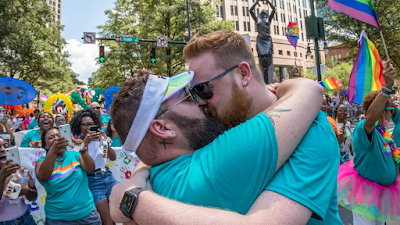
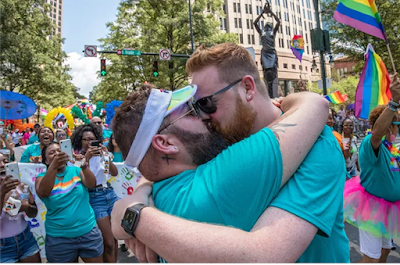
portrait of two men — Justin Colasacco and Bren Hipp — kissing in celebration just after getting engaged at 2019 Charlotte Pride Festival


The Gaston County manager ordered this photograph of two newlywed men kissing at the 2019 Charlotte Pride Parade & Festival pulled from a photography exhibit at the Gaston County Museum, according to a county statement and the photographer, Grant Baldwin/Grant Baldwin Photography


"Before the pandemic put a pause to the Queen City’s in-person festivities, Charlotte Pride hired local photojournalist Grant Baldwin to document its 2019 parade. Among the shots, Baldwin snapped a portrait of two men — Justin Colasacco and Bren Hipp — kissing in celebration just after getting engaged.

As a rainbow-festooned gaggle of cheers erupted behind them, Baldwin thought the shot would be perfect for the Gaston County Museum’s roundup of artistic and documentary photographs. Museum officials agreed initially. They accepted the photo and displayed it as part of the summer 2022 “Into the Darkroom” exhibit, Baldwin said. Ultimately, county manager Kim Eagle told museum staff to replace the photograph with one “more considerate of differing viewpoints in the community,” county spokesman Gaub said. It remains shelved, but the removal has sparked calls for more LGBTQ recognition in the county. It garnered praise for Baldwin and the couple elsewhere. The photo will take a place of honor in a New Mexico exhibit soon. “It’s reaffirmed in me that there’s still more work to be done to live up to the motto of Gastonia being an All-American city – live, work and play – when a subset of the population is not viewed as equals,” Charlotte Pride spokesman and Gastonia resident Clark Simon said. “So there’s more work to be done.”

Read more here

Grant Baldwin's photograph is featured in the exhibition "Imagine A World Without Photojournalism", on view through September 18, 2022.


screenshot of Chalotte Observer article with Grant Baldwin's photograph of 2 men kissing at 2019 Pride Festival


Tuesday, August 16, 2022

Stephen Wilkes' Photograph on the Cover of National Geographic "America The Beautiful" Issue


Cover f September, 2022 issue of National Geographic with Stephen Wilkes ' photograph of the Bears Ears National Monument in Utah


Stephen Wilkes photograph of the Bears Ears National Monument in Utah is the cover of  National Geographic's “America the Beautiful” issue. "This photograph of Bears Ears National Monument in Utah is one of four Day to Night’s I created for the September 2022 issue. The spectacular landscape of Bears Ears Monument is a symbol of the risk to some of the country's unique and irreplaceable places. One president preserved it at the urging of Native Americans who hold it sacred, another tried to open it to drilling and mining.

A national monument rich with archaeological sites, it includes the Citadel, once a fortified cliff dwelling, now a popular hiking spot. I took 2,092 photographs over 36 hours and selected 44 for this image. Beyond the sense of awe and beauty, there's a palpable sense of history with every step you take.

Bears Ears was one of the most challenging Day to Nights I have created. After a long day of traveling my team and I hiked out over an hour with several hundred pounds of gear to our shoot location and set up camp for the next three days. Over the duration of our shoot we photographed while battling steady 45 mph winds, and were blessed to be able to capture the sunrise, a full moon and a rare alignment of the planets, Jupiter, Venus, Mars, and Saturn." --Stephen Wilkes


Sunday, August 14, 2022

We need great photojournalism more than ever

 Via Amateur Photographer

August 14, 2022


OPINION: WE NEED GREAT PHOTOJOURNALISM MORE THAN EVER


Deputy Editor Geoff Harris reflects on the worrying trend of people simply shunning bad news – and what it could mean for photojournalism, documentary and news photography.

As somebody who believes passionately in the importance of hard-hitting documentary and news photography, I’m worried. A survey, recently shared by the BBC, reveals that a lot of people are turning off from the news as it makes them depressed.

According to the report, from the respected Reuters Institute, almost four in 10 of those surveyed say they often or sometimes avoid the news, a sizeable jump from 29% in 2017.

It also found the number of people avoiding news over the past five years has doubled in the UK (46%) and Brazil (54%).

Considering the devastation that the corrupt Bolsonaro regime is inflicting on the Amazon rainforests and indigenous tribes in Brazil, this is even more concerning, but I digress.

Photojournalism tells the truth about what is happening

When you think of some of the most influential news images in the history of photography – Dorothea Lange’s record of dirt-poor US migrants, or Nick Ut’s Napalm Girl photo – yes, they are upsetting and depressing.

This is not usually because photographers are trying to make viewers feel bad or have any kind of agenda (Ut certainly wasn’t against the anti-communist South Vietnamese forces who dropped the napalm), it’s because they want to tell the truth about what is happening around them. If more and more people are actively turning away from the news in order to ‘protect their mental health,’ where does that leave the next generation of photojournalists? Will they still be able to make a living?

Then there is the environment.

I’ve been lucky enough to interview a lot of great nature photographers over the years, including Frans Lanting and Joel Sartore, and most still believe that their photography can help protect endangered species or habitats through awareness-raising.

But what if an increasing number of potential viewers of these images just throw their hands up in the air and switch to cute puppy videos on YouTube or silly dance routines on TikTok?

Indeed, another recent report from OFCOM shows that TikTok is the fastest-growing news source for UK adults. Of course, not all content on TikTok is trivial, but it’s an illuminating and concerning trend.

Then there are the unhinged conspiracy theorists who accuse much mainstream news of being fake, following in the footsteps of cynical politicians like Donald Trump. Predictably, attacks on news journalists and photographers have risen exponentially.

We need great photojournalism more than ever

We need great photojournalism more than ever, as it’s one of the pillars of a free society, where politicians, big business and the military are held accountable. Shackling the press is one of the first things authoritarian regimes do – just ask any photojournalist struggling to tell the truth in China and Russia.

I also think that mental health charities and ‘experts’ should be doing more to dispel this insidious myth that the news is somehow damaging to people’s well-being. Certainly, today’s 24/7 news cycles mean it’s easy to feel overwhelmed, but we can all control how much news we consume, and only consume it from reputable sources. Sticking our head in the sands is no answer.

A few years ago, photojournalists were fretting that the biggest threat facing them was the closure of a lot of print-based media and the increasing use of freelancers and ‘citizen journalists’ by digital outlets. These threats remain, and jobs continue to be lost, but a general turning away from bad news is an even more worrying trend.

As photographers, we should be doing what we can to support and speak up for photojournalists, and of course, getting out there with our cameras ourselves. Stories of death and destruction are not new, but however much they seem to be piling up in 2022, it’s important we all face up to what is going on the world. How else are we going to help to change it?


Tuesday, August 9, 2022

New documentary from CNN Films celebrating female photojournalists: No Ordinary Life

 Via RealScreen

August 9, 2022


CNN has scheduled a new documentary from CNN Films celebrating female photojournalists, No Ordinary Life, to premiere on the network on September 5.

Directed by journalist, documentary filmmaker and CNN alum Heather O’Neill, the feature doc tells the story of five courageous and trailblazing female photojournalists — Jane Evans, Maria Fleet, Margaret Moth, Mary Rogers and Cynde Strand — who documented major world events from Tiananmen Square to the Arab Spring, Sarajevo to South Africa and more. The film features all five women describing the risks they faced when reporting under fire — complemented by behind-the-scenes footage of situations in which they had to brave highly dangerous circumstances in order to get their story — as well as reflecting the challenges they faced working in a field that remains dominated by men.

The documentary had its world premiere at the 2021 Tribeca Film Festival, and later screened at Hamptons Doc Fest.

No Ordinary Life was produced by Array Films, with Rich Brooks serving as producer. The acquisition deal was negotiated for CNN Worldwide by Stacey Wolf, senior vice president of business affairs, and Kelly MacLanahan, assistant general counsel, on behalf of CNN Films.

Wednesday, August 3, 2022

Richard Skipper Celebrates the world of Bill Eppridge with Adrienne Aurichio

screen shot of Richard Skipper Celebrates the world of Bill Eppridge with Adrienne Aurichio YouTube page


Monroe Gallery is pleased to welcome Adrienne Aurichio to Santa Fe on September 30 for a talk about the life and career of legendary photojournalist Bill Eppridge. The talk opens a new exhibition of Eppridge's photographs that features many new, rare early works.

September 30 - November 20, 2022


Tuesday, August 2, 2022

Imagine A World Without Photojournalism – Monroe Gallery Celebrates 20 Years in Santa Fe


Via The Arizona Photography Alliance

Mark Timpany

August 1, 2022


Most likely readers have seen some or all of the photographs hanging on the wall of the Monroe Gallery in Santa Fe, NM. Gallery co-owner, Sid Monroe will explain, though, that matting, framing, and gallery display transforms these images to something beyond their original use to document a current event. When viewed away from the newspaper or magazine page, multiple levels of meaning are conveyed through these photographs. They provide us with insight into a historical period in today’s world.

The exhibit currently displayed, Imagine A World Without Photojournalism, coincides with the 20-year celebration of Monroe Gallery’s presence in Santa Fe. Michelle and Sid Monroe opened their gallery in New York City but moved to Santa Fe in the aftermath of the terrorist events of 9/11. Their focus has always been on photojournalism. To that end, they have had the advice and support of some of the most noteworthy members of that community, the likes of Alfred Eisenstaedt and Carl Mydans. Some of the earliest advice was the suggestion that such a gallery could not succeed.

The gallery has survived. The current exhibit serves as a retrospective of the shows that have been hung in their transplant location in New Mexico. Viewers will find iconic photos such as Robert Capa’s images from Omaha Beach on D-Day, June 6, 1944, Eddie Adams’s Saigon Execution, and numerous photos originally seen in Life magazine to photos from the present day Australian photojournalist, Ashley Gilbertson’s depiction of Officer Eugene Goodman holding back January 6th insurrectionists. The broad range of material serves to communicate the importance of photojournalism in our lives and for the several generations before us. The exhibit is important at a time when journalism is under attack (along with journalists) and lacking in funding.

This exhibit runs through September 18, 2022. For those who cannot make it to Santa Fe during the run of the exhibition, Monroe Gallery has produced a video sampler of many of the images on display. The presentation Threats to Photojournalism with photographers Nina Berman and David Butow took place in the gallery on Friday, July 22 but can be accessed on YouTube. Details on the presentation and the exhibit can be found at the Monroe Gallery website.

Link to article and photos here.


Friday, July 29, 2022

“I hope that the documentary can change the mentality of some people a little — make them understand that without journalists, there is no democracy,”


An early look at the new content is available, via Farrow’s interview with Jimenez in this 9-minute video clip


Via FORBES

July 28, 2022

CNN correspondent Omar Jimenez, at times, still looks a little stunned when recounting what happened to him in May of 2020 while covering a protest over the killing of George Floyd. All of a sudden, despite the press badge hanging prominently near his waist — to say nothing of the crew that was clearly filming him — Jimenez went from reporting a story to staring blankly at the still-rolling camera as police put him in handcuffs.

The cops in riot gear, standing in the background brandishing batons during Jimenez’ live shot, wanted the street cleared. And this reporter from CNN was another body standing in the way.

“As a reporter, it’s the last thing you’d expect would happen in the United States,” Jimenez says, by way of recounting his arrest during a conversation with investigative journalist Ronan Farrow. “I was in this professional mode of being a reporter at first … then trying to figure out, wait, what the hell is going on right now?”

That conversation is part of new footage HBO Max is releasing today in support of “Endangered,” an HBO Original documentary film that debuted in June about journalism in its current state of global crisis.

Directed by filmmakers Heidi Ewing and Rachel Grady, with Farrow as executive producer, that documentary presents vignettes of reporters from around the world. From places as disparate as Mexico City, Miami, and Sao Paulo, where reporters like photojournalist Sáshenka Gutiérrez grapple with recalcitrant public officials, death threats, an indifferent public, an uncertain business model, and other hazards to their livelihood and lives.

“I hope that the documentary can change the mentality of some people a little — make them understand that without journalists, there is no democracy,” Gutiérrez told me. “(And) show them the different forms of violence that we face.”

In all, “The Endangered Tapes” includes six new pieces of content featuring Farrow interviewing journalists like Jason Rezaian, the Washington Post opinion writer arrested in Iran and held in the country’s notorious Evin prison for 544 days. As well as Selene San Felice, formerly of The Capital Gazette and a survivor of the newsroom shooting there.

"While we were producing ‘Endangered,’” Farrow told me, “I was guided by conversations with fellow journalists about their experiences and views on the state of the free press. I’m happy to share some of those behind-the-scenes exchanges with the world. These are bite-sized, informative glimpses into the lives of different kinds of journalists, facing different challenges. I learned a lot from them, and I’m so glad that the HBO Documentaries team — and the journalists I spoke with — are allowing others to see them too."

The documentary and supplemental content encourages viewers to not take for granted that the profession of bearing witness undertaken by reporters will always exist in its current form. That existential threats are ever-present. And that there is a man or a woman behind every byline, as well as a home and a family that the correspondent you see on TV will return to at the end of the day.

For journalists like Jimenez, there is also an everlasting tension between functioning as an objective reporter — and as someone with a life outside of that work, someone who’s not dispassionate about the people and things they encounter.

“A lot of times, being reporters, I think we fall into this pattern of — I have to be so objective that I am removed from the story,” Jimenez tells Farrow. “The story is over here, but I am back here.”

“This,” Jimenez continues, about his arrest, “was a situation where I couldn’t escape it.”


Related: Photojournalists Nina Berman and David Butow discuss threats to photojournalism.

:

Thursday, July 28, 2022

Censorship Is a Missing Picture: Photojournalist Grant Baldwin discusses what we don't see

 Via  Charlotte Journalism Collaborate

Censorship Is a Missing Picture: Photojournalist Grant Baldwin discusses what we don't see

Justin Colasacco and his husband Bren Hipp kissing after Colasacco dropped to one knee and proposed in front of the crowd at the 2019 Charlotte Pride Festival & Parade.
Grant Baldwin: 2019 Charlotte, North Carolina Pride Parade, August 18, 2019


What is censorship? How do we recognize when it is happening, and how do we address it? Please join local photojournalist Grant Baldwin to discuss his photographs, their impact, and his experience with censorship.

The Gaston County Manager ordered the removal of a photograph on display as part of an exhibit titled Into the Darkroom at the Gaston County Museum of Art and History. According to the Charlotte Observer, "LGBTQ equality advocates are demanding officials in Gaston County reverse their decision to remove a photo showing two men recently engaged, kissing, from a museum exhibit. The photograph, taken by Charlotte freelance photojournalist Grant Baldwin, shows Justin Colasacco and his husband Bren Hipp kissing after Colasacco dropped to one knee and proposed in front of the crowd at the 2019 Charlotte Pride Festival & Parade. They married Oct. 4, 2020." According to the Gaston Gazette, the Gaston County Manager claimed that the photograph was political advocacy and wanted Mr. Baldwin to replace it with something else. The photojournalist chose instead to leave the display spot on the wall empty to demonstrate that something was missing.

Grant Baldwin is an award-winning freelance photojournalist based in Charlotte NC who focuses on visual story telling. His work has appeared in multiple local and national news outlets. He recently won the North Carolina Press Association's 2020 Best Multimedia Project for Black Lives Matter Coverage. 

Please join the Charlotte Journalism Collaborate to discuss what censorship means in our community.


Grant Baldwin's photograph is featured in the current exhibit "Imagine A World Without Photojournalism", on view through September 18. Monroe Gallery hosted Nina Berman and David Butow for a discussion on July 22: Threats to Photojournalism".

Wednesday, July 27, 2022

Dallas Center for Photography Welcomes Back Renowned Photojournalist Ed Kashi with an Exhibition, Artist Talk & Book Signing


Dallas Center for Photography Welcomes Back Renowned Photojournalist Ed Kashi with an Exhibition, Artist Talk & Book Signing Celebrating Work from his Newly Released Monograph

Abandoned Moments Exhibition

DCP’s Community Gallery

Opening Reception: Thursday, August 4, 6-8pm

Exhibition on View: August 4 – August 27

For more information go here.


Artist Talk and Book Signing (DCP Speaker Series):

Friday, August 5, 7-9pm

For more information, go here.


For forty years, celebrated photojournalist Ed Kashi has delivered the world's stories through images that both imply, as well as directly show, humanistic challenges and joys. Abandoned Moments: A Love Letter to Photography (Kehrer Verlag) is a window into Kashi's unique voice and craft, and presents glimpses of ordinary life, as well as extraordinary events, struggles, and triumphs – the chaos of everyday life. 

The images selected for Kashi’s book and exhibition span the decades of his work and were taken around the world. Shot entirely from the hip, Kashi flips standard photography conventions by snapping these "abandoned moments" without looking through the viewfinder, seeking to capture moments shaped by serendipity and instinct, rather than objectivity and intellect. “They are free to be less controlled but for that very reason they may be more certain and more certainly true,” Kashi explains about the evolution of his style and methodology.


Ed Kashi's photographs are included in the current exhibition "Imagine A World Without Photojournalism" on view through September 18, 2022.