Showing posts with label New York City. Show all posts

Thursday, September 10, 2026

9/11 25 Years Later: Photojournalist Eric O’Connell recalls being thrust into horror and history after living just a week in NYC

 Via AM New York

September 10, 2026

Eric O’Connell had been living in his apartment on Pearl Street in Lower Manhattan, next to historic Fraunces Tavern, for less than a week when the Sept. 11, 2001, terrorist attacks struck the city. 

As a 33-year-old photojournalist and commercial photographer at that time, he had been working in various parts of the country, teaching and photographing for magazines and advertising stock. Because New York City is the American center of photojournalism, it was only natural for O’Connell to make a new home here. 

Like many others, O’Connell recalls hearing about the first attack on the World Trade Center that day while watching television.

“When the first plane hit the World Trade Center, I saw it on the news – Matt Lauer and Katic Couric were preempted and they showed a picture of the building on fire (the north tower) – may be a Cessna hit it and I said, ‘ok, this is not an accident and my training kicked in,’” O’Connell said from his current home in San Antonio in an interview with this reporter, who had spoken to him for the first time in 25 years. “I grabbed my cameras and ran out the door.”

That’s when he said the metal doors on the building shook; he didn’t realize it at that moment, but that was when the second plane had hit the south tower. “It felt like an earthquake,” he recalled.

Despite having moved to NYC in July, O’Connell was not too familiar with the city. He had just spent July teaching in Italy and all of August in New Mexico teaching art. Nevertheless, he made his way to the World Trade Center, running down Broadway to Liberty Street, passing the black tombstone-like Deutsche Bank building.

Then O’Connell came upon the grotesque scene of horror: A piece of plane fuselage on a parking lot across from the south tower. A chunk of steel from the plane pierced the hood of a car. Gruesome body parts were scattered.

Then came the unthinkable: Jumpers.

“They (firefighters) were coming across the parking lot, and then I heard it. I saw something out of corner of eye; it finally registered that a body was falling,” O’Connell recalled. “Then I saw these guys running. Firefighters were dragging him, a firefighter hit by debris. I didn’t know at the time that a body had hit him.”

O’Connell had witnessed what this reporter had seen while covering that fateful morning: Firefighter Danny Suhr struck by a jumper. He ran around the corner and snapped a picture of him being removed in front of 90 West St. He then shot a few frames of St. Nicholas Greek Orthodox Church.

“I was standing on the corner (of Liberty Street) where there was scaffolding and I thought, ‘Okay, this is barely safe – things were falling out of the sky,’” he recalled. “I took a picture of the church from the corner, and my instinct was that there was extreme danger. There were two cops there, one a female, and we didn’t know where to go.”

O’Connell had witnessed what this reporter had seen while covering that fateful morning: Firefighter Danny Suhr struck by a jumper. He ran around the corner and snapped a picture of him being removed in front of 90 West St. He then shot a few frames of St. Nicholas Greek Orthodox Church.

“I was standing on the corner (of Liberty Street) where there was scaffolding and I thought, ‘Okay, this is barely safe – things were falling out of the sky,’” he recalled. “I took a picture of the church from the corner, and my instinct was that there was extreme danger. There were two cops there, one a female, and we didn’t know where to go.”


black and white photograph looking up at burning World Trade Center with St. Nicholas Church in foreground, Sept. 11, 2001
Eric O'Connell: Greek Orthodox Church and Towers, September 11, 2001

“Then we heard the rumble; we knew the building was falling and someone yelled, ‘Run!’” O’Connell recalled. “The female cop screamed, ‘In here!’ I chose to dive in, turned left and curled up in a ball.”

O’Connell had grown up in the southwest U.S., where his community sometimes suffered tornadoes. As the south tower fell, he remembered the advice his mother gave him when a twister approached: Get into the corner. 

“I headed to the wall, and the impact threw me in the air,” he recalled. “I remember thinking to myself, ‘Please let it be quick.'”

As soon as the rumble of the collapse stopped, “only 10 seconds, I was sitting on my ankles with knees bent thinking maybe the building is on fire and I might die from the smoke,” he said. “I felt like I had three inches of talcum powder on my face. Then I heard a woman’s voice say, “We can get out here.’ I also heard another voice say, ‘Over here.’”

He could not tell where the doorway was at first, the entrance to Liberty Street completely blocked by debris. Instinctively, he unscrewed the dust-filled filter from his camera and took a few photos, capturing a female police officer and in the background with this reporter.”


black and white photograph of a group of people with a policewoman using a flashlight in dust of fallen World Trade Center on Sept. 11, 2001

Eric O'Connell: The crowd, September 11, 2001

Once outside of the building, the street was dark and filled with dust. He made an important life choice.

“My early influences were all those journalism guys, like James Nachway and Anthony Suau (both famed war photographers), and I thought, ‘I’m not a Nachway or a Suau – I’m not a war photog,’” he said. “So I had a choice to turn right or left, and I turned left. I didn’t want to be one of those people.”

O’Connell then photographed a man in a dust-coated business suit. He took a picture of O’Connell with an instant camera next to an MTA bus. Then he made a joke that “disgusted” O’Connell. “Who do we sue?” the man had quipped.

O’Connell kept walking south and ran into an abandoned hot dog cart.

“I grabbed a water and as soon as I did, a different female cop put her hand on my shoulder, pulled me towards her and said, ‘you need to wash your face,’ so she dragged me to a water fountain, and she pressed the button for me. She then disappeared and I kept walking.”

He said a few guys had a transistor radio on top of car, listening to the news. He said he thought about the movie “Red Dawn,” and thought about the country being under attack as happened in the film.

By the time he made it to Battery Park, he turned back when he heard another rumble, and “I saw an enormous cloud of dust and smoke,” the collapse of the north tower.

“I started to understand what may have happened, but I just didn’t know what to do so I went home, (to his apartment on Pearl Street) and I saw the pictures on television. I took my clothes off. I knew my life had changed forever,” he said.

After cleaning up, he went back out and walked a woman across the Brooklyn Bridge; “she was terrified to walk across,” O’Connell recalled. He went to a friend’s house in Brooklyn to get food and some sleep.

“I tried to sleep but I kept waking up because I was having a nightmare of falling – I’d He brought his processed film to Time Magazine the next day, but because he had shot it on black-and-white film, they weren’t interested. He later sold the images to CNN and “60 Minutes” and gave and St. Nicholas Greek Orthodox Church — which had been destroyed in the Twin Towers’ collapse — a photo to help them raise money to rebuild.

photographer Eric O'Connell stands near his framed photograph from Sept. 11, 2002 at and exhibition at Monroe Gallery in Santa Fe

Eric O’Connell showing photos in an exhibit in 2021 at Monroe Gallery of Photography for the 20th anniversary of 9/11. Photo shows last picture of the Greek Orthodox Church crushed in the collapse.

(Photo Courtesy of Eric O’Connell)

O’Connell said he sometimes regrets not having done more on that “historic moment.” But he was also suffering from post-traumatic stress disorder that so many also experienced. He never returned to the site: “I couldn’t even go down there.” He said he didn’t leave Manhattan for a year.

“I was scared to leave – didn’t think I could come back – I was in a red zone, and so when I finally did leave, I’d make sure to take my insurance card, or utility bill, to show where I lived. I was just angry about stuff – I had just moved to New York City,” he said. “I chose to turn my back on it; I didn’t have that connection to all those people – I only had a few friends.” 

Now living in San Antonio, he continues to work as a photographer, but also works part-time for Parks and Recreation and rides his bike on the greenways, “like the West Side Highway along the river.”

One of the guys he rides with is a retired NYPD officer, “the only person he knows who speaks about 9/11.”


Exhibit: 9/11 In Remembrance

Wednesday, September 2, 2026

9/11 In Remembrance 25 Years Later


color photograph of sun-reflecting from the World trade Center Towers in 1979


Monroe Gallery of Photography announces a special Pop Up exhibition of photographs commemorating the 25th anniversary of the terrorist attacks on the World Trade Center that became known as 9/11. The Pop Up is at Monroe Gallery, 112 Don Gaspar Avenue September 9-13, 2026.

Every year since 2001 solemn ceremonies are held to remember the many that lost their lives, the families whose lives were changed forever, and the selfless first responders who performed heroically on that day, and for days after, in the search for survivors.


black and white photograph of 3 weary FDNY Firemen looking up towards the burinng World Trade center amongst debris on the street, Sept 11, 2001

Shepard Sherbell: Firemen on scene of the terrorist attack on World Trade Center, September 11, 2001


The twin towers design process started in 1965 and construction began in 1972. The twin towers were the tallest buildings in the world for a very short time. Photographs in the exhibit document the construction of the World Trade Center, its prominence in the skyline of Manhattan, and the devastation of September 11, 2001

Sidney and Michelle Monroe relocated their family and Gallery from New York City to Santa Fe shortly after 9/11. This exhibit is a remembrance of the World Trade Center, fellow New Yorkers, and the countless lives affected on that day.


Monday, August 31, 2026

Joe McNally - Faces of Ground Zero: 25 Years Later


Via Adorama


Joe McNally shares the story behind his powerful portraits of 272 lives changed by 9/11
Adorama, New York, NY
Thursday, September 10  •  5 PM - 6 PM

Please join us for a very special night in honor of the 25th Anniversary of 9/11.

The Faces of Ground Zero, which are life-sized, giant Polaroids, was created by photographer Joe McNally in the immediate aftermath of the tragedy. Working out of a special studio housing the camera, a highly specialized instrument, he photographed 272 people whose lives intersected in profound fashion with 9/11.

Firefighters, police officers, medical personnel, iron workers, volunteers, families—all came to the camera to have their story told in pictures and their own words. The Giant Polaroids, framed, stand roughly 9 feet tall and 4 feet wide. They toured the US and internationally, became a book, and assisted in raising approximately $2 million for the 9/11 relief efforts.

The project is now on view, installed permanently in the 9/11 Memorial Museum, but for one night only, join us in-store to see a limited amount of the giant Polaroids up close!

photograph showing Faces of Ground Zero Giant Polaroid installation


On the 25th Anniversay Joe McNally will be at Adorama in a special appearance to discuss the creation of this project, and the emotional story of how these pictures were made.


Joe McNally is an internationally acclaimed, award-winning photographer whose prolific career includes assignments in nearly 70 countries. McNally is often described as: Authentic, articulate, an exceptional technical photographer whose varied skill set means he is called upon often for the “unusual” or “challenging” job. But no job is too big or too small for McNally because he loves photographing anything or anyone interesting in front of his lens.

He is also known world-wide for his unmatched visual creativeness and extraordinary imagination. He is calm under pressure and excels in the field whether it is a portrait of a celebrity or corporate CEO to an unwieldy fashion shoot with a crew of 60.

Joe McNally’s credit list includes 5 covers of the National Geographic, (amongst an overall 15 coverages for the magazine), 7 Covers of Life Magazine and 4 successful Olympic coverages as he looks ahead to number 5 with Paris 2024 approaching. McNally has also climbed the Empire State Building 4x and the Burj Khalifa tower 2x. A proud Nikon Ambassador, he is the rare photographer to make the bridge between photojournalism and commercial photography and has the distinct ability to come away with a photograph no matter the twist or turns he might encounter on assignment.

Monday, August 24, 2026

The Woman Guiding Tourists Through New York City’s Worst Day

 Via the New York Times

August 24, 2026


"The tour begins outside a Burger King on Liberty Street in Lower Manhattan, and the guide explains why. People forget that this was commandeered by the police on Sept. 11, 2001, as a staging area amid the chaos, “NYPD Temp HQ” spray-painted over the front door.

What follows is a very specific narrative of the events of that day as told by a very specific guide, Christina Stanton, who lived it firsthand. She continues to watch it unfold, 25 years on.....

Why keep reliving that?

Because.

Because the boat rescue is praised as the largest maritime evacuation in the country’s history — it has been called the “American Dunkirk” — and there is a documentary about it narrated by Tom Hanks, and yet few on her tours seem to have heard of it.

Because not everyone realizes that the number of illnesses and deaths linked to the attacks continues to grow, far surpassing the number of people who died that day.

Because, surrounded by plaques and statues and the reflecting pools and the broken hull of that huge metal Sphere, she, too, is a memorial."


Related exhibition: 9/11 - In Remembrance

Monday, April 20, 2026

World Affairs Lecture Series: Unbroken: Solidarity Through the Lens with Professor Nina Berman On April 23

 Via Fashion Institute of Technology


In this virtual World Affairs Lecture, Columbia University Professor Nina Berman will be in conversation with Dr. Souzeina Mushtaq, assistant professor of Communication and Media Studies at University of Wisconsin–River Falls, on the topic of “Unbroken: Solidarity Through the Lens.”

Lifelong New Yorker and photojournalist Nina Berman draws on decades of documenting the city’s defining upheavals. From the depths of the AIDS crisis to the aftermath of Hurricane Sandy, the surge of COVID-19 and waves of protest, to illuminate the moments of collective care that rise amid crises. With a curated selection of photographs, she reflects on how New Yorkers forge bonds of compassion and mutual support even as neighborhoods transform. Berman weaves personal recollection with powerful imagery to reveal that resilience and community are as fundamental to New York’s identity as its skyline. Her work has been exhibited at more than 100 international venues from the Whitney Museum Biennial to the concrete security walls at the Za’atari refugee camp. Public collections include the Smithsonian National Museum of American History, the Museum of Fine Arts, Houston, the Museum of the City of New York, the Harvard Art Museums and the Bibliothèque nationale de France among others. Berman is the recipient of a 2025 Guggenheim Fellowship.

The Department of Social Sciences’ World Affairs Lecture Series fulfills FIT’s mission to foster an understanding of diverse cultures and politics within the international as well as domestic perspectives. It also embraces, supports, and expands upon the president’s campuswide initiative on civility. Find an archive of previous lectures online.

Join using this webinar link:
https://fitnyc.webex.com/fitnyc/j.php?MTID=mc120037050d78d810efa3827321be861

Webinar number: 2864 358 2945
Webinar password: fitnyc (348692 when dialing from a phone or video system)

Or join by phone:
+1-646-992-2010 United States Toll (New York City)

This virtual event is free and open to the public; join using the Webex link and use the password fitnyc.

Tuesday, April 30, 2024

A few highlights from the 2024 AIPAD Photography Show


White Hot Magazine: The Photography Show (AIPAD) 2024 returned this year to their previous home, the grand Park Avenue Armory.

"The Photography Show truly stepped up their game this year, bringing a new breath of Spring air by including new galleries. They have created a great visual atmosphere of the classics and newest trends of the photography world of today."

screenshot of a photograph of Ryan Vizzion's Flooded Church print

Ryan Vizzions
A church flooded by Hurricane Florence


Collector Daily: Highlights from the 2024 AIPAD Photography Show, Part 1 of 2

"..a wandering sweep through the booths in search of eye-catching works worth thinking about more."


screenshot of photograph of Sanjay Suchak's print of foundry worker's preparing to melt down the face from the Robert E. Lee statue

Monroe Gallery of Photography (here): In the past few years, as various Confederate monuments and statues have been removed or dismantled, we’ve seen plenty of photographs of graffitied pedestals and boxed up bronzes waiting for transport. This image by Sanjay Suchak powerfully continues the story, with the face of Robert E. Lee about to be melted down by metal recyclers. 


Sunday, April 21, 2024

Monroe Gallery at the 43rd edition of The Photography Show,

Color graphic for the AIPAD Photography Show with dates of April 25-28, 2024 and Monroe Gallery booth location A52


Monroe Gallery of Photography is delighted to announce its participation in the highly anticipated 43rd edition of The Photography Show, the longest-running and leading fair dedicated to photography, returning this year to the iconic Park Avenue Armory in New York City from April 25 to 28, 2024.

Marking an exciting homecoming for The Photography Show, this edition promises a spectacular showcase of photography. The expansive Armory space will host 77 exhibiting galleries and a dedicated photobook sector, creating a unique and exciting experience for collectors and enthusiasts alike.

The Photography Show, located at 643 Park Ave, New York, NY 10065, will open its doors with a VIP Preview on Thursday, April 25, followed by the official opening on Friday, April 26, at 12 pm. That evening, the fair will feature a Night of Photography from 5 pm to 8 pm, providing a unique evening experience. On Saturday, April 27, and Sunday, April 28, the show will be open to the public from 12 pm to 7 pm and 12 pm to 5 pm, respectively.

Monroe Gallery of Photography will be located at Booth A52 and will exhibit a curated selection of important contemporary photojournalism, with a central focus on Sanjay Suchak's “Take Them Down” project documenting the deinstallation and repurposing of monumental Confederate statues along with photographs Mark Peterson made at the Robert E. Lee monument in Richmond, Virginia in 2020. Other issues addressed by Gallery photojournalists in our exhibit will include climate change, women’s rights, and the 2016 Standing Rock protest movement to stop the Dakota Access pipeline. The Gallery will also have a special selection of fashion, WWII, and portrait photographs by Tony Vaccaro, who passed away in December 2022 at the age of 100 and who was a frequent presence in the Monroe Gallery booth through past AIPAD Shows.

We look forward to seeing you in our booth #A52! Please email us with any questions. Preview our exhibition here.

Wednesday, September 6, 2023

Photojournalists settle long fought case against the NYPD

 Via National Press Photographers Association

September 5, 2023


Sept. 5, 2023 - The New York City Police Department (NYPD) has agreed to historic settlement terms with five photojournalists who were attacked and arrested by NYPD during the racial justice protests of 2020. The agreement reinforces the First Amendment rights of the public and the press, provides new protections for journalists operating in New York, and according to the terms of the agreement will improve police training and reinforce proper behavior toward the press.

The settlement resolves a federal lawsuit brought three years ago by attorneys from the National Press Photographers Association (NPPA), along with the nationally recognized law firm of Davis Wright Tremaine LLP and noted civil rights attorney Wylie Stecklow, on behalf of the five photojournalists, Adam Gray, Jason Donnelly, Diana Zeyneb Alhindawi, Mel D. Cole, and Amr Alfiky.


The agreement includes the following terms:

Journalists with press credentials issued by New York City’s Mayor’s Office of Media and Entertainment (MOME) will not need to leave the area when an order to disperse is issued to the general public and members of the press will not be subject to arrest for documenting police activity or for not leaving the general area;


NYPD will not arrest journalists with government-issued credentials for alleged low-level offenses (such as disorderly conduct or obstructing governmental administrations) without prior approval by an incident commander or a Deputy Commissioner, Public Information official. Any summons for such arrests will presumptively be issued to the journalist on site instead of at a police station, thereby discouraging the practice of unlawfully detaining journalists at police stations for hours before charges against them are dropped;


NYPD officers are prohibited from arresting, restricting, or interfering with members of the press for merely observing or recording police activity in public places;


NYPD will recognize the legitimacy of press passes that are issued by jurisdictions outside New York City;


NYPD is required to provide journalists with access “to any location where the public is permitted,” and NYPD officers are barred from putting up crime/accident/incident scene tape or establishing “frozen zones” for the purpose of preventing members of the press from viewing or recording events in public places;


Neither a press pass nor any other form of press identification is needed to observe or record police activity occurring in public places, including areas where protests, crimes, or other matters of public concern are taking place.


In the agreement, the NYPD also—for the first time ever—formally acknowledges that the press has a clearly established First Amendment right to record police activity in public places, and commits itself to respect that right. (See Settlement Agreement, ¶¶ 14, 89.) No press pass or other form of identification is needed to exercise this right. Pursuant to the agreement, the agency will update its guidelines, amend its current policies and training and will specifically train members of the service on treatment of the press and the clearly established right to record police activity in public. The agreement also makes clear that the increased protection for members of the press does not in any way diminish the right of citizens to record police activity in traditional public places.


“Journalists are an essential part of a functioning, civil society and it’s essential that they be allowed to conduct their work free of harassment and assault, especially from state actors,” said Mickey H. Osterreicher, general counsel to the NPPA. “On behalf of our members and all visual journalists, who perform a vital role as watchdogs and witnesses to history, I am very pleased with the terms of this agreement and the changes to police behavior that it demands.”


“This is not an agreement that will simply sit on a shelf,” added NPPA deputy general counsel Alicia Calzada. “It has real teeth and real mandates for improved training of police at all levels. We are hopeful this will truly change law enforcement culture when it comes to First Amendment activities.”


Attorney Robert D. Balin, who led the litigation for Davis Wright Tremaine accentuated the importance of the case. “The treatment that our clients received at the hands of the NYPD was not only unconstitutional, it was unconscionable, and a direct threat to our democratic principles,” Balin said. “I’m proud that these brave photojournalists chose to hold the police department accountable for their actions and I look forward to seeing the terms of this far-reaching settlement implemented for the benefit of all journalists.”


In addition to the policy changes, the settlement agreement also requires that the NYPD provide extensive annual training to all of its officers—ranging from Police Academy cadets to high-ranking executive personnel—on the First Amendment rights of the press and establishes a police-media relations committee to monitor and discuss future incidents involving the press. Additionally, for a period of three years, a committee headed by the New York City Department of Investigation will monitor police activity at protests to ensure that the NYPD complies with its commitments to respect the rights of peaceful protesters, journalists, and legal observers.


While pervasive mistreatment of journalists covering the George Floyd protests was the catalyst for the civil rights suit (see, Testimony of NPPA General Counsel Mickey H. Osterreicher June 15, 2020, OAG Hearing on Interactions Between NYPD and the General Public, p. 207), the scope of the agreement they ultimately hammered out with the NYPD reaches much further. The provisions in this settlement agreement related to the press are not limited to protest situations, but are crucial First Amendment principles that apply whenever members of the press are covering police activity in public.


“The NYPD’s abuse of the media has been a systemic issue for decades, and today’s injunctive settlement hopefully provides a brighter future for protest and the ability of the press and public to document police interactions at First Amendment activities and beyond in this great City,” said Wylie Stecklow, who in addition to his work on this case, regularly represents photographers and protesters whose rights have been violated by the NYPD. “But today’s announced settlement is not the end, it’s just the beginning of re-training and new NYPD policies to ensure there is respect and protection for the press, up and down the NYPD hierarchy. We cannot expect the rank and file to follow these rules related to the respect of First Amendment rights of the media, if high ranking officers are able to violate the rights of the media with impunity and immunity.”


The five plaintiffs in the case are award-winning visual journalists who have published their work in a variety of leading global news outlets, including Reuters, The New York Times, The Times of London, The Guardian, The Wall Street Journal, National Geographic, Paris Match, Le Monde, CNN, BBC, The Atlantic, Rolling Stone, and more.


Adam Gray, former chief photographer for the British press agency South West News Service and repeat recipient of the Photographer of the Year Award by the British Press Photographers’ Association, was the first plaintiff to join the case following his wrongful assault and arrest while covering the protests. He was pushed to the ground without warning, arrested, and detained overnight while covering protests in and around Union Square. “I’m extremely grateful for the no-cost representation provided to me and the other news professionals by Rob, Mickey, Wylie and their teams,” said Gray. “These protests happened during a critical inflection point for U.S. society and I am hopeful this settlement will mark a major change in New York’s police culture as well.”


Jae Donnelly, a well-known photographer, and regular contributor to The Daily Mail, was violently assaulted by a baton-wielding officer while photographing protestors in the Hell’s Kitchen neighborhood. “Our lawsuit has fought to change the NYPD rule book on how NYPD from top to bottom treat us news gathering professionals with the professional courtesy,” said Donnelly. “We deserve to be kept safe before one of us is eventually killed at work. My attack by an NYPD sergeant put myself and my family through much pain,” he added.


Amr Alfiky —who was arrested while photographing police activity on the Lower East Side in February 2020, and, in a second incident, violently attacked by an officer while covering protests at the Barclay’s Center in Brooklyn—celebrated the agreement. “This settlement is indeed historic and goes beyond the compensation for the profound damage caused by excessive use of force and unlawful arrests towards visual journalists and photographers in New York City,” he said. “Hopefully, this is the start of a new era of how journalists are perceived and treated by NYPD.” Alfiky is now a staff photographer for Reuters in the Middle East.


Diana Zeyneb Alhindawi, a renowned documentary and news photographer, who was hit in the face by a baton-wielding officer while photographing police beating a young man in Lower Manhattan said, “as a photographer working in conflict zones around the world, I was stunned when the NYPD struck me with a baton, splitting my lip, when I was simply doing my job on the public streets of NYC a few days after the murder of George Floyd. It was the first time I'd suffered an injury while on the job, and it wasn't in war-torn Congo or South Sudan, but in the New York City. I'm glad to see that in the USA, however, when the rights of the press are so egregiously infringed upon, there is a legal system that can come to our support. I do hope our trial will move things in the right direction for us journalists to be able to do our jobs without fear of unlawful arrest or harm, and ultimately for freedom of the press and a more just society.”


Mel D. Cole, a widely published visual journalist and music photographer, was documenting police-protester clashes from the Brooklyn Bridge footpath when he was arrested, stripped of his cameras, and held for seven hours. “Going to jail for doing your job as a photographer should never ever happen. I'm happy that I can now put what should have never been behind me, but I will never forget the feelings that I had that day while being handcuffed and not being able to free when I should have been!” he said.


These terms are all part of a larger settlement announced today of claims that were brought on behalf of peaceful protestors by the New York Attorney General’s Office, the New York Civil Liberties Union, The Legal Aid Society, Gideon Orion Oliver, and civil rights firms Cohen & Green and the Aboushi Law Firm. The NPPA had previously filed public comments and testified during public hearings regarding the mistreatment of the press during the 2020 protests. Along with the agreed upon terms of the settlement, the photographers will all receive monetary compensation.


This significant civil rights litigation was supported by NPPA counsel Osterreicher and Calzada and a team that consisted of Davis Wright Tremaine counsel Robert D. Balin, Abigail Everdell, Alison Schary, Kathleen Farley, Alexandra Settelmayer, Nimra Azmi, Megan Amaris, Jean Fundakowski and Veronica Muriel Carrioni, and paralegal Megan Duffy, along with attorney Wiley Stecklow of Wylie Stecklow, PLLC.

About the National Press Photographers Association NPPA is a 501(c)(6) non-profit organization dedicated to the advancement of visual journalism in its creation, editing, and distribution. NPPA’s members include video and still photographers, editors, students, and representatives of businesses that serve the visual journalism community. Since its founding in 1946, the NPPA has been the Voice of Visual Journalists, vigorously promoting the constitutional and intellectual property rights of journalists as well as freedom of the press in all its forms, especially as it relates to visual journalism. For more information, go to nppa.org.


Photojournalists settle long fought case against the NYPD (nppa.org)


Friday, June 2, 2023

Tony Vaccaro in 'This Is New York'


Via NPR

June 1, 2023

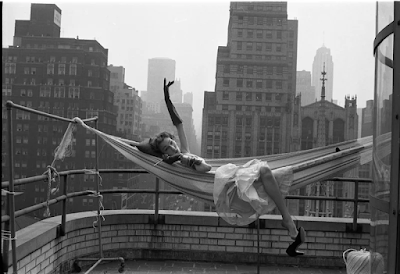
black and white photograph of dancer Gwen Verdon lounging in a hammock on a balcony overlooking the New York skyline in 1953

In a town where private space is at a premium, this 1953 photo from Michael "Tony" Vaccaro 
taken for LOOK magazine shows off a stylish way to get a city view.
Michael "Tony" Vaccaro /Museum of the City of New York


Visiting New York City this summer? A fun, family-friendly exhibit celebrating movies, TV shows, music, books, fashion and art inspired by the city is now open at the Museum of the City of New York.

This Is New York is in celebration of the museum's own centennial. It turns out that the past 100 years have been rich ones for depicting the city.

"1923 is really at the beginning of mass American culture ... Radio, film, it's at the beginning of a whole cultural explosion," said Lilly Tuttle, one of the curators. She said the exhibit is meant to capture New York as artists have experienced it during that time. It's not a love letter.

"It's a crowded, dirty, smelly, rude, cacophonous place. And also glamorous and wonderful and glitzy and fabulous and elegant and cool. And artists across time and across media have captured that," she said. "It's all in here, all at once."

But there's so much to see — in this corner, Jake LaMotta's boxing gloves from Raging Bull! In that corner, a video mocking the meme Pizza Rat! — that it can be overwhelming. Full article here.


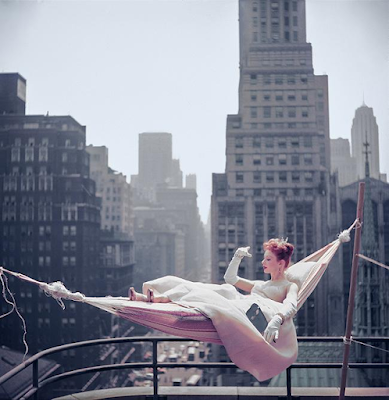
color photograph of dancer Gwen Verdon lounging in a hammock on a balcony overlooking the New York skyline in 1953
Gwen Verdon, New York City, NY, 1953


Friday, April 28, 2023

REMEMBERING THE RADICAL WOMEN OF NEW YORK'S PHOTO LEAGUE

screen shot of on-line article "Remembering the radical women of The Photo League" with close up of 3 boys posing with fists raided in front of poster-covered outside wall

 Via Huck Magazine

April 26, 2023
By Miss Rosen

A new exhibition revisits the work of Sonia Handelman Meyer and Ida Wyman, who devoted themselves to social justice and chronicling daily city life as part of one of the most progressive art collectives in US history.


In 1936, a group of predominantly Jewish-American photographers in New York City came together to form The Photo League, dedicating themselves to using the camera in the ongoing fight for social change. By the ‘40s, the League’s roster included luminaries like W. Eugene Smith, Berenice Abbott, Paul Strand, Lisette Model and Weegee, with women accounting for more than a third of their membership at a time when gender equity in the industry was extremely rare.

Standing at the vanguard of art and activism, the League was dedicated to supporting the struggles of American workers through the Depression and the start of the post-war boom – only to be targeted by the FBI during the early years of the Red Scare. In 1947, the US Department of Justice blacklisted the Photo League as a “subversive organisation,” putting members at risk of government persecution.

The League rallied but was ultimately no match for the state, which used a paid informant to destroy the photography collective in court. Although the League finally disbanded in 1951, its legacy lives on in both the work of its members and their shared commitment to human rights.


four well-dressed men by street lamp in Spanish Harlem, New York c.1946
Sonia Handelman Meyer
Sharp dressers on the corner, Spanish Harlem (1946-1950) 


In a new exhibition, gallerists Sid and Michelle Monroe revisit the groundbreaking work of two photographers whose work as gone unrecognised until recent years: Ida Wyman (1926-2019) and Sonia Handelman Meyer (1920-1922).

Joe Meyer, manager of the Sonia Handelman Meyer Estate, remembers his mother as an artist and activist who first took interest in social issues as a teen. “When she joined the Photo League in her mid-20s, she found a new medium to share her radical ideals with an even broader audience,” he says.

Handelman Meyer attended rallies and participated in boycotts, devoting herself to civil rights, environmental and anti-war causes. Standing at the frontlines, she was tear gassed during protests in Washington D.C., charged by a mounted policeman in New York, and had rocks thrown at her during the 1949 Peekskill Riot.

In an artist statement written in her later years, Handelman Meyer recounted her work for the League photographing at an anti-lynching rally in Madison Square Park, at a Jehovah’s Witness convention in Yankee Stadium, and at the Hebrew Immigration Aid Society, as well as chronicling daily life in New York, which she descried as “rough-edged, tender and very beautiful in its diversity.”

After the League shut down, Handelman Meyer packed up her prints and negatives and went underground for three years, fearing repercussions of her involvement. She lost track of League members, focusing her energy on raising a family and photographing nature instead.

After a series of events brought her work back into the public eye in 2007, Handelman Meyer, then 87, was finally able to receive the recognition she deserved. Charged with purpose, she picked up where she left off, passing along the mission of the Photo League to a new generation of photographers.

Sonia Handelman Meyer and Ida Wyman: Pioneering Women of the Photo League is on view April 21 – June 18, 2023, at Monroe Gallery in Santa Fe, New Mexico.

Wednesday, May 4, 2022

PHOTO2022: In Conversation with Ashley Gilbertson

 Via National Gallery of Victoria


Looking back over the photographs that he made of New York in 2020 Australian photographer Ashley Gilbertson wrote, ‘The resulting photo essay is my requiem to the New York that we knew before the pandemic, but also a love letter to the resilient people who never gave up.’

One consequence of the COVID-19 pandemic was the shutting down of much of New York and the suspension of national and international travel. For Gilbertson, this enforced a shift in his focus had a profound impact on his life and work. Already a regular runner, his practice during 2020 involved daily distance running and using the camera in his phone to photograph the events unfolding around him as he ran through the streets of the city. Over the course of the year, he documented the trajectory of the pandemic, the Black Lives Matter protests, and the US presidential election, creating a visual diary of the unfolding events across the city.


Join Ashley Gilbertson to discuss his work in conversation with NGV Senior Curator of Photography Susan van Wyk.

Thursday, 5 May, 11am (AEST)  Free entry

The Ian Potter Centre: NGV Australia, Fed Square Level 2

Booking is not required

General enquiries

Ph +61 3 8620 2222

ngvenquiries@ngv.vic.gov.au

9am–5pm, daily


Speakers

Susan van Wyk

Senior Curator, Photography

Ashley Gilbertson

Ashley Gilbertson was born in Melbourne in 1978, lives and works in New York, and is a member of the VII Photo Agency. Gilbertson’s early work focused on refugees around the world, an interest that in 2002, led him to Iraq. His work in that country, made largely on contract for The New York Times, earned critical acclaim and he was awarded the Robert Capa Gold Medal for his 2004 work in Falluja. One of the leading photojournalists of his generation, Gilbertson has been recognised for his photographs in conflict zones, empathetic pictures of the global refugee crisis and his humanist approach to photography as a documentary medium.

Thursday, April 28, 2022

Requiem to New York: Photographs by Ashley Gilbertson

 Via National Gallery of Victoria

April 28, 2022


Melbourne-born Ashley Gilbertson has crafted a career from his human, empathetic approach to photojournalism, most recently channelled through his images of New York City in 2020, when the metropolis was in the deepest throes of the COVID-19 pandemic. Gilbertson’s astute eye captured both sadness and moments of joy. Full article here.


View Ashley Gilbertson's photographs at The AIPAD Photography Fair May 20-22 in New York City, booth #113, Monroe Gallery of Photography.

Monday, February 21, 2022

Listening with his camera: The late photographer Don Hunstein captured a golden age of music


Via the Daily Hampshire Gazette


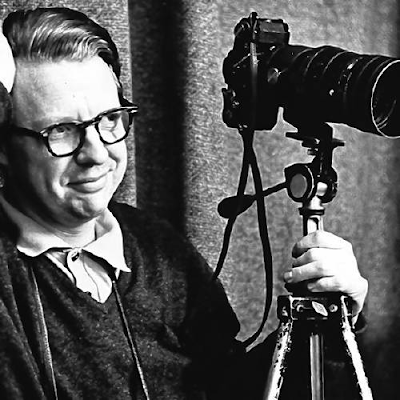
black and white photograph of Don Hunstein with his camera
Portrait of the artist: Photographer Don Hunstein took many iconic shots of musicians from the late 1950s to the 1980s by putting them at ease. Image courtesy cdeVision

It’s arguably one of the most iconic album covers of all time, certainly in the folk and pop world: a young Bob Dylan, on the cusp of stardom, walks down a slushy street in Greenwich Village in New York City, hands in his pockets and shoulders hunched against the cold, as his girlfriend, Suze Rotolo, clings to his left arm.

That image, from the 1963 disc “The Freewheelin’ Bob Dylan,” came out of a session that Don Hunstein, a longtime director of photography for Columbia Records, had staged with Dylan in the singer’s nearby apartment, capturing the rising folk star as he played his acoustic guitar, sprawled in a beat-up armchair, and tried at one point to smoke and sing at the same time — another memorable shot

Those are just two of hundreds of impressive images that are now preserved on a website dedicated to Hunstein’s work, a site put together by Hunstein’s daughter, Tina Cornell, who lives in Florence with her family, and cdeVision, a Holyoke web studio specializing in advertising, website design and more.

Along with taking many shots of Dylan in his early career, Hunstein, who died in 2017, photographed a huge array of stars on Columbia’s roster from the late 1950s into the 1980s: Billie Holiday, Aretha Franklin, Miles Davis, Dave Brubeck, Barbara Streisand, Simon and Garfunkel, Johnny Cash, Janis Joplin, Billy Joel.

The photographer also shot hundreds of album covers, including Loretta Lynn’s memorable “Coal Miner’s Daughter” from 1970, as well as the records of classical musicians including pianist Glenn Gould.

Hunstein, born in 1928 in Missouri, grew up in St. Louis but settled in New York in the 1950s. He made his mark as a documentary photographer — his adopted home was a favorite subject — whose unobtrusive style, Cornell says, helped put his subjects at ease.

As one of his obituaries noted, “Don had the ability to listen with his camera. Instinctively he under stood that to capture artists at their best moments, patience, trust and humility were needed.”

Now Cornell and her mother, DeeAnne Hunstein, who also helped develop the website, are hoping to bring some more attention to Hunstein’s work, in turn highlighting an era when photography became an important tool for documenting the cultural history of music.

“My dad was humble to a fault, just very self-effacing,” Cornell said during a recent phone call. “He didn’t act like a fan [of musicians] or put himself out there like he was some kind of big shot … He saw this as a job, and he always said he was lucky to be at the right place at the right time.

“And yet he created all these great images,” she noted. “People liked him — they felt comfortable around him, he was good at making a joke, and that’s why he was able to do what he did.”

Case in point: Cornell says Johnny Cash could sometimes be testy with reporters and photographers, but her father and the gritty country singer hit it off, with Cash inviting Hunstein to visit him on his Texas ranch in the late 1950s.

Though Hunstein mostly took black and white photos, his website offers a couple especially atmospheric images of Cash in color. In one, wearing a checked shirt and a straw hat, he leans on a worn wooden fence rail and looks off moodily into the distance. In another, the singer, this time decked out in dark suit and white shirt, sits with his guitar on a huge woodpile, his nearby open guitar case revealing a bright purple interior.

“I love that mix of colors!” Cornell said.

hen there’s the near-silhouette of jazz great Thelonious Monk, hunched over a piano, a cigarette dangling from his mouth (there was a lot of smoking in Columbia’s studios in those days). And Cornell says one of her father’s favorite photos was an image he took of Duke Ellington, his “all-time hero,” as she puts it.

“My dad used to say he was really lucky to have this job, because he was such a huge music fan himself,” she said.

‘Don Hunstein did all this?!’

Bill Alatalo, a co-partner of cdeVision with Antonio Costa, says the company actually first designed a website for Hunstein’s work perhaps a dozen years ago after Cornell first approached them. It was a simpler affair, with far fewer images, Alatalo notes, in part because Cornell and her mother were busy at the time trying to help Hunstein, who struggled with Alzheimer’s disease for about a decade before his death.

Then Cornell got back in touch about a year ago, Alatalo said, and asked if cdeVision could develop a new site. “The old one kind of got lost in the shuffle, and at this point Tina had a lot more photos for us to work with,” he said. “Antonio and I were amazed — we were like, ‘Don Hunstein did all this?!’ ”

As a music lover and record collector himself, Alatalo says the Hunstein website “has just been a cool project to work on, to really give it some play and give people a better sense of what he did.” The website also dovetails with other music-related work cdeVision has done in recent years, Alatalo said, such as designing a new site for Hawks & Reed Performing Arts Center in Greenfield.

For Cornell, who was born in 1968, her father’s website is a deeply personal project. She was inspired by his work as she got older, she says, and studied photography herself as well as drawing and painting. She came to the Valley about 20 years ago with a former partner, and the couple had plans then to create a pottery studio. Today she works as a jeweler and goldsmith and also is involved with a local chapter of an environmental group, Mothers Out Front.

She can remember going as a kid to her father’s studio at Columbia Records, then located in a building on 52th Street near 5th Avenue in Manhattan, and “playing with the props” while her dad was arranging shots of various artists.

“It wasn’t until I was older that I really developed an awareness of the full scope of his work,” she said.

Cornell and her mother have also established the new website as a means of protecting the provenance of Hunstein’s work. Some of his photos now crop up online, such as on people’s Instagram sites, and go uncredited, she noted, and she’s had to ask people to remove the pictures.

In addition, the Sony Corp. bought Columbia Records (and Columbia Pictures) in the late 1980s, acquiring all of Hunstein’s work for the record label, and Cornell and her mother have since worked with Sony to gain access to many of those images.

Ultimately, Cornell says, the website is designed to reacquaint people with her father’s work and his era as a photographer. He never took to computers or digital photography, she notes, instead working with contact sheets in his darkroom, giving his photos a distinctive style and pedigree that she believes is worth commemorating.

More are added to the website regularly, she says, and the site also has many images her father took of Puerto Rican communities in New York City in the early 1960s, part of a book project for an English publisher.

“My dad was just a huge part of my life,” she said. “This is my way of honoring that.”


Friday, September 10, 2021

9/11 In Remembrance Exhibition


Santa Fe, NM -- Monroe Gallery of Photography announces an exhibition of photographs commemorating the 20th anniversary of the terrorist attacks on the World Trade Center that became known as 9/11. 


The twin towers design process started in 1965 and construction began in 1972. The twin towers were the tallest buildings in the world for a very short time. Photographs in the exhibit document the construction of the World Trade Center, its prominence in the skyline of Manhattan, and the devastation of September 11, 2001

Saturday, September 4, 2021

Sunday, March 21, 2021

“A City Ruptured” with Ashley Gilbertson and Renee Melides


black and white photograph of steam on Third Ave, Midtown East, September 30, 2020
Photo by Ash Gilbertson / VII for The New York Times.
 Third Ave, Midtown East, September 30, 2020

Via VII Insider

Date: Monday, March 22, 2021

09:00–10:15AM EDT

Join here


Join NY Times Editor Renee Melides and VII Photographer Ashley Gilbertson to discuss “A City Ruptured” on March 22 at 9 AM EDT.

The duo will discuss their year of COVID-19 coverage in New York City, the concepts behind the work, the production of a months-long story, and the importance of collaboration on projects.

Renee Melides

Renee Melides is a Photo Editor at The New York Times and is currently based in New York. Renee also worked for The Times in both their London and Hong Kong bureaus. Prior to this, she was the Deputy Photo Editor at Monocle Magazine in London.

Ashley Gilbertson

Ashley Gilbertson is an Australian photographer and writer living in New York City widely recognized for his critical eye and unique approaches to social issues. Gilbertson is a member of the VII Agency, a frequent contributor to The New York Times, and a collaborator with the United Nations.


View the exhibition "History Now" featuring several of Ashley Gilbertson's photographs.

View a selection of Ashley Gilbertson's prints


Wednesday, March 10, 2021

Ashley Gilbertson: "My requiem to the New York that we knew before the pandemic, but also a love letter to the resilient people who never gave up."


Via The New Yok Times

March 10, 2021

black and white photo of a Food line on Allen Street, New York City, August 11, 2020


The pandemic shattered the city’s economy, affecting people’s homes, livelihoods and wallets. One photojournalist documented the hardships, as both a lament and a tribute.

"I needed to photograph our decimated economy in a way that brought the various elements to life — through the people living it. The resulting photo essay is my requiem to the New York that we knew before the pandemic, but also a love letter to the resilient people who never gave up." -Ashley Gilbertson